Latest in: Latest News.

EU chapter

Green roofs for urban rainwater and stormwater management

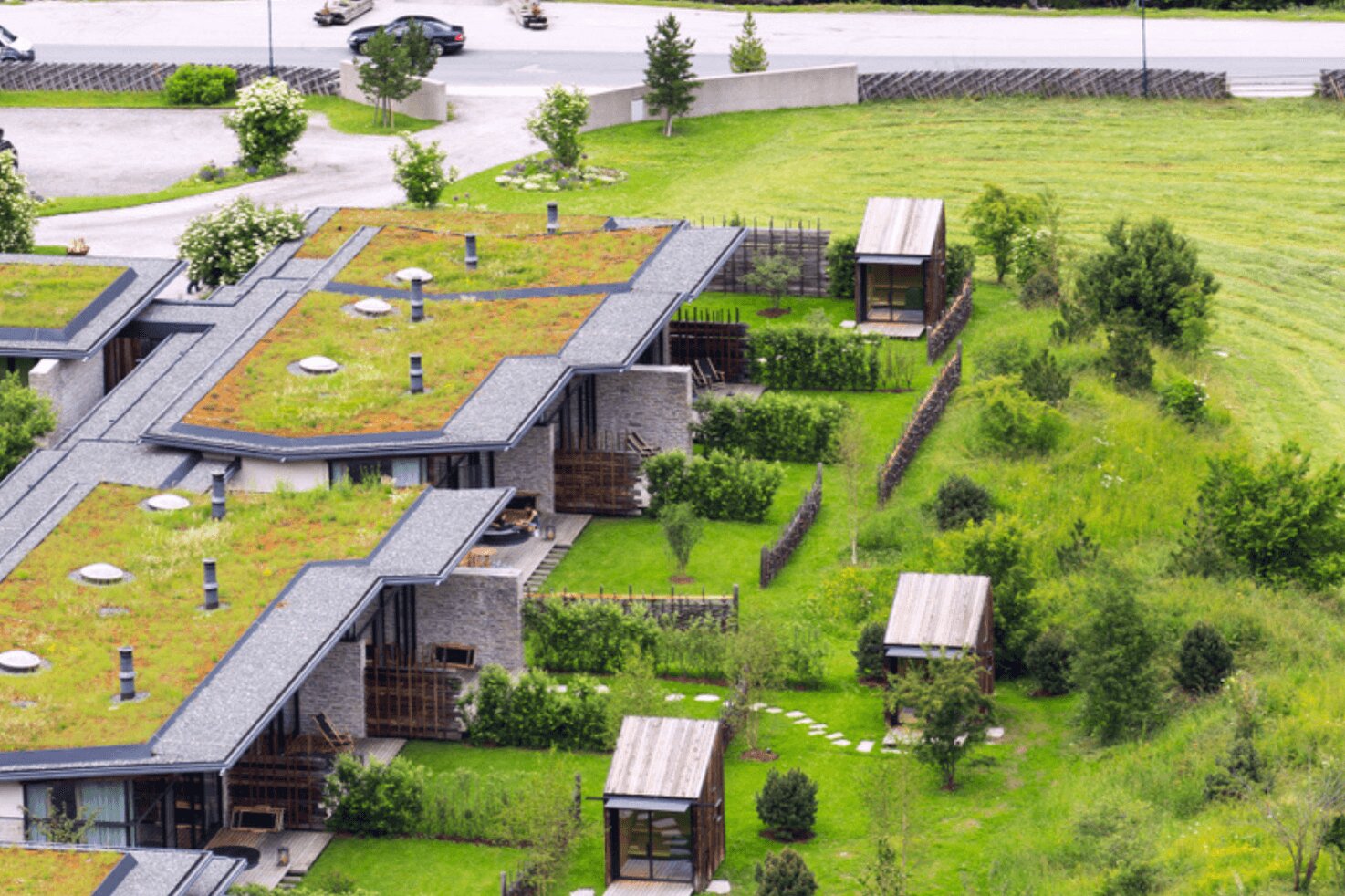
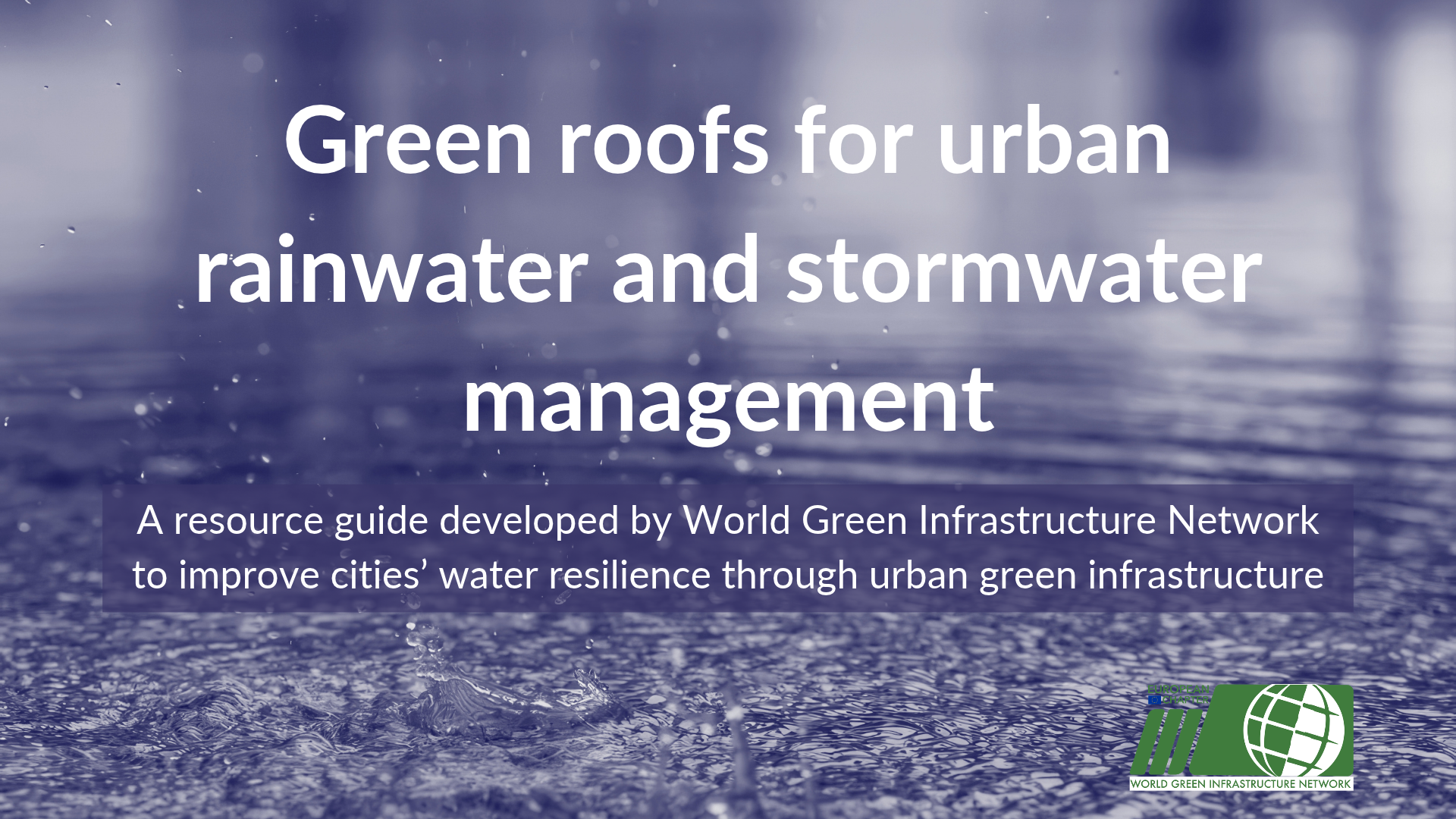
The new paper by WGIN’s EU Chapter “Green Roofs for Urban Rainwater and Stormwater Management”, explores how green roofs can contribute to more climate-resilient cities. The paper highlights their role in managing rainfall, reducing pressure on urban drainage systems, and delivering wider benefits for biodiversity, urban cooling and well-being. Published ahead of the European Commission’s forthcoming Climate Resilience Framework, the paper underscores the importance of integrating green infrastructure and nature-based solutions into urban planning and climate adaptation strategies. Download the paper here.

Read More »
Latest News

Green roof research measures performance, but not yet people

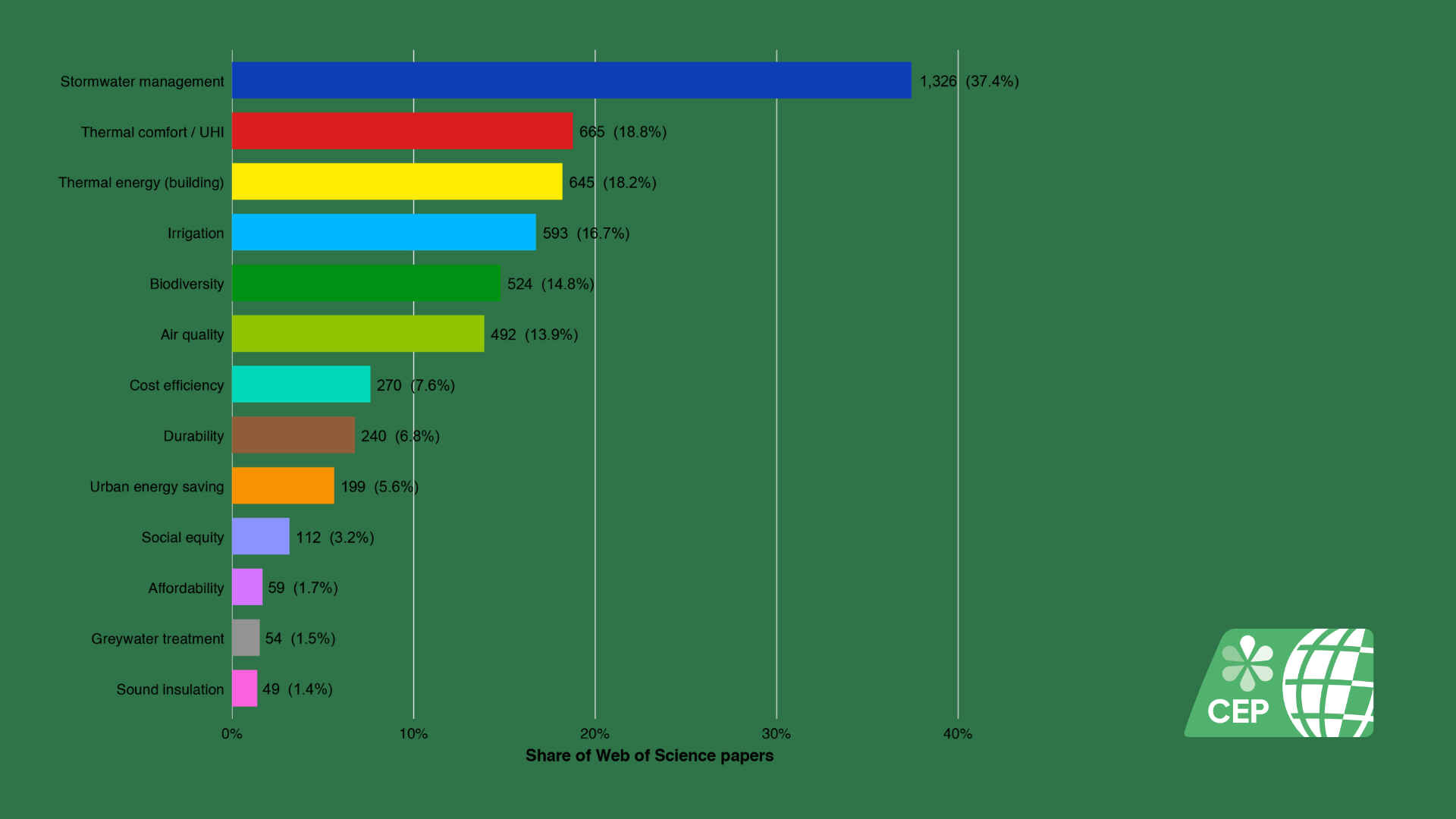
New study maps 25 years of green roof literature and finds affordability and social equity nearly invisible. Submitted by WGIN members Ferre Maes and Bert Belmans In a study published in City and Environment Interactions, WGIN members Ferre Maes and Bert Belmans, together with Roméo Delcroix (Vrije Universiteit Brussel), analysed more than 3,500 green roof articles published between 2000 and 2025. They tracked how often 13 performance dimensions appear in titles, abstracts and keywords. The results show a clear imbalance. Stormwater management appears in 37% of publications, urban heat island mitigation in 19% and building energy in 18%. Affordability (1.7%) and social equity (3.2%) are among the least visible topics in the field, and have remained marginal for 25 years. The study does not show that green roof implementation is inequitable; it shows that the published evidence cannot yet answer this question. Research on parks, urban greening and green stormwater infrastructure engages with affordability and equity far more often, which shows this gap can be closed. There is no reason green roof research can’t do the same. A call to action WGIN’s mission is to advocate and promote the integration of green infrastructure in urban planning, globally. But planning decides who benefits, and evidence on who benefits is largely missing. If we want cities, funders and residents to trust green roofs as a public good, we need to be open about what we know and what we don’t. That openness is also an opportunity: evidence on affordability and equity is what opens the door to public funding, social housing and neighbourhoods green roofs have yet to reach. We call on our community to: Count people, not just performance. In research papers, project reports and case studies alike, report cost, access and who benefits alongside technical results. In publications, name affordability and equity explicitly in titles and abstracts so the work can be found. Plan for equity from the start. Build these questions into green roof strategies, subsidies, projects and research calls, before roofs are built. Make costs transparent. Manufacturers, installers and researchers alike can share life-cycle cost data, from installation and maintenance to lifespan and savings, in a consistent and anonymised format, so support schemes can reach beyond those who can already afford a green roof. Neighbouring fields already study performance and people together. The green roof community can too! Read the full paper here: 10.1016/j.cacint.2026.100476 (open access)

Read More »
Latest News

WGIN Global Green Roof Professional Development and Accreditation Programme – Call for National Associations Partners

In April 2026, WGIN launched the Global Green Roof Professional Development and Accreditation Programme. This initiative aims to establish an internationally recognised professional training programme focused on green roof design, installation practices, maintenance, and long-term performance. The online training is designed to deliver a set of universal quality best practices rooted in knowledge rather than technical skills. The programme’s intent is to accelerate the development of national and regional green roof markets by providing online training and accreditation.  The Global Green Roof Professional Development and Accreditation Programme is now looking for two national associations to design national training modules and examination questions based on the core curriculum developed under this project. The application process is open until 7 September. Selected national associations will be contacted by 21 September. For more information, see the call for interest. To apply for the call of interest, visit this link.

Read More »
Latest News

In Memoriam: Professor Nigel Dunnett (1963–2026) – A Champion for Biodiversity in Living Cities

The global green infrastructure community is saddened by the loss of Professor Nigel Dunnett, who passed away on April 26, 2026, at the age of 63. As a visionary horticulturalist, author, and Professor of Planting Design and Urban Horticulture at the University of Sheffield, Nigel was one of the world’s most influential voices in redefining the relationship between nature, architecture, and urban planning. At the World Green Infrastructure Network (WGIN), we honor his extraordinary legacy. Nigel did not just design gardens; he pioneered a philosophy that transformed urban spaces into dynamic, climate-resilient, and living ecosystems. Nigel was actively involved with the World Green Infrastructure Network (WGIN) as the UK representative in WGIN. Nigel participated in several congresses of the network, among others in Toronto in 2009, Mexico in 2010 and in Nantes, France in 2013. He advanced the field of knowlegde and practice in urban biodiversity through his guidance of several PhD candidates and the legendary internationally inclusive conferences in Sheffield. A Leading Voice for the Green Infrastructure Community of Practice Nigel Dunnett was central to the transformation of the green infrastructure movement, shifting the global professional focus from sterile, hard landscapes to biodiverse, high-performing “soft” infrastructure. He bridges the gap between rigorous ecological science and breathtaking artistic design, proving that urban greening could be simultaneously wild, functional, and deeply beautiful.His contributions to our community of practice are monumental: A Pioneer of Naturalistic Planting: Alongside his long-time collaborator James Hitchmough, Nigel pioneered ecological, seed-based naturalistic planting. He challenged traditional, high-maintenance landscape management by proving that diverse, low-input plant communities could thrive in harsh urban environments. Transforming Public Consciousness: His high-profile masterworks brought the concepts of urban biodiversity and green infrastructure into the global spotlight. From the spectacular, climate-adapted expanses of the Queen Elizabeth Olympic Park to the Tower of London “Superbloom” and the Barbican Beech Gardens, Nigel showed the world what a green city could truly look like. Sustainable Urban Drainage (SuDS): Nigel was a fierce advocate for integrating water management into the urban fabric. His work on the Sheffield “Grey to Green” project remains a gold-standard blueprint for how cities can use bioswales and urban vegetation to mitigate flooding while enhancing public life. Author: Nigel authored Planting Green Roofs and Living Walls (co-authored with Noël Kingsbury) Dunnett and Kingsbury shifted the narrative on building integrated green infrastructure by arguing that green roofs and living walls should be designed as dynamic, highly biodiverse, and aesthetically pleasing ecological systems. Together with Andy Clayden Nigel co-authored Rain Gardens: Managing Water sustainably in the Garden and Designed Landscape. Following the same philosophical line as his work on green roofs, Nigel revolutionized how landscape architects and garden designers approach urban hydrology. Educator and Innovator: Beyond his books and research papers, he founded the social enterprise Pictorial Meadows, democratizing ecological urban design by making wildflower meadow systems accessible to municipalities worldwide. As an educator, he inspired multiple generations of landscape architects to prioritize ecological integrity. Healing Through Nature: The Aberdeen Royal Infirmary Roof Garden While Nigel’s grand urban masterplans won international acclaim, my personal favorite of Nigel’s many contributions to our field is the role he played in the creation of The Robertson Family Roof Garden at the Aberdeen Royal Infirmary. The project originated from Nigel’s gold medal-winning RBC Blue Water Roof Garden at the 2013 RHS Chelsea Flower Show. Rather than letting the installation disapear after the show, Nigel collaborated with the hospital’s Chaplin James Bell Falconer to adapt the design and installation into a permanent, 24/7 therapeutic sanctuary in the heart of the hospital. Opened officially by Queen Elizabeth II in 2017, the garden represents a pinnacle of biophilic, inclusive healthcare design. Nigel engineered the rooftop to be entirely accessible, ensuring that even critically ill, fully ventilated patients from the intensive care unit could be wheeled outside to experience the open air, the rustle of grasses, and the scent of trees. The Aberdeen roof garden stands as a powerful testament to Nigel’s belief that access to nature is not a luxury, but a fundamental human right—and an essential component of clinical recovery and psychological restoration. A Lasting Legacy Nigel Dunnett’s work altered the trajectory of modern landscape architecture. He taught us that urban nature should not be merely decorative, but an active, spontaneous, and healing force woven deeply into our buildings and streets. The World Green Infrastructure Network extends our deepest condolences to his wife Marta, sons Alex and Jack, colleagues, and the countless students and professionals he inspired.

Read More »
EU chapter

European Green Infrastructure Day 2026

European Green Infrastructure Day is back!  And this year, it will be a full-day event. Join us on 29 September in Brussels for the fifth edition of our annual gathering to discuss urban green infrastructures. This year’s edition will place a strong focus on the European Climate Resilience Framework, highlighting the key role that green spaces play in strengthening Europe’s resilience to climate change and building sustainable, future-proof communities. Bringing together EU policymakers, experts, local authorities, practitioners and NGOs, EGI Day 2026 will explore how greener cities can contribute to climate adaptation, improve water resilience and enhance the quality of life in urban areas across Europe. Join us for a full day of discussion, knowledge-sharing, and collaboration on the future of urban resilience. Download the full programme here.Register for EGI Day 2026 here.

Read More »
EU chapter

Choosing green and blue over grey to improve cities’ climate resilience

Climate change is making extreme weather events more frequent and severe, increasing the vulnerability of Europe’s cities . Heatwaves, flooding, droughts and water scarcity are already affecting citizens, infrastructure, and economic activity, and continued urbanisation further intensifies these challenges. As the European Chapter of the World Green Infrastructure Network (WGIN), we publish today a new position paper ahead of the upcoming publication of the European Climate Resilience Framework, planned for release during Q4 2026. We call the Commission to ensure that the t Climate Resilience Framework: Embed a mandatory “resilience-by-design” principle across EU planning, public spending, and sectoral policies. Establish a clear EU definition of a climate-resilient city, adaptable to national and regional contexts. Require climate risk assessments for urban areas, including pathways to scale up blue-green infrastructure solutions. Prioritise urban areas, buildings, and critical infrastructure, ensuring renovation policies deliver future-proof, climate-resilient buildings. Strengthening climate resilience in Europe must start with cities and the built environment. Read our full set of recommendations here.

Read More »
EU chapter

Policy Guidance: Making European Cities healthier, more resilient and beautiful

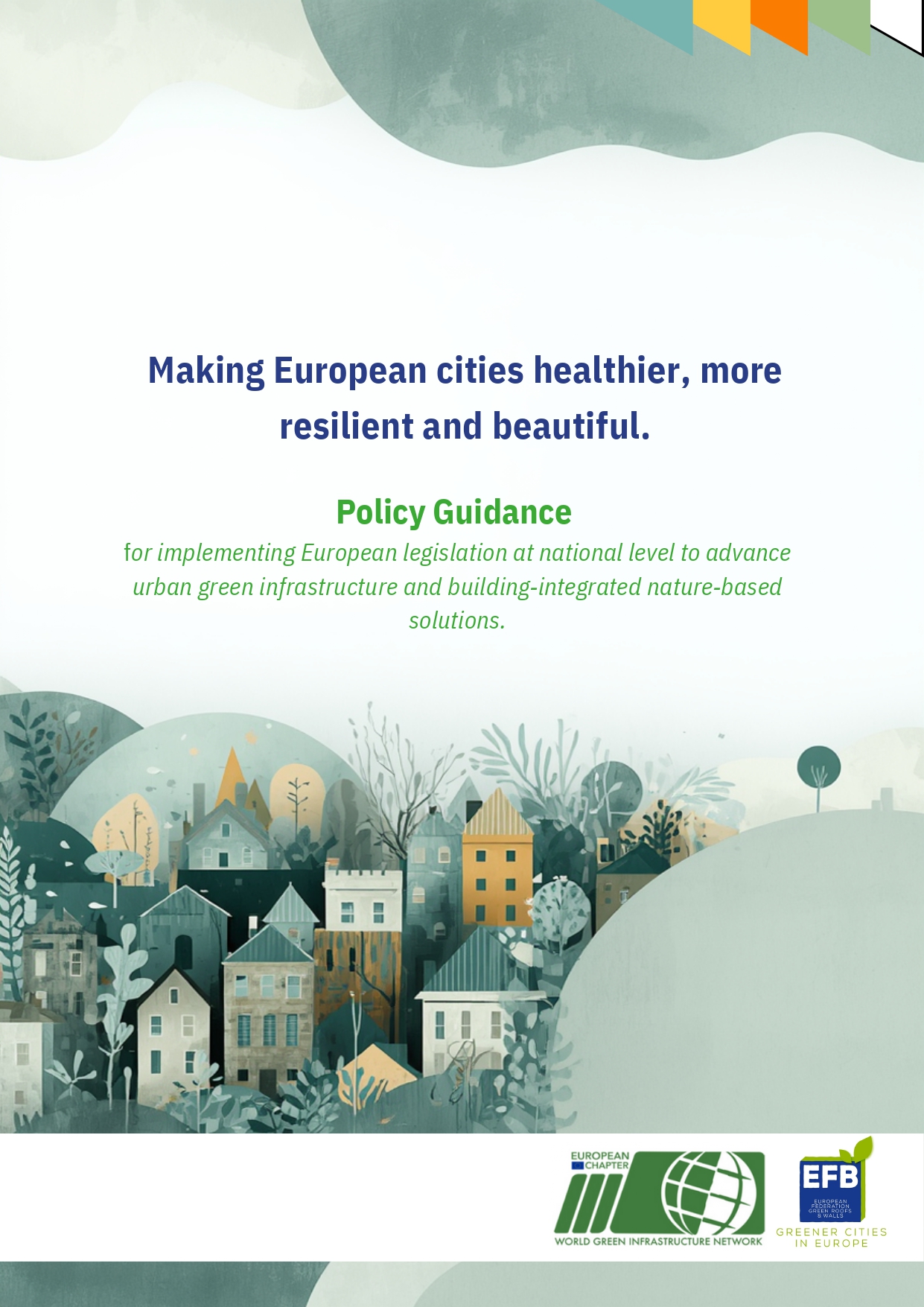
  WGIN’s European Chapter and EFB have released a new set of implementation guidelines to support the national adoption of European legislation. The document provides practical guidance on how to implement legal provisions that can accelerate the deployment of green roofs and green walls, generating multiple benefits for people, cities, and the environment, including climate resilience, increased biodiversity and enhanced urban wellbeing. They offer direction on implementing key EU legislative instruments: Energy Performance of Buildings Directive (EPBD) Energy Efficiency Directive (EED) Urban Waste Water Treatment Directive (UWWTD) Nature Restoration Regulation (NRR) With scientific evidence and a set of practical steps, the document shows how effective implementation of green roofs and walls can support meeting EU obligations and climate goals. Download the full paper here.

Read More »
Latest News

New Award Program for Landscape Architecture

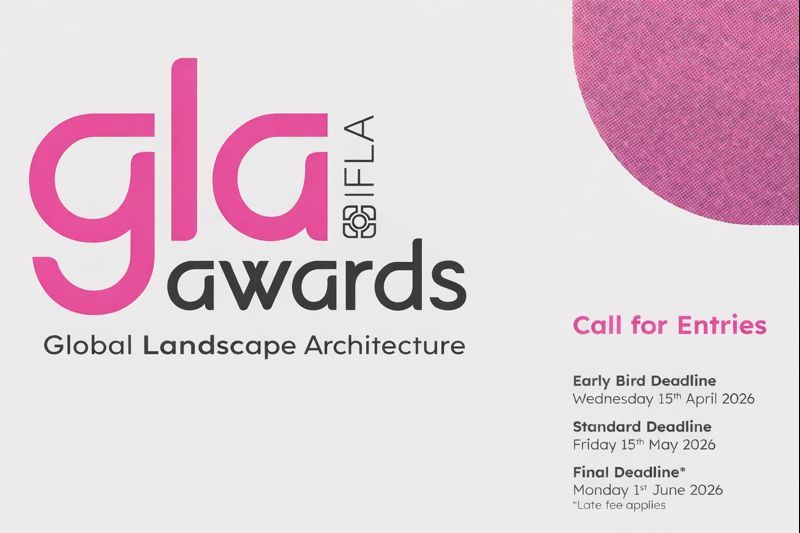
The International Federation of Landscape Architects, one of WGIN’s organizational collaboration partners, is presently launching a new award program. Nominations will be accepted until June 1st. Winners will be announced in Hong Kong at the IFLA World Congress in the last week of October, 2026. The IFLA GLA Awards celebrate the projects, policies, and people shaping a resilient future. Entry submissions here. Awards GuidelinesThe IFLA Global Landscape Architecture Awards are designed to recognize the diverse, impactful work of landscape architects worldwide. From Indigenous stewardship to high-tech climate resilience, we are elevating the voices that matter. Key Information Eligibility: Open to landscape architecture practices, individuals, and multi-disciplinary teams as well as students worldwide. Projects must be completed (or published) between Jan 2021 and June 2026. Deadlines– Early Bird: 15 April 202– Standard: 15 May 2026– Final: 1 June 2026 Fees: A Tiered Fee Structure based on the World Bank Income Groups will be used to ensure fair access for professionals in all regions. Award Categories The IFLA Awards program has significant overlap with WGIN’s World Green Infrastructure Awards, and is structured into 18 diverse categories: Climate & Environment: Climate Action, Desertification, Nature Conservation, Water Security, Energy-Efficient Design. Community & Justice: Ethics & Equity, Indigenous Knowledge, Migration & Inclusive Communities, Children & Youth, Age-Friendly Communities. Planning & Culture: Landscapes for Cities, Heritage, Food Systems, International Landscape Convention. Practice & Future: Technology & Innovation, Urban Health, Resilience and Disaster Risk Reduction, Young Landscape Architects. Those who submit nominations for the WGIN Awards are encouraged to consider also participating in the IFLA Awards program. For information or suggestions about organizational collaboration between IFLA and WGIN please contact WGIN Advisory Board Member David Brasfield.

Read More »
events

Save the date: World Green Infrastructure Congress 2026

Join us at: World Green Infrastructure Congress BARCELONA 2026 October 27–29: CCIB – Parc del Fòrum, Barcelona (Spain) October 30: University of Lleida – Catalunya (Spain) Organized by: University of Lleida Co-organized by the World Green Infrastructure Network (WGIN). Visit WGIC26.Barcelona

Read More »
Latest News

WGIC26 – Closing the gap between communities of practice for green infrastructure and health

  WGIN’s mission statement is “The World Green Infrastructure Network advocates for optimal use of green infrastructure in the urban built environment for the health and well-being of people and the planet.” WGIN has in recent years acknowledged a gap in the attention we’ve given to the human health and well-being benefits of urban green infrastructure. The next World Green Infrastructure Congress, WGIC26, in Barcelona in October 2026 will address this gap by dedicating one of its three thematic tracks to health and well-being. Our congress hosts, the University of Lleida, expect this track will contribute to increased focus on health and well-being within our community of practice, and will hopefully contribute to increased interdisciplinary collaboration with the health sector. WGIN members and stakeholders are encouraged to support and help distribute the soon to be published call for papers for WGIC26 through their websites, social media and personal networks and to assist in recruiting the health community to join us in Barcelona. Through stronger interdisciplinary collaboration we can foster greater recognition and support for urban and building integrated green infrastructure and its relevance in health research, policies and practices. The socioeconomic system seen through the One Health lens. Source

Read More »

Follow us on our social channels.

Follow us on the channel that best suits you to receive our latest updates!