Cultivating Change: The Role of Urban Agriculture in European Policy

Cultivating Change: The Role of Urban Agriculture in European Policy

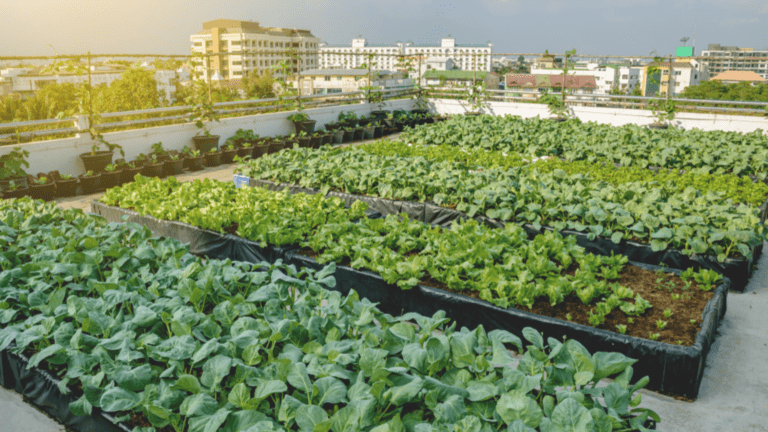
 Roof garden, Vegetable garden on the roof, Vegetables on the roof of the building, Agriculture in urban on the roof of the building. Shutterstock ID:1010959666

In the concrete jungles of our cities could take root a quiet revolution: urban agriculture. As we struggle with the challenges of food security, environmental degradation, and climate change, harnessing the potential of urban spaces for agricultural production can emerge as a solution. Urban agriculture has a myriad of benefits which could be delivered to people through a reevaluation of European policies.

Urban agriculture offers a broad range of benefits that extend beyond mere food production. Firstly, it fosters food security by bringing fresh, locally grown produce closer to urban dwellers, reducing reliance on long-distance transportation and mitigating the increasing risks associated with disruptions to global supply chains. Moreover, cultivating crops within cities promotes biodiversity as green spaces created through urban agriculture serve as habitats for diverse flora and fauna.

Additionally, urban agriculture plays a pivotal role in mitigating climate change. By converting impervious surfaces, vacant lots, rooftops, and walls into productive green spaces, carbon sequestration is enhanced, while reducing the urban heat island effect and mitigating stormwater runoff, thereby increasing urban resilience to extreme weather events.

Finally, engaging in urban agriculture fosters community cohesion and social inclusion. Community gardens and allotment schemes provide spaces for interaction, knowledge sharing, and skill development, forging stronger bonds among residents and promoting a sense of ownership and pride in local neighbourhoods.

Read the full article by Luigi Petito, Head of Secretariat at WGIN’s EU Chapter in the Spring 2024 issue of Living Architecture Monitor.
Follow us on our social channels.

Follow us on the channel that best suits you to receive our latest updates!

NEW

LATEST POSTS

BuGG World Congress on Greening Buildings 2026

BuGG is organising the World Congress on Greening Buildings  in Berlin from 9 to 11 June 2026. The event will explore all aspects of green buildings (roof, façade and interior greening) with the associated topics (including urban climate, rainwater management, sustainability, city of the future) and will be accompanied by a trade exhibition. On the third day of the congress, there will be the opportunity to take part in excursions to special projects in Berlin. The World Congress on Greening Buildings offers: Speakers from various countries Topics related to roof, facade, and interior greening A wide range of exhibitors at the accompanying trade exhibition A large number of cooperation and media partnerships (associations, organizations, institutions) Knowledge transfer and contacts for building greening  Demonstration of best practice examples Knowledge transfer by experts from the sector from home and abroad in parallel series of lectures and discussion rounds Networking. Meeting point. Addressing of new target groups Cross-thematic exchange of experience between city representatives, architects, urban planners, urban water management experts, industry and real estate representatives, manufacturers, processors, researchers, associations, politicians and other interested parties. The World Congress is organised by the Bundesverband GebäudeGrün e.V. (BuGG) with the support of international and national partners such as the European Federation of Green Roof & Wall Associations (EFB).  Find more information and register here.

Webinar: Impact of military aggression in Ukraine on agroecosystems and natural phytocoenoses.

The third webinar of WGIN’s post-conflict research group on the impact of military aggression in Ukraine on agroecosystems and natural phytocoenoses will take place on the 31st of October at 14:00 CEST. Join to learn more about: Types of military operations taking place on the territory of Ukraine. Types of weapons used and their impact on agroecosystems and natural phytocoenoses. Studies of the impact of military operations on specific agricultural enterprises. Studies of the impact of military operations on agrophysical and agrochemical soil indicators in Kyiv and Chernihiv regions Transformation of natural ecosystems under the influence of military operations in Kyiv and Chernihiv regions of Ukraine. SpeakerAnna SalnikovaPhD in Ecology, Associate Professor, Department of Ecology, Radiobiology and Life Safety National University of Life and Environmental Sciences of Ukraine Register here.

Introducing the Australasian Green Infrastructure Network (AGIN)

AGIN, a recently formed national/regional association for green infrastructure advocacy, joined the WGIN family in 2024. In 2025, AGIN President Gail Hall stepped down and was succeeded by Dr. Sebastian Pfautsch.  Sebastian presents his personal journey to green infrastructure advocacy, the Australasian Green Infrastructure Network and selected projects from AGIN’s members.                                                                                                                                                                                         Dr. Sebastian Pfautsch, recently elected President, Australasian Green                                                                                                   Infrastructure Network Read the whole story about AGIN – the (not so) new kid on the block.