iCARI Conferences: More Climate Resilient Cities 2024

iCARI Conferences: More Climate Resilient Cities 2024

More Climate Resilience Cities will take place on 22-23 October in Bratislava, Slovakia.

This conference focuses on Climate Change Adaptation, with a spotlight on the CEE region. Featuring speakers and attendees from multiple continents, this event showcases cutting-edge science, research, and practical innovations. Attendees will gain insights into the latest practices, successful case studies, and project financing methods.

Experience impactful presentations and stunning LCD projections in an intimate atmosphere. For those unable to attend in person, the conference will be streamed live on YouTube for registered participants, and all presentations will be available on our YouTube channel. All content, including live streams and YouTube videos, will be professionally translated.

The conference addresses the following key areas:

  • Climate Change: Strategies, Policies, Adaptation planning to cope with and mitigate ongoing impacts.
  • Green Infrastructure: Creating cool zones, improving air quality, and enhancing energy efficiency.
  • Blue Infrastructure: Promoting rainwater harvesting, enhancing water resilience, and innovative water retention.
  • Green-Blue Infrastructure Synergy: Amplifying adaptation measures, reducing energy consumption, and improving water management.
  • Climatically sustainable wooden buildings: Modern wooden buildings, Multi-storey wooden buildings, and Civil buildings.
  • Urban Planning: Integrating climate adaptation into urban development to create resilient cities.
  • Buildings: Focusing on energy efficiency, sustainable practices, and reducing emissions.
  • Energy Efficiency: Investigating innovative technologies, reducing GHG emissions, and linking with green and blue infrastructure.
  • Waste Management: Addressing and integrating waste produced from other focus areas for holistic sustainability.

Join for a comprehensive exploration of these critical topics and contribute to advancing effective climate adaptation strategies.The conference will also announce the results of the famous Green Roof of the Year competition. Winners will be recognized for their contributions to sustainable development and innovations in green roofing.

Find more information in iCARI’s website: https://www.icari.eu/conference
Follow us on our social channels.

Follow us on the channel that best suits you to receive our latest updates!

NEW

LATEST POSTS

Green roofs for urban rainwater and stormwater management

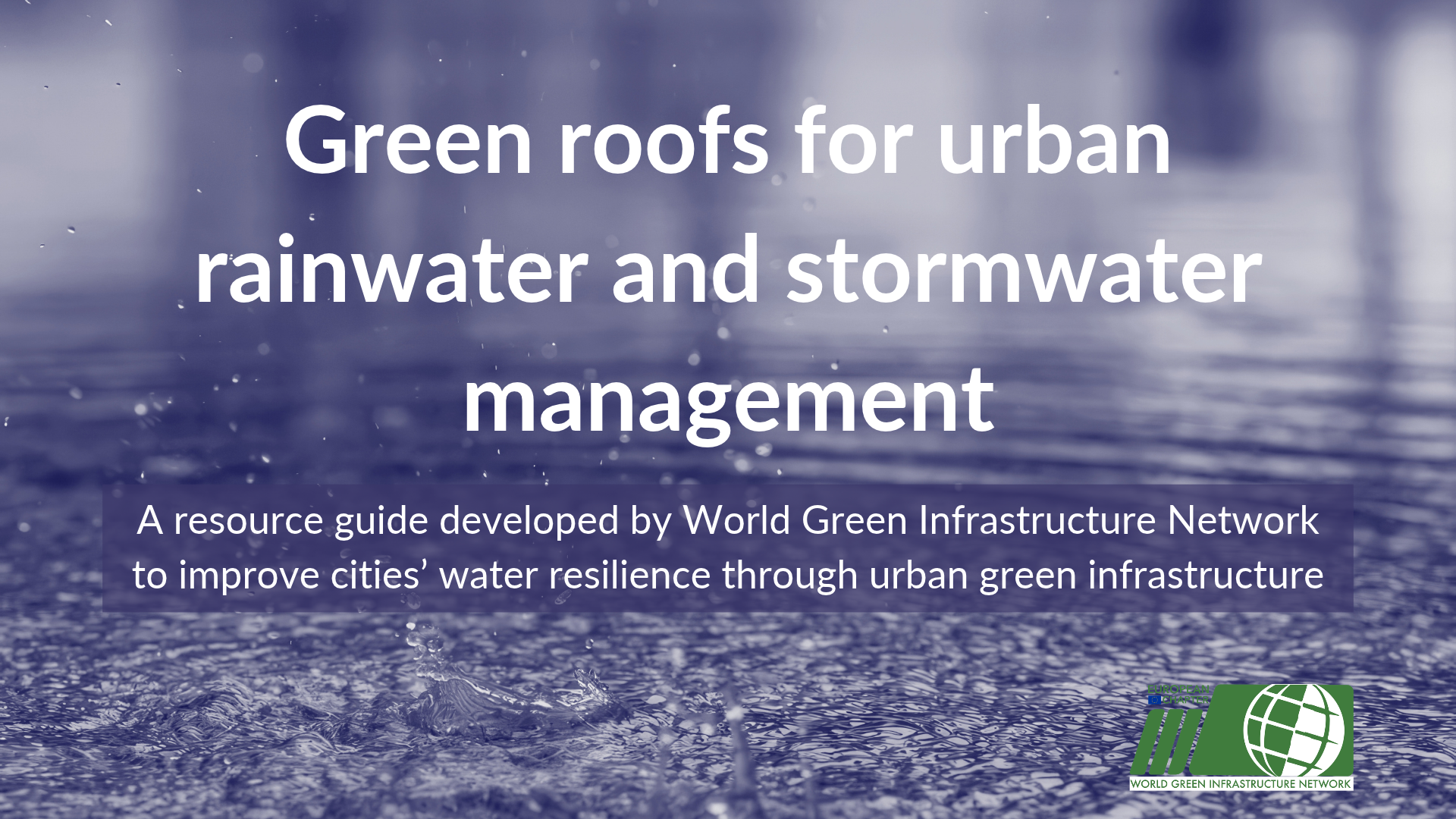
The new paper by WGIN’s EU Chapter “Green Roofs for Urban Rainwater and Stormwater Management”, explores how green roofs can contribute to more climate-resilient cities. The paper highlights their role in managing rainfall, reducing pressure on urban drainage systems, and delivering wider benefits for biodiversity, urban cooling and well-being. Published ahead of the European Commission’s forthcoming Climate Resilience Framework, the paper underscores the importance of integrating green infrastructure and nature-based solutions into urban planning and climate adaptation strategies. Download the paper here.

Green roof research measures performance, but not yet people

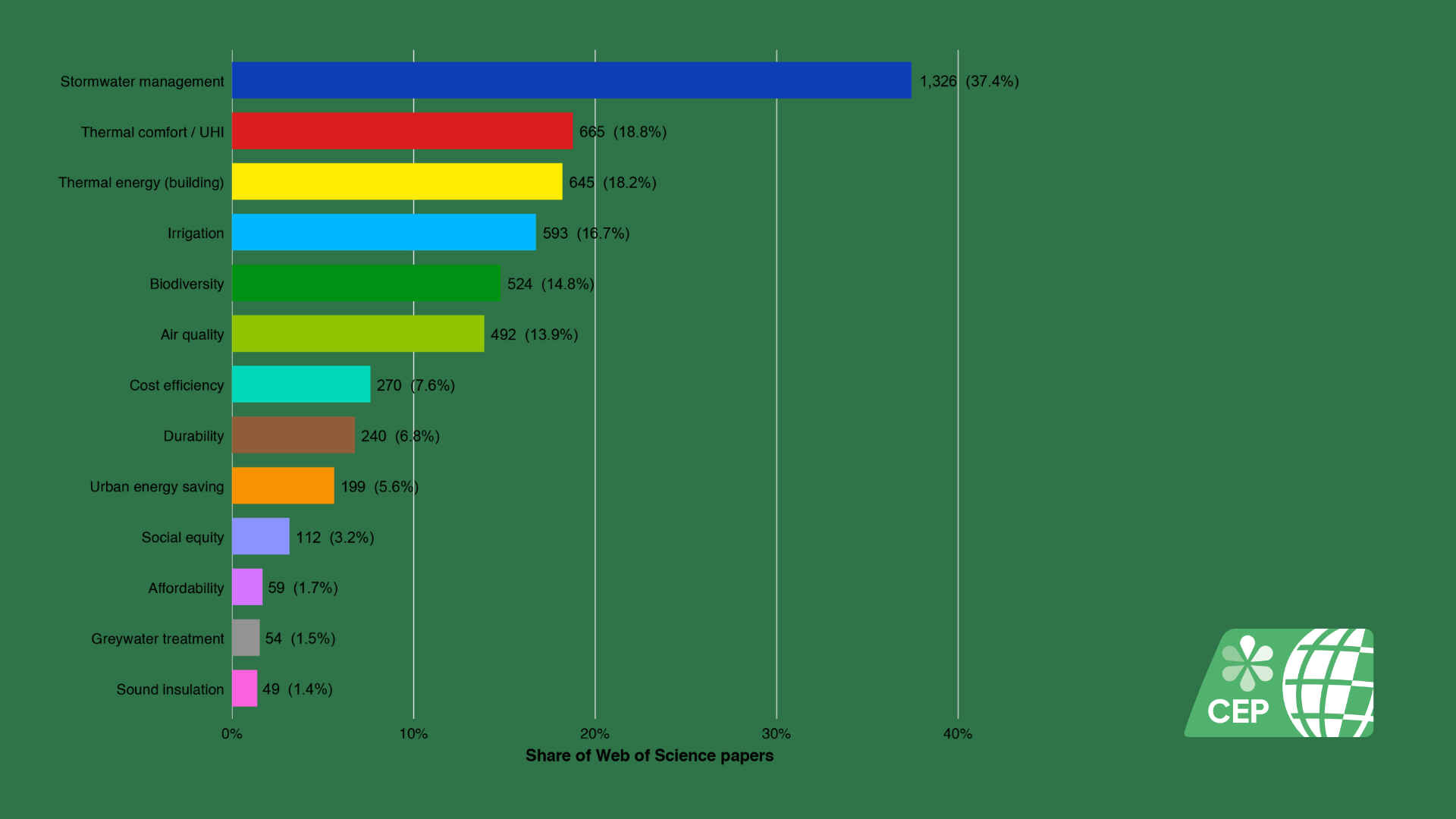
New study maps 25 years of green roof literature and finds affordability and social equity nearly invisible. Submitted by WGIN members Ferre Maes and Bert Belmans In a study published in City and Environment Interactions, WGIN members Ferre Maes and Bert Belmans, together with Roméo Delcroix (Vrije Universiteit Brussel), analysed more than 3,500 green roof articles published between 2000 and 2025. They tracked how often 13 performance dimensions appear in titles, abstracts and keywords. The results show a clear imbalance. Stormwater management appears in 37% of publications, urban heat island mitigation in 19% and building energy in 18%. Affordability (1.7%) and social equity (3.2%) are among the least visible topics in the field, and have remained marginal for 25 years. The study does not show that green roof implementation is inequitable; it shows that the published evidence cannot yet answer this question. Research on parks, urban greening and green stormwater infrastructure engages with affordability and equity far more often, which shows this gap can be closed. There is no reason green roof research can’t do the same. A call to action WGIN’s mission is to advocate and promote the integration of green infrastructure in urban planning, globally. But planning decides who benefits, and evidence on who benefits is largely missing. If we want cities, funders and residents to trust green roofs as a public good, we need to be open about what we know and what we don’t. That openness is also an opportunity: evidence on affordability and equity is what opens the door to public funding, social housing and neighbourhoods green roofs have yet to reach. We call on our community to: Count people, not just performance. In research papers, project reports and case studies alike, report cost, access and who benefits alongside technical results. In publications, name affordability and equity explicitly in titles and abstracts so the work can be found. Plan for equity from the start. Build these questions into green roof strategies, subsidies, projects and research calls, before roofs are built. Make costs transparent. Manufacturers, installers and researchers alike can share life-cycle cost data, from installation and maintenance to lifespan and savings, in a consistent and anonymised format, so support schemes can reach beyond those who can already afford a green roof. Neighbouring fields already study performance and people together. The green roof community can too! Read the full paper here: 10.1016/j.cacint.2026.100476 (open access)

WGIN Global Green Roof Professional Development and Accreditation Programme – Call for National Associations Partners

In April 2026, WGIN launched the Global Green Roof Professional Development and Accreditation Programme. This initiative aims to establish an internationally recognised professional training programme focused on green roof design, installation practices, maintenance, and long-term performance. The online training is designed to deliver a set of universal quality best practices rooted in knowledge rather than technical skills. The programme’s intent is to accelerate the development of national and regional green roof markets by providing online training and accreditation.  The Global Green Roof Professional Development and Accreditation Programme is now looking for two national associations to design national training modules and examination questions based on the core curriculum developed under this project. The application process is open until 7 September. Selected national associations will be contacted by 21 September. For more information, see the call for interest. To apply for the call of interest, visit this link.