Climate Resilient Cities 2023

Climate Resilient Cities 2023

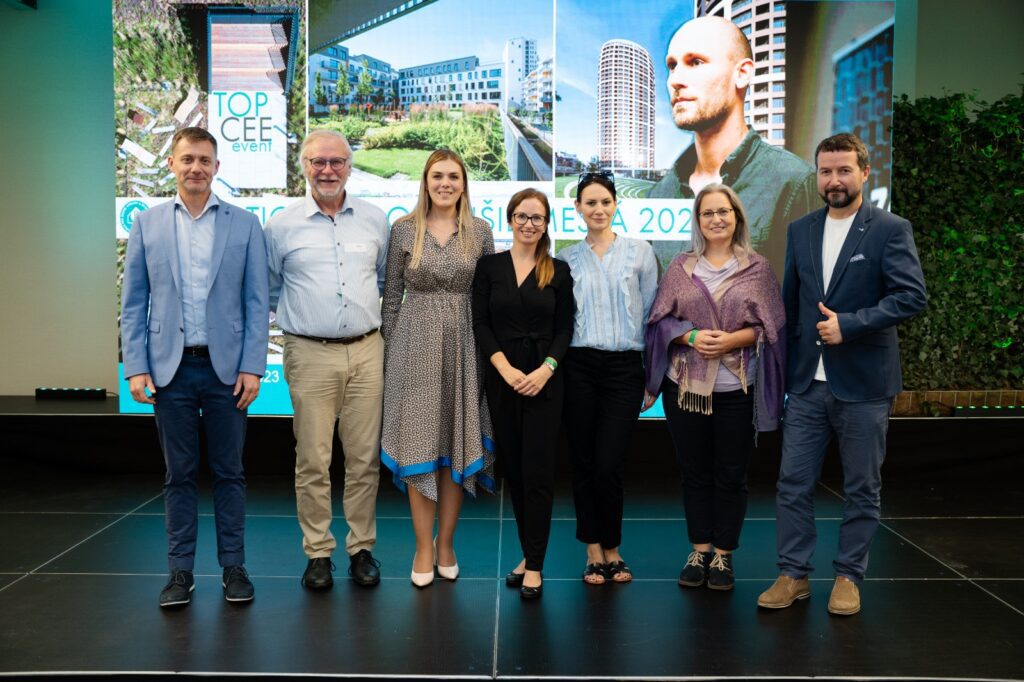
Branislav Siklienka, President, Slovak Association for Green Roofs & Green Infrastructure (first from left); Manfred Koehler, President, WGIN (second from left); Oleksandra Strashok, Head, Ukrainian Association of Green Infrastructure (third from left); Jana Toth, Leading manager for EU financing (the middle); Eva Papp, conference management (third from right); Marta Weber-Siwirska, Board member of WGIN &  President of Polish Green Roof Association (second from right); Jan Rapan, Vice President, Slovak Association for Green Roofs & Green Infrastructure (first from right).

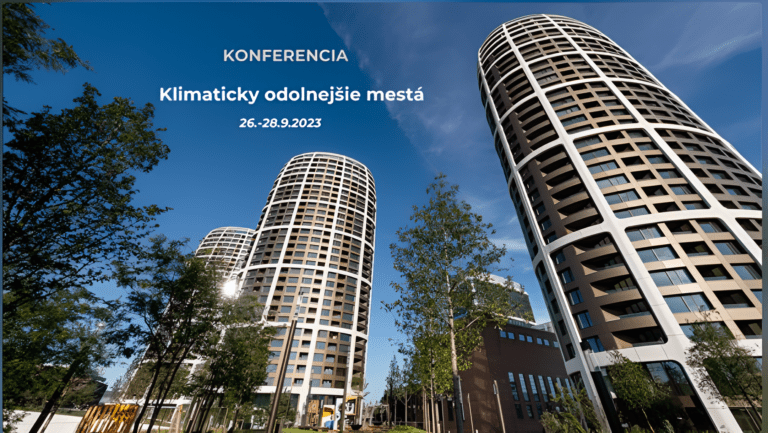
Climate Resilient Cities took place on  26 – 28 September 2023 in Bratislava, Slovakia! The most successful Central & Eastern European Conference dedicated to science and research regarding climate resilient cities brought together the World Green Infrastructure Network (WGIN) and the Slovak Association for Green Roofs and Green Infrastructure in a more complex collaboration.

Green roofs, green facades and other green and blue measures have many benefits to help us adapt our cities to changing climate conditions. Every year we experience extreme droughts, heat waves and torrential rains. Vegetated roofs help to cool heat islands in cities, retain rainwater, increase biodiversity, and create new living spaces in office or commercial centres. They also combine well with photovoltaics and improve their efficiency.

During the Climate Resilient Cities 2023 conference, we had the opportunity to see and hear 24 great lectures and analyses as well as  an evening of networking with conference participants. On the third day, there was an excursion to Bratislava and Vienna.

Manfred Kohler, President of WGIN, and Marta Weber-Siwirska, Board Member of WGIN, contributed with excellent lectures.

This conference also had a world first in hosting the Head of the Ukrainian Association of Green Infrastructure, Oleksandra Strashok.

PROGRAMME:

DAY 1: 26.9.2023 (Tuesday)

  • 8:00: Registration
  • 9:00 – 18:00: Presentations and announcement of the winners of the “Green Roof of the Year 2023”
  • 18:00: Evening reception and networking.

DAY 2: 27.9.2023 (Wednesday)

  • 9:00 – 17:00: Presentations

DAY 3: 28.9.2023 (Thursday) 

  • Excursion to interesting green roofs

SPEAKERS:

  • Prof. Dr. Ing. Prof. Dr. Manfred Koehler, President, World Green Infrastructure Network (WGIN) Germany
  • Prof. Marta Weber-Siwirska, Wroclaw University of Environmental and Life Science, Poland
  • Prof. Ing. Zuzana Sternová, PhD, Executive Advisor of the Technical and Testing Institute of Construction
  • Mgr. Jozef Pecho, climatologist, Slovak Hydrometeorological Institute
  • Ing. Marek Sokáč, PhD., Chairman of the Scientific Council of the Institute of Hydrology, Slovak Academy of Sciences
  • RNDr. Timotej Brenkus, SAŽP, Director of Environmental Science Section
  • Ing. arch. Ondrej Horváth, Head of the Department of Spatial Development and Concepts, City of Trnava
  • Ing. Pavel Dostál, Chairman of the Green Roof Section, Czech Republic
  • Ing. Jana Tóth, Specialist in public project financing
  • and many others…

Find more information here.

View the event trailer here.

CONTACT:

The Slovak Association for Green Roofs and Green Infrastructure

papp@zelenestrechy.org
www.zelenestrechy.org
Follow us on our social channels.

Follow us on the channel that best suits you to receive our latest updates!

NEW

LATEST POSTS

Save the date: World Green Infrastructure Congress 2026

Join us at: World Green Infrastructure Congress BARCELONA 2026 October 27–29: CCIB – Parc del Fòrum, Barcelona (Spain) October 30: University of Lleida – Catalunya (Spain) Organized by: University of Lleida Co-organized by the World Green Infrastructure Network (WGIN). Visit WGIC26.Barcelona

WGIC26 – Closing the gap between communities of practice for green infrastructure and health

  WGIN’s mission statement is “The World Green Infrastructure Network advocates for optimal use of green infrastructure in the urban built environment for the health and well-being of people and the planet.” WGIN has in recent years acknowledged a gap in the attention we’ve given to the human health and well-being benefits of urban green infrastructure. The next World Green Infrastructure Congress, WGIC26, in Barcelona in October 2026 will address this gap by dedicating one of its three thematic tracks to health and well-being. Our congress hosts, the University of Lleida, expect this track will contribute to increased focus on health and well-being within our community of practice, and will hopefully contribute to increased interdisciplinary collaboration with the health sector. WGIN members and stakeholders are encouraged to support and help distribute the soon to be published call for papers for WGIC26 through their websites, social media and personal networks and to assist in recruiting the health community to join us in Barcelona. Through stronger interdisciplinary collaboration we can foster greater recognition and support for urban and building integrated green infrastructure and its relevance in health research, policies and practices. The socioeconomic system seen through the One Health lens. Source

Green Street Standards – A Breakthrough in Urban Green and Blue Infrastructure (Wrocław, Poland)

Local stormwater management in a rain garden collecting runoff from S. Drabika Street, Wrocław (Poland). (Photo: J. Rubaszek). Planning and designing green and blue infrastructure (GBI) as an integral part of urban streets – as is widely recognised – requires support in terms of organisation, funding, legislation and social awareness. As demonstrated by the case of Wrocław – one of the fastest-growing cities in Poland – standards can serve as an effective tool for supporting the implementation of GBI. These standards include guidelines and model solutions that integrate spatial, technical, and environmental aspects. Before establishing these standards, introducing green and blue infrastructure to Wrocław’s streets – even in newly planned projects – posed significant challenges. The main obstacles included insufficient space, the location of underground utility networks in areas that could otherwise accommodate trees, and relatively low public awareness of the importance of creating proper conditions for vegetation, especially large street trees. Read the full article here.