Renaturing our cities for climate action and citizens’ wellbeing – Open letter to the EU Commission

Renaturing our cities for climate action and citizens’ wellbeing – Open letter to the EU Commission

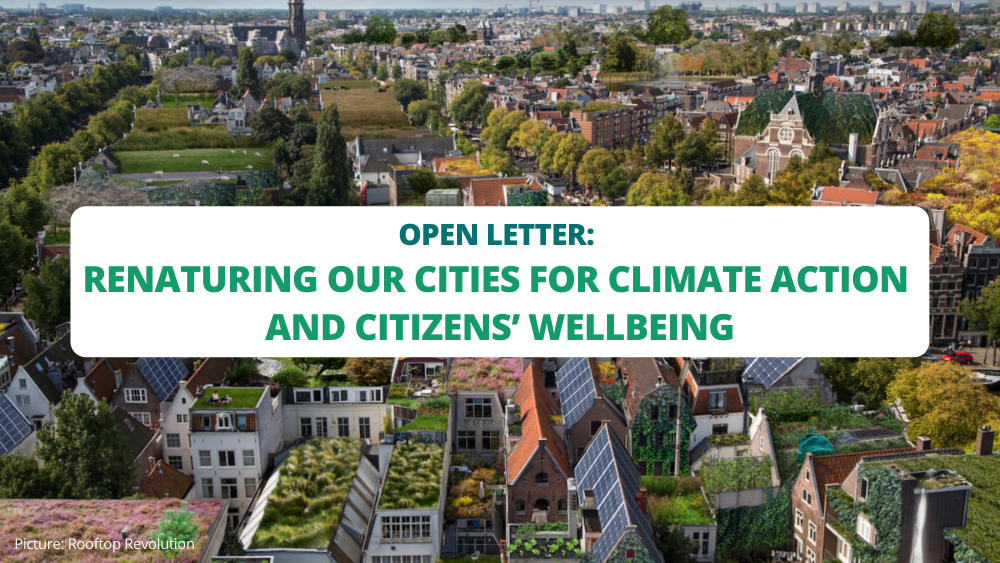
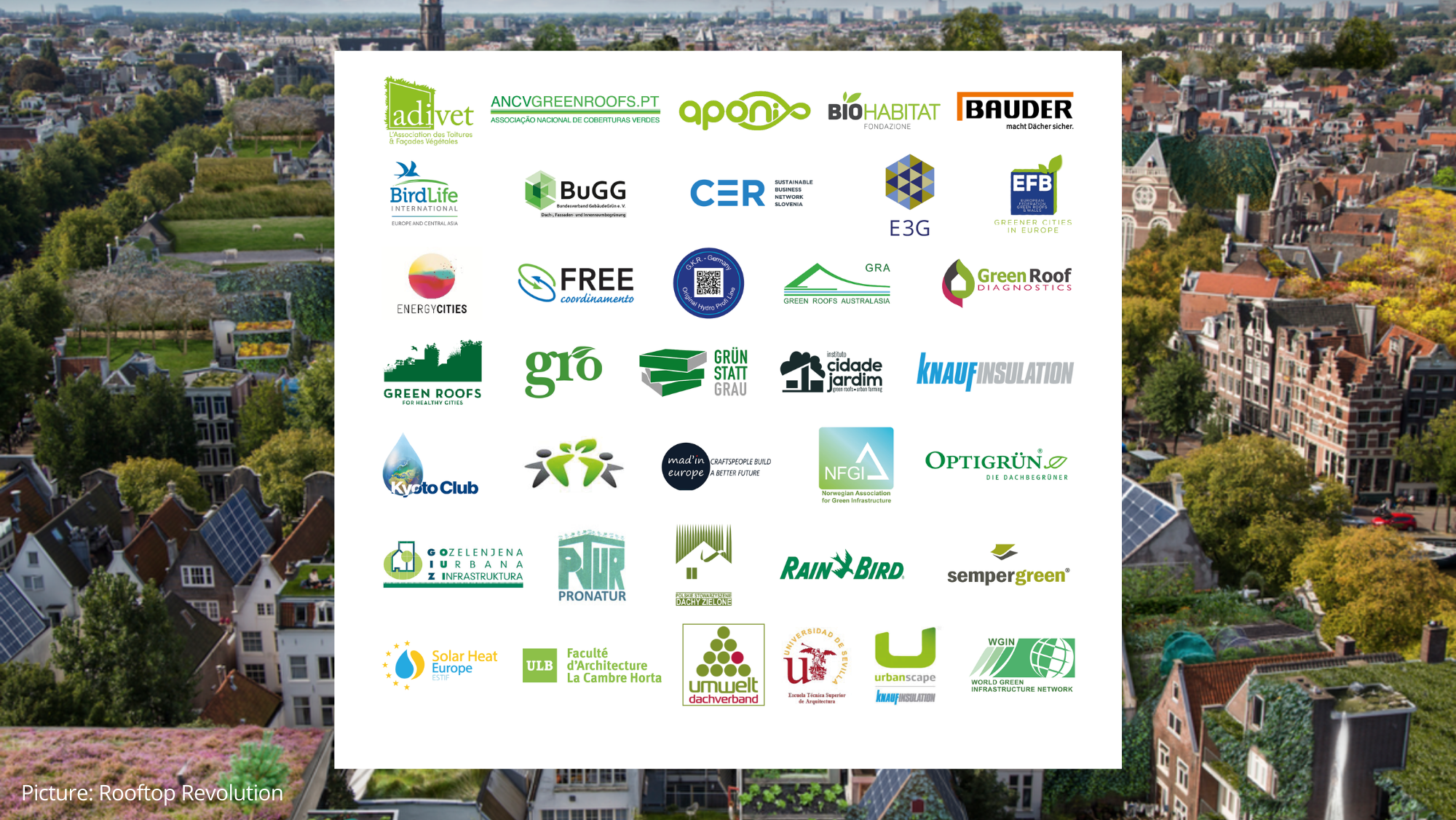
Boosting the uptake of green infrastructure through new EU rules on buildings’ energy performance can lead the way for decarbonised, healthier and more biodiverse buildings and cities, 36 organisations representing industry associations, companies, universities, think tanks and NGOs, wrote in an open letter to the European Commission.

“The built environment is a core area of the Union’s decarbonisation efforts in the next ten years. We believe that green infrastructure, with the support of the right legislative framework, can play a key role both for climate mitigation and in supporting urban areas to adapt to a changing climate”, write the co-signatories. They underline that with urban population projected to further grow in most European regions, investing in the switch from grey to Blue-Green Infrastructure must be a priority to renature our cities, reduce their carbon footprint and improve the health and wellbeing of their residents.

The 36 organisations call on the Commission to introduce in its proposal for the revision of the Energy Performance of Buildings Directive (EPBD) mandatory provisions for the integration of green infrastructure in new and renovated buildings. In particular, they recommend to:

  • Systematically integrate green infrastructure in a new Zero Emission Building standard and require combination with solar renewables installations (bio-solar roofs) such as solar thermal and/or photovoltaic energy;
  • Require commercial and public buildings, undertaking renovations, to install green roofs and walls in combination with solar renewables installations (bio-solar roofs) such as solar thermal and/or photovoltaic energy;
  • Require Member States to provide incentives for large residential buildings occupying a land surface of 400m2, and more, and undertaking renovations to install green roofs in combination with solar renewables installations (bio-solar roofs) such as solar thermal and/or photovoltaic energy.

European citizens will support these actions, as the recent lockdowns stressed the importance of access to nature and green spaces for people’s mental and physical health and general wellbeing, the letter states.

With the right legislative framework, we can make nature and green areas accessible to all by installing vegetation on billions of square meters of roofs and impervious surfaces which would be otherwise unused.

Read and download the full letter here

Note to the editor:

The European Commission is expected to present a proposal for the revision of the EU Energy Performance of Buildings Directive (EPBD) in December 2021.
Follow us on our social channels.

Follow us on the channel that best suits you to receive our latest updates!

NEW

LATEST POSTS

BuGG World Congress on Greening Buildings 2026

BuGG is organising the World Congress on Greening Buildings  in Berlin from 9 to 11 June 2026. The event will explore all aspects of green buildings (roof, façade and interior greening) with the associated topics (including urban climate, rainwater management, sustainability, city of the future) and will be accompanied by a trade exhibition. On the third day of the congress, there will be the opportunity to take part in excursions to special projects in Berlin. The World Congress on Greening Buildings offers: Speakers from various countries Topics related to roof, facade, and interior greening A wide range of exhibitors at the accompanying trade exhibition A large number of cooperation and media partnerships (associations, organizations, institutions) Knowledge transfer and contacts for building greening  Demonstration of best practice examples Knowledge transfer by experts from the sector from home and abroad in parallel series of lectures and discussion rounds Networking. Meeting point. Addressing of new target groups Cross-thematic exchange of experience between city representatives, architects, urban planners, urban water management experts, industry and real estate representatives, manufacturers, processors, researchers, associations, politicians and other interested parties. The World Congress is organised by the Bundesverband GebäudeGrün e.V. (BuGG) with the support of international and national partners such as the European Federation of Green Roof & Wall Associations (EFB).  Find more information and register here.

Webinar: Impact of military aggression in Ukraine on agroecosystems and natural phytocoenoses.

The third webinar of WGIN’s post-conflict research group on the impact of military aggression in Ukraine on agroecosystems and natural phytocoenoses will take place on the 31st of October at 14:00 CEST. Join to learn more about: Types of military operations taking place on the territory of Ukraine. Types of weapons used and their impact on agroecosystems and natural phytocoenoses. Studies of the impact of military operations on specific agricultural enterprises. Studies of the impact of military operations on agrophysical and agrochemical soil indicators in Kyiv and Chernihiv regions Transformation of natural ecosystems under the influence of military operations in Kyiv and Chernihiv regions of Ukraine. SpeakerAnna SalnikovaPhD in Ecology, Associate Professor, Department of Ecology, Radiobiology and Life Safety National University of Life and Environmental Sciences of Ukraine Register here.

Introducing the Australasian Green Infrastructure Network (AGIN)

AGIN, a recently formed national/regional association for green infrastructure advocacy, joined the WGIN family in 2024. In 2025, AGIN President Gail Hall stepped down and was succeeded by Dr. Sebastian Pfautsch.  Sebastian presents his personal journey to green infrastructure advocacy, the Australasian Green Infrastructure Network and selected projects from AGIN’s members.                                                                                                                                                                                         Dr. Sebastian Pfautsch, recently elected President, Australasian Green                                                                                                   Infrastructure Network Read the whole story about AGIN – the (not so) new kid on the block.