Latest in: green infrastructure.

Projects

Huf Haus show house

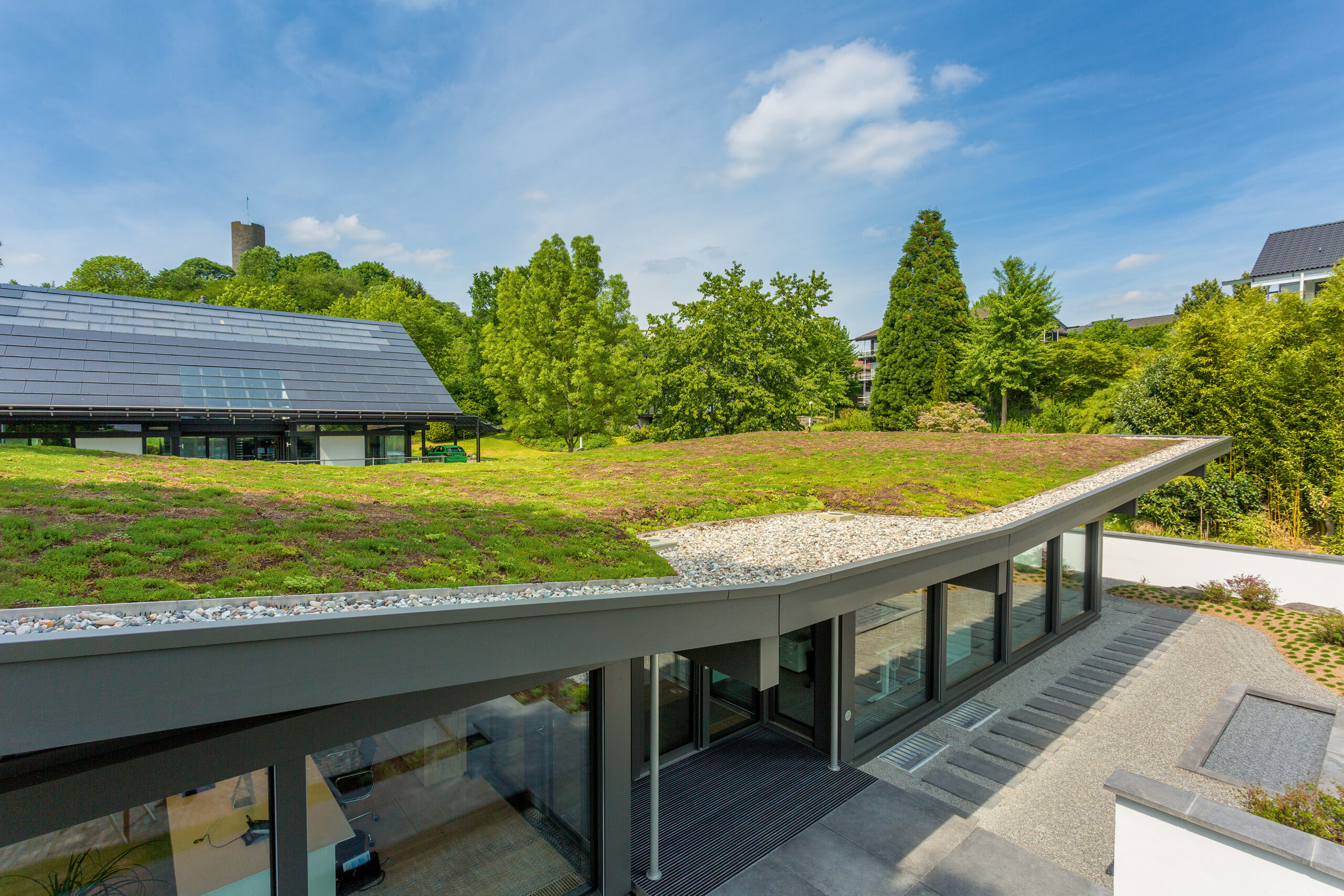
HUF HAUS Show House, Hartenfels, Germany A fascinating building rises picturesquely on a light plateau in the middle of the HUF village. The outlines of the slim wood-glass construction in the landscape are elegant. An impressive “Butterfly roof” Anyone who wonders how the classic components of timbered architecture can be interpreted even more intelligently and in an unprecedented way will find the answer in the crystal-clear HUF show house “Ausblick”: Maximum transparency characterizes the appearance of the filigree bungalow as well as the impressive “Butterfly roof” that makes the architecture of the house look even finer and more open. This slightly different roof surfaces create a barely noticeable asymmetry in the otherwise very rhythmic and stringent exterior, which immediately becomes an eye-catcher. The butterfly roof is oriented in its shape to the nature and symbolizes the beauty of a Falters. On average, Urbanscape® Green Roof System is much lighter than other regular green roof, so it can be installed also on lightweight constructions and to differently shaped and inclined roofs, what the HUF “Ausblick” house absolutely has, where traditional green roof systems are not possible. The lightweight design of Urbanscape ® Green Roof System does not compromise the structure stability and at the same time provides good stormwater buffer (stormwater management) through natural evaporation, herewith cooling the roof of the house and represent an advanced performance regarding the energy efficiency. Furthermore, the sedum roof increases the biodiversity in the urban area by providing protection and a source of food for bees, butterflies and other insects. The architecturally cleverly planned and built house with Urbanscape Green Roof on top, combined with the innovative engineering and architectural aspiration of the HUF House, creates a harmonious whole that harmonizes the life of man, house and nature – architecture in its most intelligent form. Designer: UrbanscapeYear: 2020Country: Germany owner website

Read More »
Projects

Commercial Building in retail park France

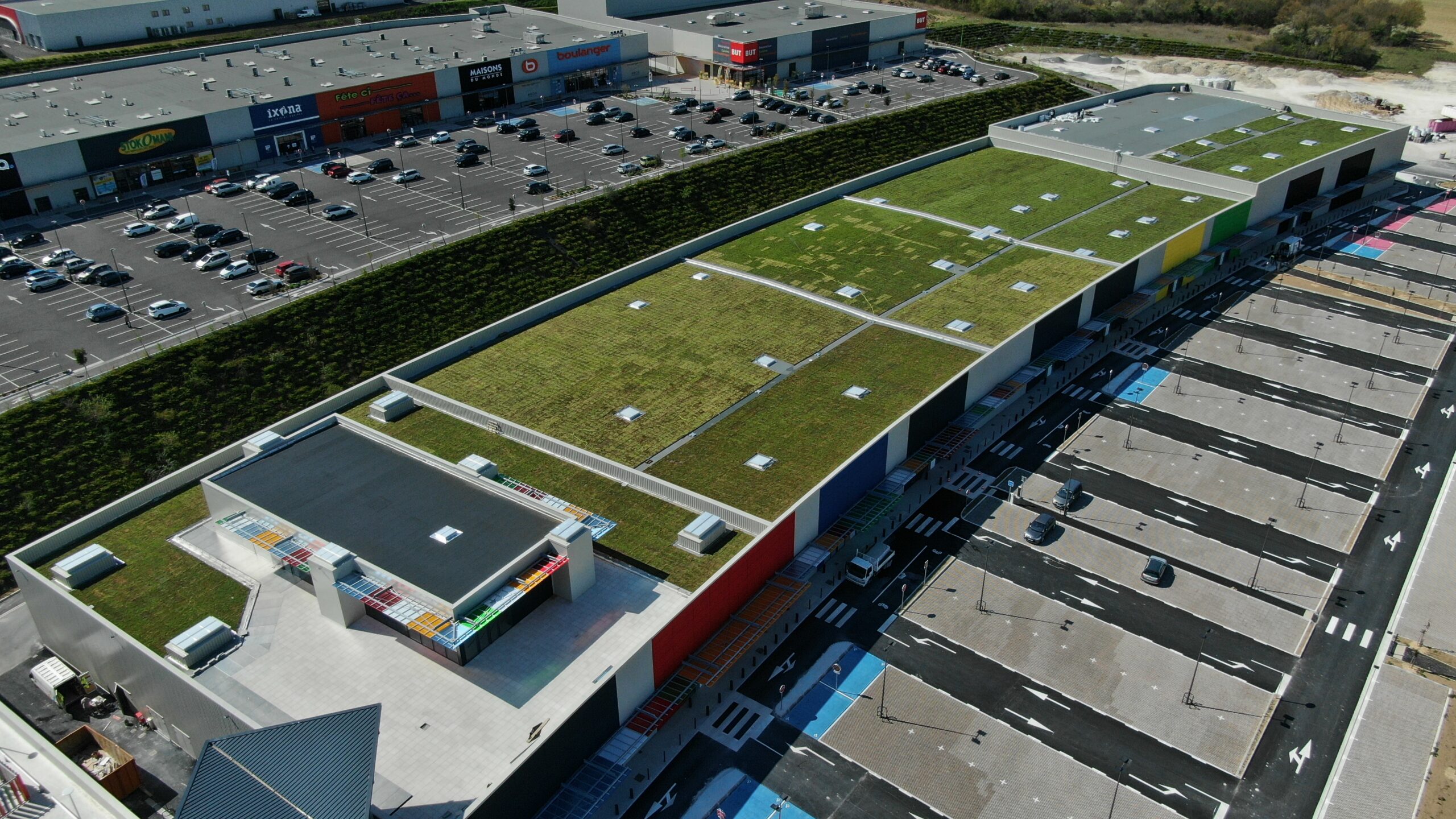
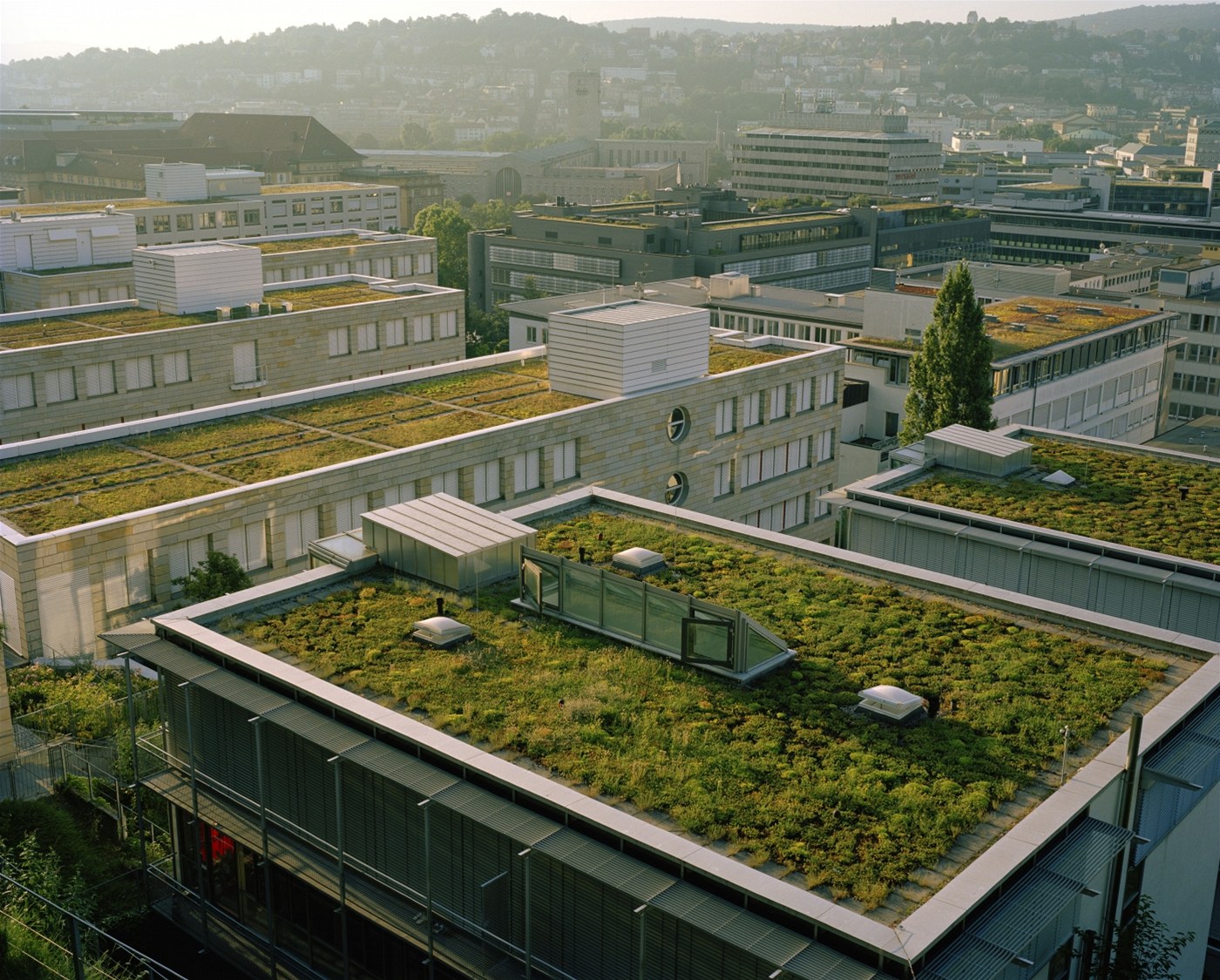
Credit for HD images to: Pikt’Air We are delighted to announce the unveiling of our biggest Urbanscape® green roof in France — a 8,300m2 installation that will save almost two Olympic-sized swimming pools of storm-water every year. A lush green impact in a desert environment like Dubai We are delighted to announce the unveiling of our biggest Urbanscape® green roof in France — a 8,300m2 installation that will save almost two Olympic-sized swimming pools of storm-water every year. This Urbanscape system will store more than 4,800m3 of rainwater every year — the equivalent of almost two 2,500m3 Olympic swimming pools of water every year. Such a high level of absorption of the new 8,300m2 roof will make a major contribution to the local environment and have a huge impact on cooling the building during summer months as well as reduce heat island effect — where the urban environment is much hotter than surrounding countryside. Green roofs such as Urbanscape can also contribute to better urban biodiversity and help absorb air pollution, which is good news in the light of European Commission review of key environmental issues facing France. The giant green roof features vegetation by the Sempergreen Group and is more than 11 times bigger than our previous Urbanscape record holder, which covers an area of 700m2. Urbanscape’s unique Performance Evaluation Tool (PET) was used to ensure the precise calculation of the roof’s water retention potential. PET analyses complex local weather data, the area’s climate history and the dimensions of the installation to produce reliable final figures. Designer: UrbanscapeYear: 2021Country: France owner website

Read More »
Projects

Slovenian Pavillon at Expo 2021 in Dubai

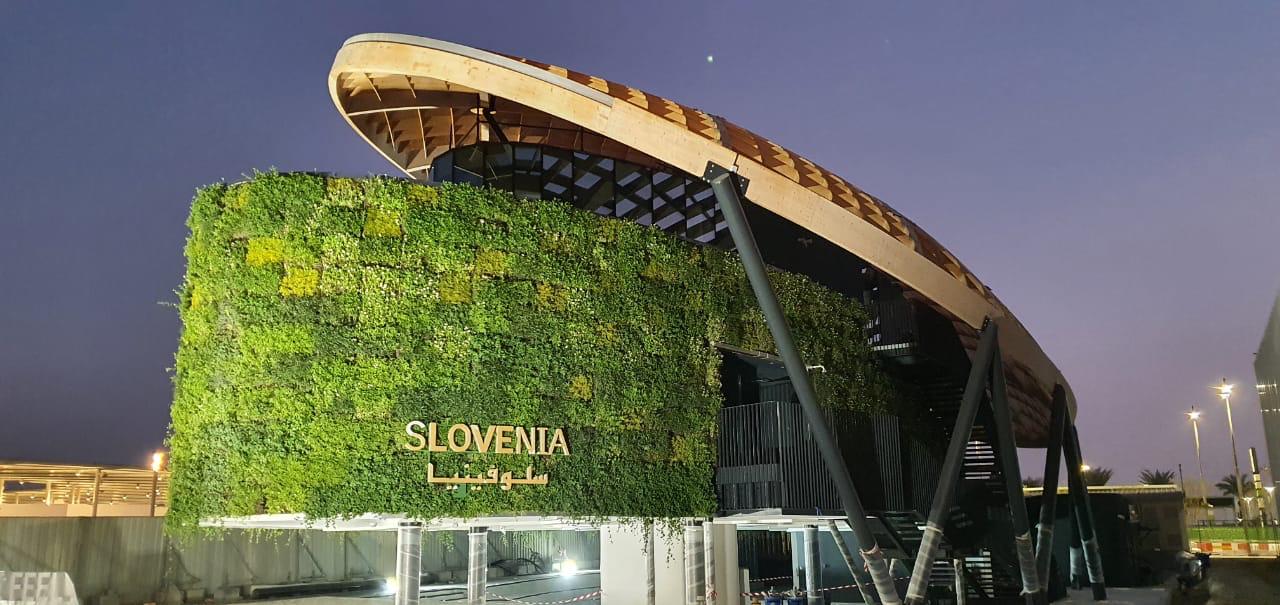
With a total surface of 460 m2 it is by far among the biggest projects in the MEA region. We are very proud to be a part of the Slovenian pavilion at EXPO 2021 in Dubai, which showcases Slovenia as the green heart of Europe, situated at an important European crossroads combining natural elements: water, forest and wood. It features an eye-catching 6 meters high Urbanscape® Green wall with 45,000 plants. The wall is designed in 11 varieties of locally grown plants in green shades to represent Slovenian forests. The Slovenian Pavilion and its Urbanscape® Green wall is unique for its lush green impact in a desert environment like Dubai, UAE. With a total surface of 460 m2 it is by far among the biggest projects in the MEA region. The Green Wall covers an area of 460 m2, with about 1500 installed green wall panels (30 are custom made) and 45.000 hand-planted local plants selected by the client. The load-bearing structure of green wall panels is represented by more than 1000 meters of various profiles. A lush green impact in a desert environment like Dubai The project started in the spring of 2020 and it was definitely specific from several perspectives. It required combining different approaches and a lot of coordination. We had been challenged to find a solution that would represent Slovenia and would at the same time fit in the local environment and climate.Around the building there was a pool area representing Slovenian lakes as our natural treasure. This meant our solution had to be hydroponic based and not soil based to avoid small soil particles leaching in the pool area which could stain the water. The installation of the profiles took place in extreme conditions, at extremely high outdoor temperatures. During the installation, the planted plants were already thriving quite nicely which was also noticed by swarms of grasshoppers. Luckily for us, they fed only on one plant species which meant we had to replant “only” a few thousand plants. The Green Wall covers an area of approximately 500 m2, with about 1,500 installed green wall panels (30 are custom-made) and 45,000 hand-planted local plants selected by the client. The load-bearing structure of the green wall panels is represented by more than 1,000 meters of various profiles. It weights up to 45 kg/m2 when fully saturated with water.  The Urbanscape® Green wall at Expo 2020 is hydroponic based. The growing media used in the green wall is rock mineral, as a light and inert substrate, where nutrient dosing is easier to regulate and the environment is more controlled than in conventional soil substrate mixtures; it is a pH-neutral substrate (7). The rock mineral growing media has an enormous water retention capacity (up to 90% of volume) and is therefore even more suitable for growing plants in arid climate.We are using the most advanced irrigation systems for watering the green walls. The average water consumption on this project will range from less than 2 liters/m2 in winter, and up to 4 liters/m2 in summer (with temperatures exceeding 40°C). Designer: UrbanscapeYear: 2021City: Dubai owner website

Read More »
EU chapter

European Green Infrastructure Day 2021

Policymakers, experts and representatives of national associations and green infrastructure industry discussed the state of affairs of urban green infrastructure in the European Union in a unique policy conference. Urban green infrastructure, such as vegetated roofs and walls, can greatly support green economic recovery and Europe’s transition to a more sustainable and resilient society. This clearly emerged from the insightful discussions of the first European Green Infrastructure Day, hosted by the EU Chapter of the World Green Infrastructure Network throughout 27 May 2021.  The panels focused on urban biodiversity, green and efficient buildings, financing green infrastructure, exchanging best green roofs practices across Europe, green infrastructure and climate adaptation, and how to build more sustainable, healthier and human-centred cities.  Among the speakers were:  View the full programme here.You can watch the event recordings below and on our YouTube channel.  recordings:

Read More »
EU chapter

WGIN selected as partner of the New European Bauhaus

The World Green Infrastructure Network (WGIN) has been selected as official partner of the New European Bauhaus (NEB). The New European Bauhaus initiative aims to connect the European Green Deal to our living spaces by calling on all Europeans to imagine and build together a sustainable and inclusive future that is beautiful for our eyes, minds, and souls. Being inspired by the 1920s Bauhaus current, that synthesized scientific, technological and artistic innovation and transformation, the NEB pushes for cross-disciplinary debates and ideas to rethink our current practices and rebuild our places according to the principles of, sustainability, quality of experience and inclusiveness. During the co-design phase of the initiative, the New European Bauhaus teamed up with inspiring networks, associations, and organisations that are committed to act as promoters and key interlocutors throughout the project. WGIN is proud to join the community of NEB partners, which include leading architecture, design and urban planning schools, universities, NGOs as well as networks of cities, mayors and local authorities. Through the inputs of contributors and partners, the NEB co-design phase will lead to the launch of at least five concrete pilot projects in different EU Member states, as innovative projects bringing the new Bauhaus concept to life. Green infrastructure, such as green roofs and walls, are a perfect example of combining sustainability with aesthetic and inclusiveness and can greatly help reconnect nature and human beings in cities and urban areas across Europe. The full list of official partners can be found here

Read More »
Projects

DF French School

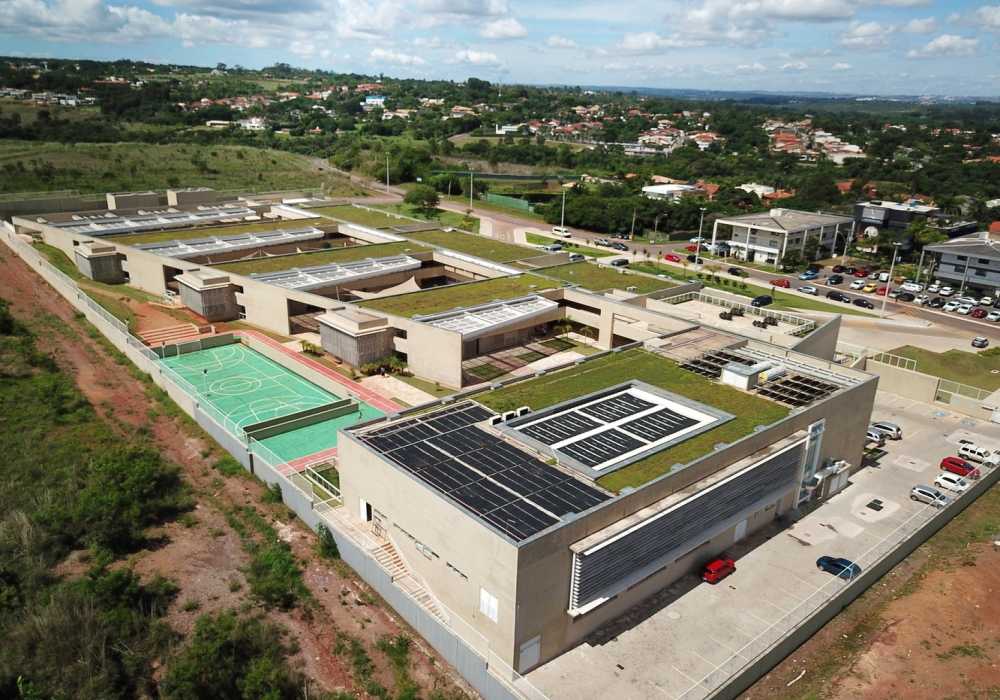
In an educational building. Chosen in an international Brazil-France competition, the project hosts the French School located in Brasília, Brazil’s capital city. The desing integrates harmoniously with the surroundings, as it respects the mold defined by the slope of Brasília’s urban design. The building presents a modular rhythm with several voids that allow the user to constantly observe the external landscapes, contemplating green spaces and sunlight. Biophilia, highlighted in the several green roofs dressing the building rooftops, increases motivation, improves users’ mood and performance and does not limit learning to the classroom alone. A community garden Green Roof/Wall System: Single Source Provider Roof/Wall Size: 3300 sqm Roof Accessibility/Amenity: Yes Number of Greenroofs / Walls on Property: 1 Roof/Wall Slope: 3 Open to the Public: Yes Designer: Instituto Cidade JardimYear: 2020City: Rio de Janeiro owner website

Read More »
Projects

Dubai Opera Garden

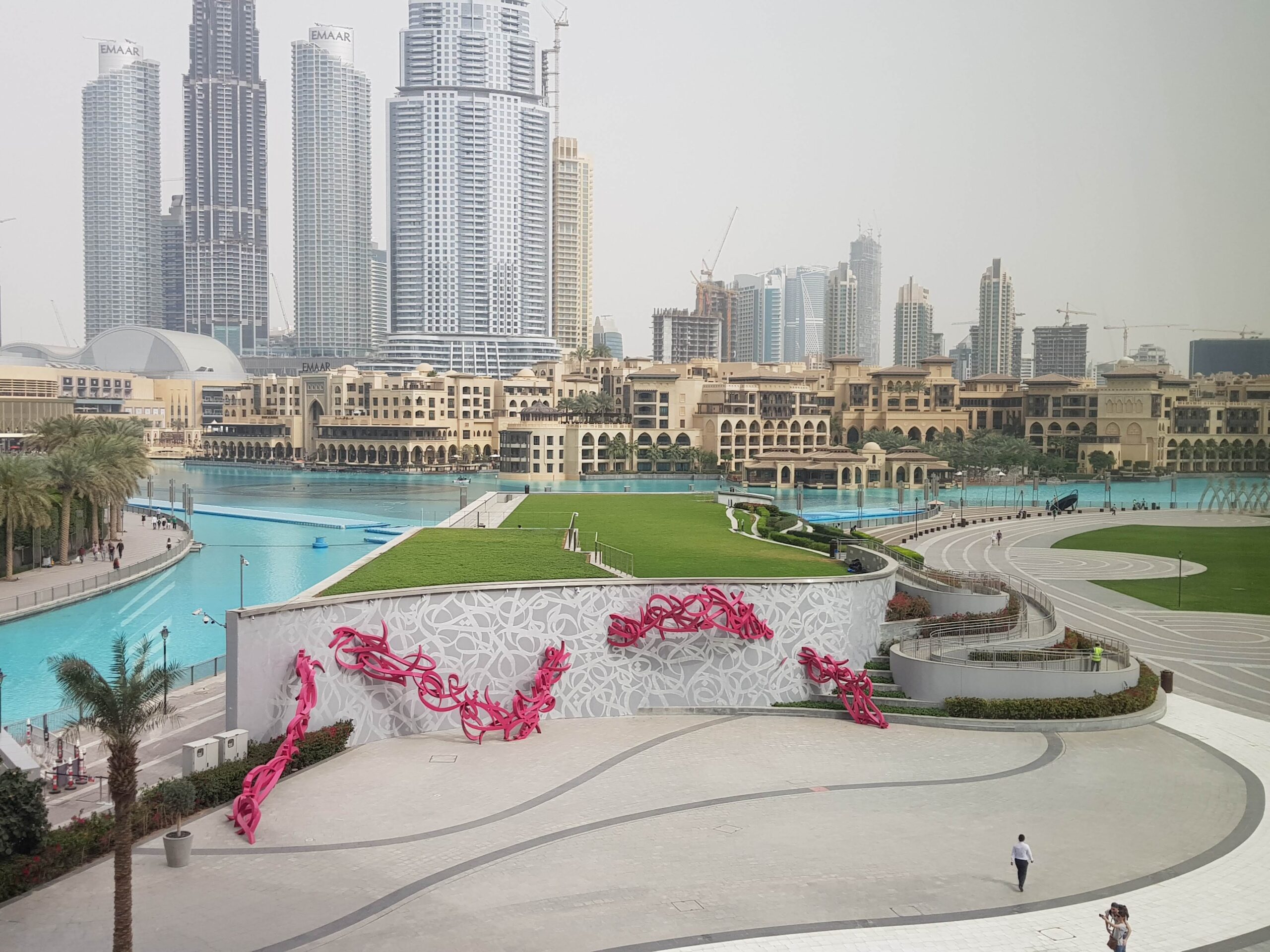
Dubai Opera Garden. This Utility House next to Dubai Opera has been facing a challenge of weight restrains as originally it was not planned to include Green Roof which will serve also as a venue place. The traditional green roofs installed in Dubai are always extremely heavy as they use between 30 – 50 cm of local sweet soil which brings the weight up to 750 kg / m2. A semi intensive green roof system  With local team we have developed a semi-intensive green roof system which allows better plant growth than traditional green roofs. Utilizing combination of inorganic rock based multipurpose growing media in thickness of 4 cm allowed us to use only up to 10 cm of local sweet soil on top which consequently opened an opportunity to do the installation on this roof and not compromising the structure stability.  Green Roof/Wall System: Single Source Provider Number of Greenroofs / Walls on Property: 1 Roof/Wall Size: 3000 The provided system has lowered the weight of the green roof to less than 150 kg/m2 but at the same time also reducing the irrigation needs for up to 50%. The entire design has been redesigned to actually become a venue place where people can meet and enjoy the views over the Dubai Music Fountain. Roof/Wall Slope: 2-5 Roof Accessibility/Amenity: Yes Open to the Public: Yes Designer: NLME ConsultantsYear: 2017City: Dubai owner website

Read More »
Must Read

Key Definition: Green Infrastructure

Green Infrastructure: There is an international movement towards the regeneration of urban landscapes due to an increased awareness about human impact on the environment. As urban development and populations increase there is a greater demand to improve upon the planning mistakes of the past. There is a movement towards mitigating the impact of impermeable urban infrastructure materials such as concrete by including permeable pedestrian paths, bio-swales, street planting, green roofs, green walls, rejuvenated wetlands, urban forests, parklands and other vegetative systems into the urban fabric. Green Infrastructure refers to any vegetative infrastructure system which enhances the natural environment through direct or indirect means. It describes the network of green spaces and water systems that deliver multiple environmental, economical and social values and benefits for sustainable urban development. Green Infrastructure includes green roofs, living walls, parks and reserves, backyards and gardens, waterways and wetlands, streets and transport corridors, pathways and green corridors, squares and plazas, sports fields and cemeteries. Green Infrastructure provides and connects vital ecosystem services which contribute or enhance urban sustainability and the natural environment. GI: a strategically planned network of natural and semi-natural areas with other environmental features designed and managed to deliver a wide range of ecosystem services. It incorporates green spaces (or blue if aquatic ecosystems are concerned) and other physical features in terrestrial (including coastal) and marine areas. On land, GI is present in rural and urban settings ie green roofs, living walls, rain gardens, parks, community gardens, canopy cover, parklands, urban forests. Green Infrastructure Benefits include storm-water management, climate adaptation, mitigation of Urban Heat Island Effects, enhanced biodiversity, carbon sequestration, enhanced air quality, sustainable energy production, enhanced storm water quality returning to the natural environment and to deep soil profiles, improved anthropocentric functions such as increased quality of life and improving biophilia. Green Infrastructure (GI) / Enhancing Natural Capital Overview: Human society depends on the benefits provided by nature such as food, materials, clean water, clean air, climate regulation, flood prevention, pollination and recreation[1]. However, many of these benefits, frequently referred to as ecosystem services, are used as if their supply is almost unlimited and treated as free commodities whose true value is not fully appreciated. This can result in public authorities turning to built infrastructure — grey infrastructure — as a substitute for natural solutions to problems such as flood prevention. In Australasia we consequently continue to degrade our natural capital, jeopardising our long-term sustainability and undermining our resilience to environmental shocks. As stated in the Resource Efficiency Roadmap[2], the failure to protect our natural capital and to give a proper value to ecosystem services will need to be addressed as part of the drive towards smart, sustainable and inclusive growth.. The EU roadmap identifies investing in GI as an important step towards protecting natural capital. All AUS government tiers need to collaborate and establish a GI Commission to develop a GI strategy[5]. The EU Resource Efficiency Roadmap states that their Commission will draft a Communication on GI. This document is the Commission’s response to these commitments[6]. It sets out how EU-wide action can add value to the local initiatives currently underway. What is Green Infrastructure (GI)? GI is a successfully tested tool for providing ecological, economic and social benefits through natural solutions. It helps us to understand the value of the benefits that nature provides to human society and to mobilise investments to sustain and enhance them. It also helps avoid relying on infrastructure that is expensive to build when nature can often provide cheaper, more durable solutions. Many of these create local job opportunities. Green Infrastructure is based on the principle that protecting and enhancing nature and natural processes, and the many benefits human society gets from nature, are consciously integrated into spatial planning and territorial development. Compared to single-purpose, grey infrastructure, GI has many benefits. It is not a constraint on territorial development but promotes natural solutions if they are the best option. It can sometimes offer an alternative, or be complementary, to standard grey solutions.

Read More »
EU chapter

European Parliament highlights green roofs for climate change adaptation

December 2020 – In a resolution adopted on 17 December the European Parliament recognised the key role of green roofs and walls to minimise the adverse impact of climate change. The resolution says that green roofs and walls can contribute to cooling high urban temperatures, retaining and reusing rainwater and producing food. Urban green infrastructure can also help reduce air pollution, improve the quality of life in cities, reduce risks to human health, and protect biodiversity, including pollinators. MEPs supported any targeted initiatives to seize this potential, including the development of urban strategies and better spatial planning. Moreover, they called for infrastructure such as roads, parking lots, train tracks and power and drainage systems to be made biodiversity and climate-proof. The Parliament’s resolution on adaptation to climate change will provide input on a new EU Adaptation Strategy, expected from the Commission in 2021 as part of the European Green Deal. About usThe EU Chapter of the World Green Infrastructure Network (WGIN) aims to increase the awareness of the European Union policymakers about the multiple benefits of green infrastructure, with a specific focus on Building Integrated Vegetative Systems (green roofs and living walls). WGIN brings together national and regional industry associations to promote the development of the green infrastructure industry through training, research, advocacy for new policy, conferences, publications, and promotion.

Read More »
Projects

Caixa Forum Museum vertical garden

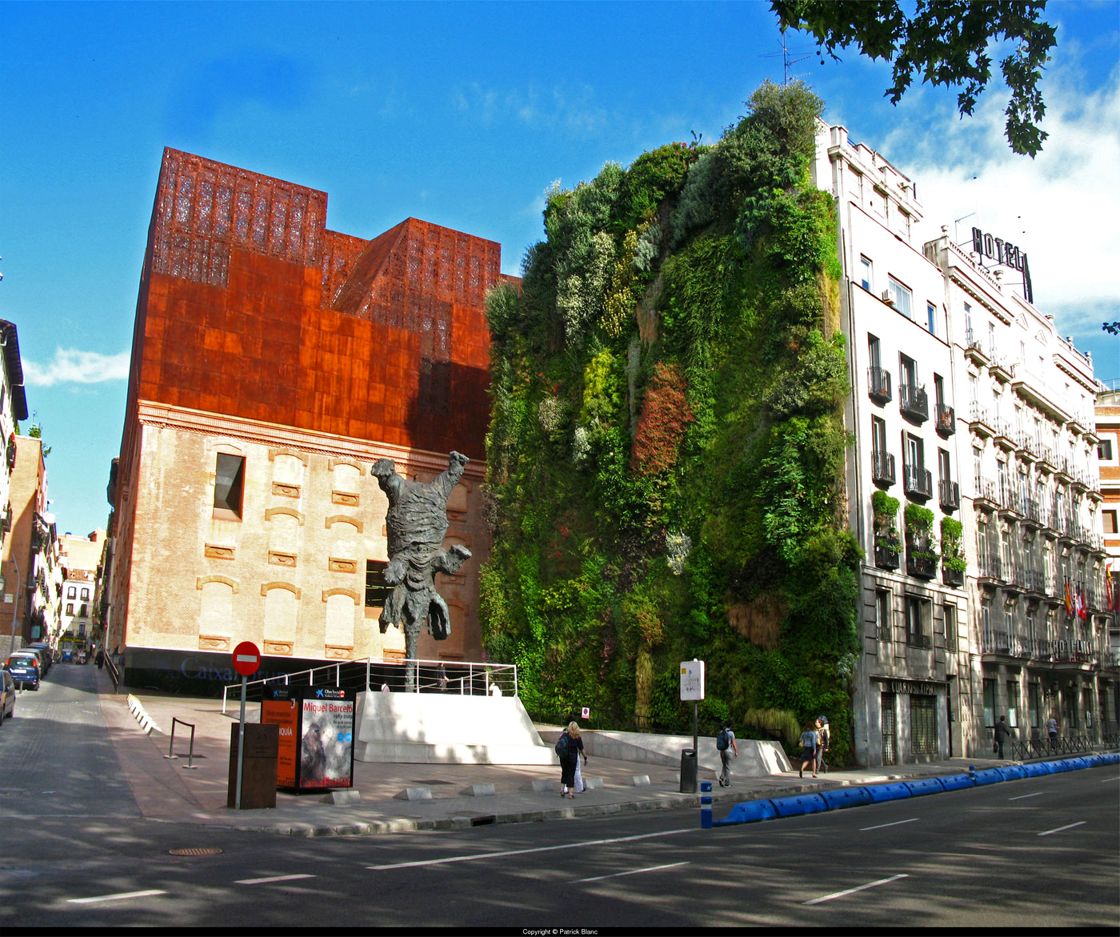
Caixa Forum Museum. Acquired by the Caixa Foundation in 2001, the Caixa Forum Museum is a modern art gallery and a refurbished 1899 power station. Located on the Avenida Prado across from the Prado Museum and botanical gardens, and in close proximity to the Reina Sofia and the Thyssen-Bornemisza Museums, exhibitions feature works from the foundation’s permanent collection (some 700 pieces by artists from the 1980s to the present), as well as temporary displays from other museums and foundations. By Patrick Blanc & his “Le Mur Végétal” system Situated in the heart of the Madrid’s cultural district, the Caixa Forum Museum vertical garden was designed and created by Patrick Blanc using his Le Mur Végétal system. The adjacent square is accessible to the public who can walk up, touch, and explore over 15,000 plantings on the hydroponic living wall. Nearly 300 different species were chosen by Patrick Blanc who had to keep in mind Madrid’s very demanding seasons – very hot in the summer and cold in the winter. Using Patrick Blanc’s Le Mur Vegetal system, the set up starts with a sheet of polyurethane, plastic mesh and a non-biodegradable felt-type blanket with pockets which are used to pot the plants. The plant roots develop extremely well and the total vertical garden weight is estimated at 30 kilos per square meter. The exact number of plants within the living wall is unknown due to replacements and changes of species over the years. The figure is between 15,000-17,000 plants, which depends on season and selected varieties adapted to the region. Species include Dianthus deltoids, Lonicera nitida, Yucca filamentosa, Cistus purpureus, Cedrus deodara, Pilosella aurantiaca, Arenaria montana, Bergenia cordifolia, Cornus sanguinea, Lonicera pileata, Sedum alpestre, Campanula takesimana, Garrya elliptica, and different Begonias. Since the building where the wall is located does not belong to Caixa Forum, special care has been taken to avoid moisture problems by contact or condensation. The polyurethane sheet is anchored to the wall of the building, leaving a gap that allows passage through its interior for monitoring of the irrigation and fertilization system, which is zoned at different heights. It constitutes a network of pipes arranged in layers with emitters, fed by a pump. Irrigation is vertical and layered, using gravity, wetting the wool and spreading by plants; all of this is automated. The runoff that occurs along the leaves and stems can cause water loss – at ground level, there is a recovery system and subsequent recirculation which continues to be tweaked. Remember that the climate of Madrid is very demanding, and a failure of water in the summer may cause the loss of many plants. Green Roof/Wall System: Single Source Provider Number of Greenroofs / Walls on Property: 1 Roof/Wall Size: 450 Roof/Wall Slope: 90 degrees Roof Accessibility/Amenity: Yes Open to the Public: Yes Designer: Patrick BlankYear: 2001City: Madrid owner website

Read More »

Follow us on our social channels.

Follow us on the channel that best suits you to receive our latest updates!