WGIN signs joint statement on the Urban Wastewater Treatment Directive

WGIN signs joint statement on the Urban Wastewater Treatment Directive

Aerial view of rooftop garden in urban residential area. ID: 1361273999

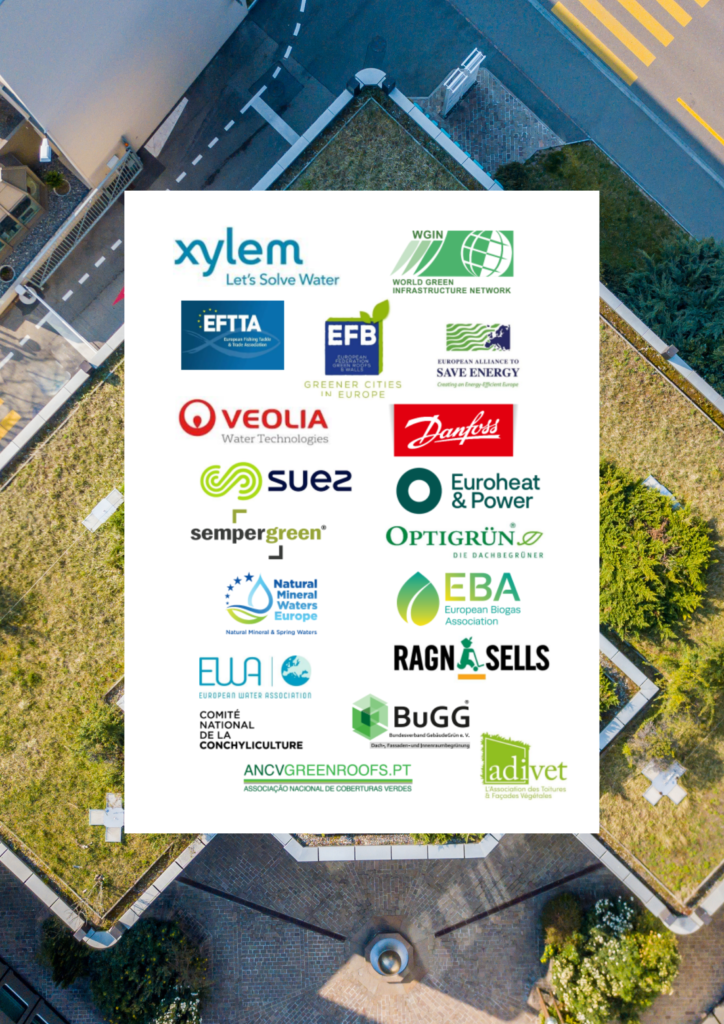
22 January 2024With the interinstitutional negotiations on the Urban Wastewater Treatment Directive (UWWTD) in full speed, WGIN joined forces with 18 organisations to call upon co-legislators to adopt an ambitious recast of the directive.

The signatories, non-profit association, businesses and business associations underlined the opportunity that represents the revision of this 30-year-old legislation to adapt it to modern water challenges. In particular, the letter stresses that many technical advances, such as green infrastructure solutions, have not yet been mainstreamed for the reduction of wastewater treatment needs.

Therefore, the signatories call for, among others, “Ensuring a timely introduction of integrated urban wastewater management plans that prioritise green and blue infrastructure to climate-proof cities and reduce pollution from urban wastewaters and runoffs”.

The letter comes ahead of the next trilogue meeting on the UWWTD, planned for the 29 January, which is expected to significantly progress negotiations on the revised directive.

Read the full letter here.

Follow us on our social channels.

Follow us on the channel that best suits you to receive our latest updates!

NEW

LATEST POSTS

Save the date: World Green Infrastructure Congress 2026

Join us at: World Green Infrastructure Congress BARCELONA 2026 October 27–29: CCIB – Parc del Fòrum, Barcelona (Spain) October 30: University of Lleida – Catalunya (Spain) Organized by: University of Lleida Co-organized by the World Green Infrastructure Network (WGIN). Visit WGIC26.Barcelona

WGIC26 – Closing the gap between communities of practice for green infrastructure and health

  WGIN’s mission statement is “The World Green Infrastructure Network advocates for optimal use of green infrastructure in the urban built environment for the health and well-being of people and the planet.” WGIN has in recent years acknowledged a gap in the attention we’ve given to the human health and well-being benefits of urban green infrastructure. The next World Green Infrastructure Congress, WGIC26, in Barcelona in October 2026 will address this gap by dedicating one of its three thematic tracks to health and well-being. Our congress hosts, the University of Lleida, expect this track will contribute to increased focus on health and well-being within our community of practice, and will hopefully contribute to increased interdisciplinary collaboration with the health sector. WGIN members and stakeholders are encouraged to support and help distribute the soon to be published call for papers for WGIC26 through their websites, social media and personal networks and to assist in recruiting the health community to join us in Barcelona. Through stronger interdisciplinary collaboration we can foster greater recognition and support for urban and building integrated green infrastructure and its relevance in health research, policies and practices. The socioeconomic system seen through the One Health lens. Source

Green Street Standards – A Breakthrough in Urban Green and Blue Infrastructure (Wrocław, Poland)

Local stormwater management in a rain garden collecting runoff from S. Drabika Street, Wrocław (Poland). (Photo: J. Rubaszek). Planning and designing green and blue infrastructure (GBI) as an integral part of urban streets – as is widely recognised – requires support in terms of organisation, funding, legislation and social awareness. As demonstrated by the case of Wrocław – one of the fastest-growing cities in Poland – standards can serve as an effective tool for supporting the implementation of GBI. These standards include guidelines and model solutions that integrate spatial, technical, and environmental aspects. Before establishing these standards, introducing green and blue infrastructure to Wrocław’s streets – even in newly planned projects – posed significant challenges. The main obstacles included insufficient space, the location of underground utility networks in areas that could otherwise accommodate trees, and relatively low public awareness of the importance of creating proper conditions for vegetation, especially large street trees. Read the full article here.