Latest in: WGIN-mockup.

News

Blue-Green Infrastructure Virtual Symposium – Technologies For Managing Stormwater

Learn how to plan & design efficient blue-green systems to mitigate the effects of urbanization and the economic justifications to invest in blue-green technologies. Blue-Green Infrastructure projects are gaining popularity due to their effectiveness in mitigating urban flooding while also addressing a number of other challenges including biodiversity, urban heat island, air quality and more!  Learn how to plan and design efficient blue-green systems to mitigate the effects of urbanization and the economic justifications to invest in blue-green technologies. Designers will share captivating designs and case studies that dispel current myths about blue-green roofs and how they enhance the urban landscape while improving resilience and human health.  Pending approval for 4 AIA, ASLA, and GRP CEUs  check this site out Admission: $59 USD  Admission Date: February 23, 12:00 PM – 5:00 PM EST  Date

Read More »
Projects

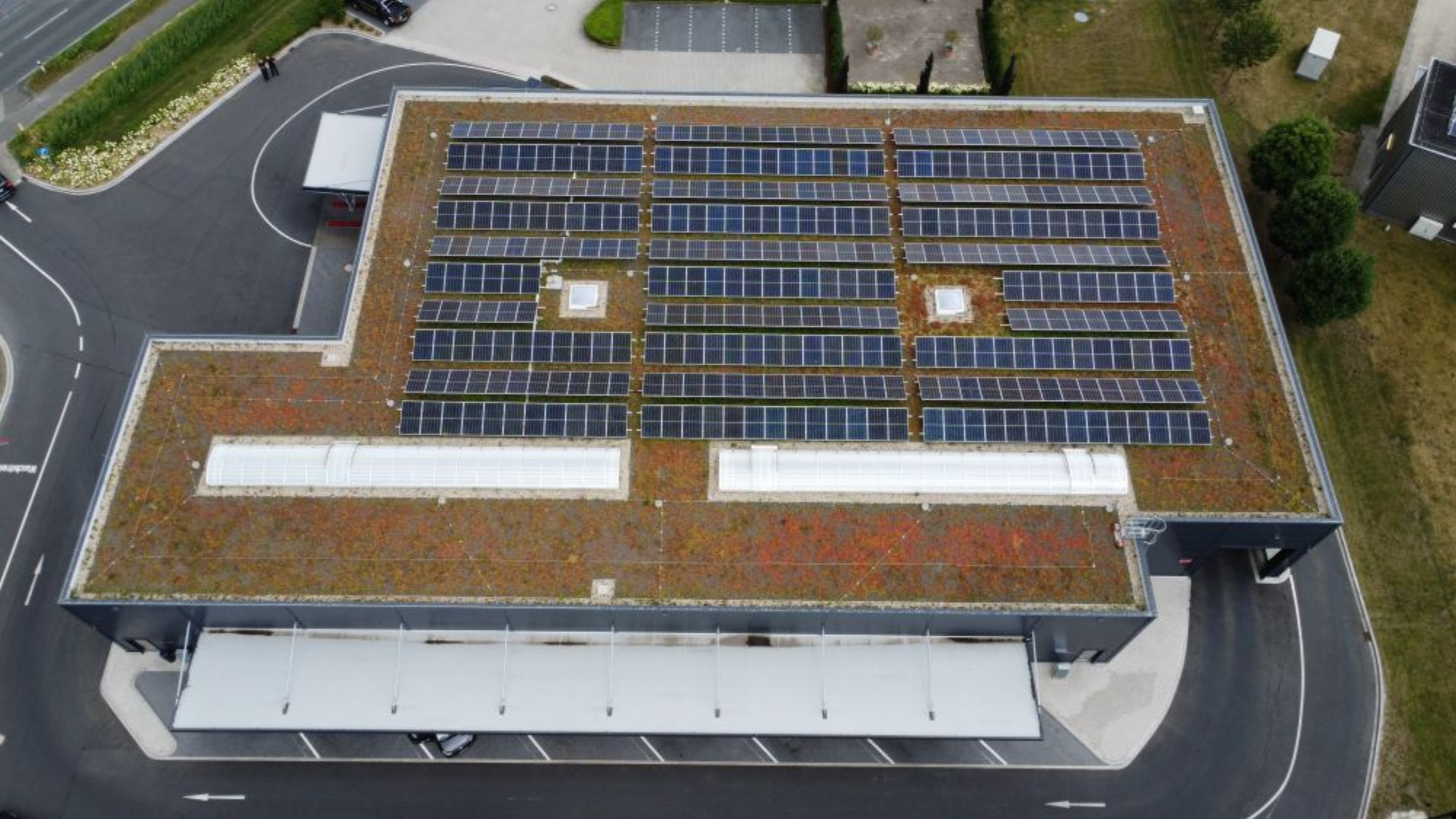
In harmony with nature – the first car wash with intelligent rainwater management and a solar green roof

An unusual car wash has been available in Ochtrup for some time now: The wi-wash car wash on Hauptstraße is equipped with a greened hall roof, offering many advantages. An unusual car wash has been available in Ochtrup for some time now: the wi-wash car wash on Hauptstraße is not only impressive because of its technically sophisticated and high-performance equipment, which offers everything needed for the perfect washing and care of vehicles. In harmony with nature, the entire hall roof has also been greened and equipped with a solar system. This has many advantages. The car wash, which belongs to the Wischemann Group, is probably the only car wash whose roof is completely greened. The idea came from Optigrün international AG, the market leader in green roofs and a long-standing customer service. For many years, Wischemann has been producing a large part of the drainage panels developed by Optigrün for their green roof systems. It was a logical consequence for Ingo Wischemann, builder and owner of the Wischemann Group, the most important plastics specialist for innovative thermoformed parts and thermoforming processes in Europe, to use the advantages of green roofs for the washing park and thus to build sustainably at the same time. Intelligent rainwater management The greening of the hall roof was carried out using the water-retention roof system developed by Optigrün. The system for different types of green roofs can retain large amounts of rainwater – in this case up to 75,000 litres. The WRB 80F water-retention boxes used here are 80 mm high plastic hollow bodies that are used in the drainage level. With the help of the Optigrün Smart Flow Control, an intelligently server-controlled throttle, a defined outflow of the water as well as a permanent water accumulation in the retention boxes is determined. In this way, the retention area is divided into a temporary and a permanent water reservoir. The stored water is transported via capillary bridges into the fleece that lies on top of the retention boxes. The water is distributed over the entire surface via the fleece and keeps the overlying substrate layer moist. Thus, the precipitation water is available to the vegetation for evaporation or can also be used in the washing park. The temporary storage tank in the retention area is emptied with a long delay when needed – for example, during a predicted rain event – via the throttle operated by an intelligent control system. In this way, low discharge restrictions can be adhered to and protection against flooding is provided even during rain events with large annualities.  Advantages of a green roof A green roof not only binds CO2 and particulate matter, but also acts as insulation. In winter it protects against the cold and in summer the building and the surrounding air do not get as hot as with ungreened buildings. In addition, a green roof protects the roof cladding from damage caused by the effects of heat/cold and hail. Evaporation via the drought-resistant vegetation contributes to maintaining the natural water balance and at the same time lowers the ambient temperature. In addition, the sewer system is relieved, drains can be reduced, sewer pipes can be made smaller and stormwater overflow basins can be saved. A retention green roof also has a positive effect on biodiversity and the microclimate. In addition, the green roof provides a habitat for flora and fauna. Green electricity from the roof for the charging columns In terms of sustainability, however, the construction of the car wash was not just about using rainwater. Rather, a photovoltaic system was also installed on the roof. The combination of green roof and photovoltaics does not represent a conflict of objectives but is the ideal symbiosis for a sustainable development. Thus, the roof area of the car wash not only offers space for the expansion of renewable energies. Rather, the combination of green roof and solar roof increases the economic and ecological functionality of the building. This is because the efficiency of energy generation from solar modules decreases with increasing temperatures. The green roof, however, increases the efficiency because the temperature of the modules rises more slowly due to the evaporative cooling of the vegetation. The electricity, which is generated in a resource-saving way, can be stored on site by six storage units so that it can be used as needed or fed into the electricity grid. For example, the temporarily stored electricity can be used by customers at the e-charging station while they are vacuuming. This is an innovative solution for solar green roofs. The Optigrün-Solar WRB system used on the roof of the car wash is a load-bearing solar elevation that is fixed in place by the green roof structure to prevent wind suction. Thus, no penetration of the roof is necessary, which in turn avoids damage to the roof cladding. The Optigrün-System Solar WRB consists of an aluminium base plate on which the water retention box is placed. Brackets used as module supports are inserted and screwed into the supports of the base plate. The individual elements are connected with the help of quick-assembly module rails. The solar elevation is then ballasted with substrate. The clear advantage of ballasted solar elevations is that the roof cladding does not have to be penetrated. Damage to the roof cladding and consequent repair work or leaks are thus ruled out. For care and maintenance work, the Optigrün- Optisafe ALS, a rope-guided restraint system, was used as fall protection. Up to two people with their protective equipment can be suspended here at the same time. The washing park in Ochtrup shows in an impressive way that with good planning and the right system the effects of climate change can be mitigated. More details: Owner: Wischemann Group Planning: Dorin-Immo GmbH & Co. KG Execution of Greenroof: Marcel Nadorf GmbH Supply of solar green roof and planning support: Optigrün international AG. © Optigrün international AG © Optigrün international AG © Optigrün international AG © Optigrün international AG Project details: Car Wash

Read More »
EU chapter

EU Policy Innovations Support Green Infrastructure Amid Climate Transition

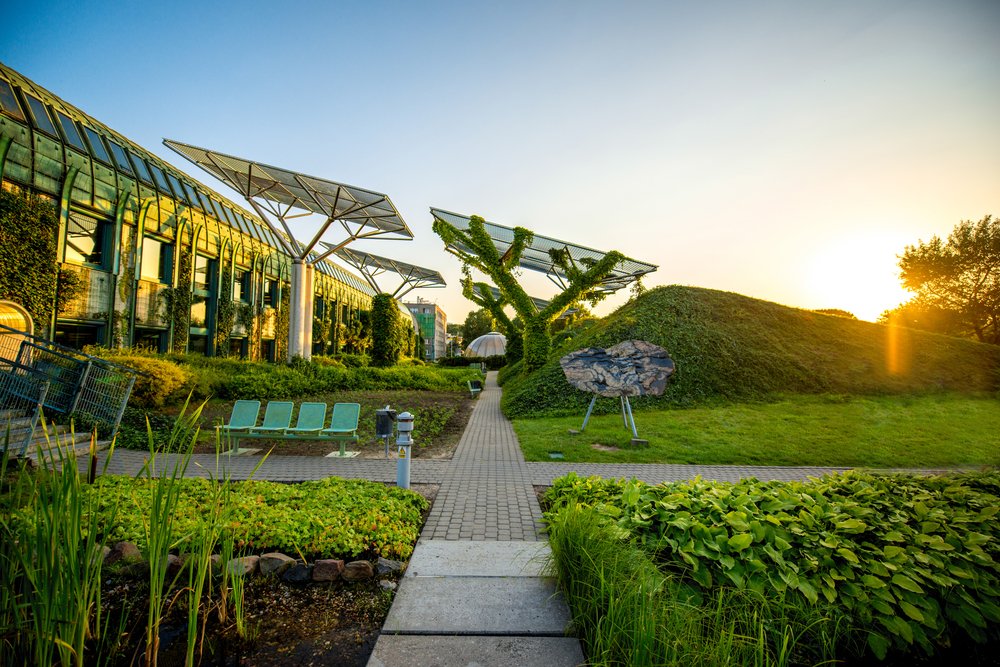
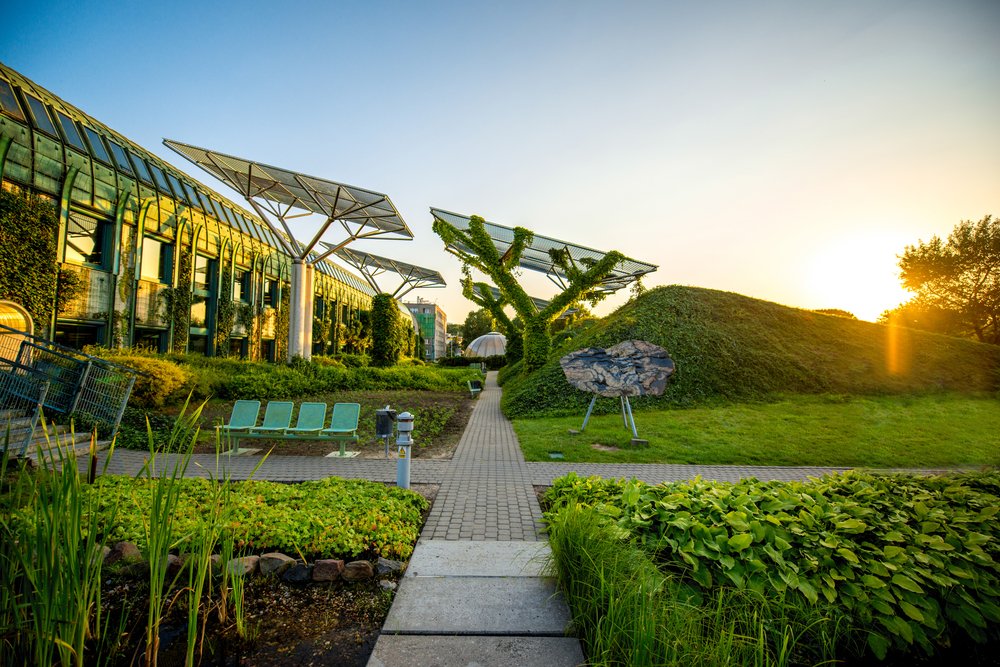
University of Warsaw library with rooftop gardens in Poland. ID: 306313655 We live in a time of unprecedented social, environmental, and economic change. To manage and hopefully guide the transition, and to address the multiple challenges it raises, particularly when it comes to the climate, we need innovation and resilience. Resilience and innovation go hand in hand. We show resilience in our capacity to face multiple crises, for example the combined climate, energy and health crisis, adapt and rethink what we consider taken for granted. When we innovate, we go beyond resilience, bringing forward new ideas, methods and devices that provide solutions. Read the full article by Luigi Petito in the winter 2022 issue of Living Architecture Monitor.

Read More »
News

World Green Infrastructure Congress 2023

The World Green Infrastructure Congress (WGIC), took place 27-29 June, 2023 in Berlin & online.  After six years, the World Green Infrastructure Congress 2023 (WGIC) was held in Berlin & online from 27 to 29 June 2023! The last World Congress, also held in Berlin, was fully booked, with over 800 participants from 44 countries. To follow up on the successful event in 2017, this years congress was available in person and online to provide various opportunities to participate. This multi-day event was aimed at planners, contractors, local-, state- and federal politicians, investors and companies in the sector, concerning the greening of buildings (greening of roofs, façades and indoor areas) with the associated accompanying topics (e. g. urban climate, rainwater management, sustainability).    During day one and two, there were presentations by more than 100 speakers from 29 countries, dealing with various topics around green infrastructure on a global level. On day three, it was possible to participate in field excursions in the city of Berlin. Please see images below. The congress offered: Take a look at the trailer for WGIC 2023. View the full program here.View the event flyer here. Sponsors and congress partners: The event is presented by Bundesverband GebäudeGrün e.V. (BuGG), supported by international and national partners, as well as 23 congress and 10 media partners. For more information, please consult our website: www.bugg-congress2023.com ……………………………………………………. World Green Infrastructure Congress 2023 Date: 27. – 29. June 2023 Venue: MERCURE HOTEL MOA BERLIN, Stephanstrasse 41, 10559 Berlin Moabit, GermanyFront desk: +49 30 394043 – 0www.hotel-moa-berlin.de WGIN presented the 2023 Global Awards for best green infrastructure practice at the World Green Infrastructure Congress 2023! View the winners here. Some speakers of WGIC 2023 Rebecca Gohlke (MSc) shares a report on Urban Dialogue Building Green Municipal Funding Instruments. Dr. Marta Weber-Siwirska reflects on the challenges and possibilities of implementing green solutions in Polish cities. Paolo Russo shares highlights of his study titled “From Green obsession to vertical forests”. Professor Helga Fassbinder talks about Biotope City. The dense city as nature: the case of Wienerberg, Vienna Chintan Raveshia takes us through Singapore’s journey from a Garden City to a City in Nature. Dr. Eugenia Lin took us on a journey to Taiwan, sharing the exciting and impressive green roof projects of Taiwan.  Dominik Gooner (M.Eng) discusses modern stormwater management of urban quarters captioned Blue-Green and Smart. Prof. Nicholas Williams, University of Melbourne, shares a study of quantifying the local benefits of green roofs & provides the evidence base for planning and policy changes in Melbourne. Mathias Johr shares the technical intricacies of rainwater management on green roofs and barrier-free roof terraces. WGIN EU Chapter’s Antonin Chapelot gives an overview of EU policies on urban greening targets. Green Infrastructure Tour of Berlin:

Read More »
Projects

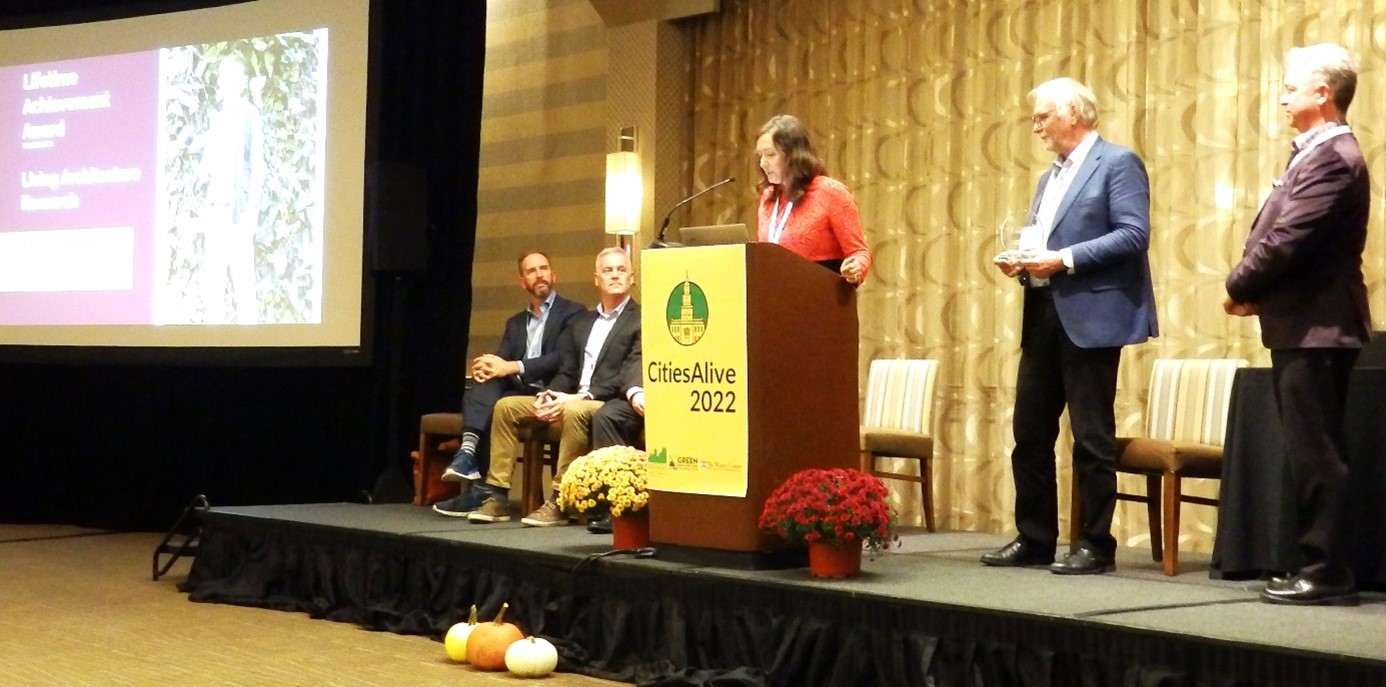
Greening projects in Philadelphia, highlighted at the Cities Alive Conference, 16-19 Oct 2022

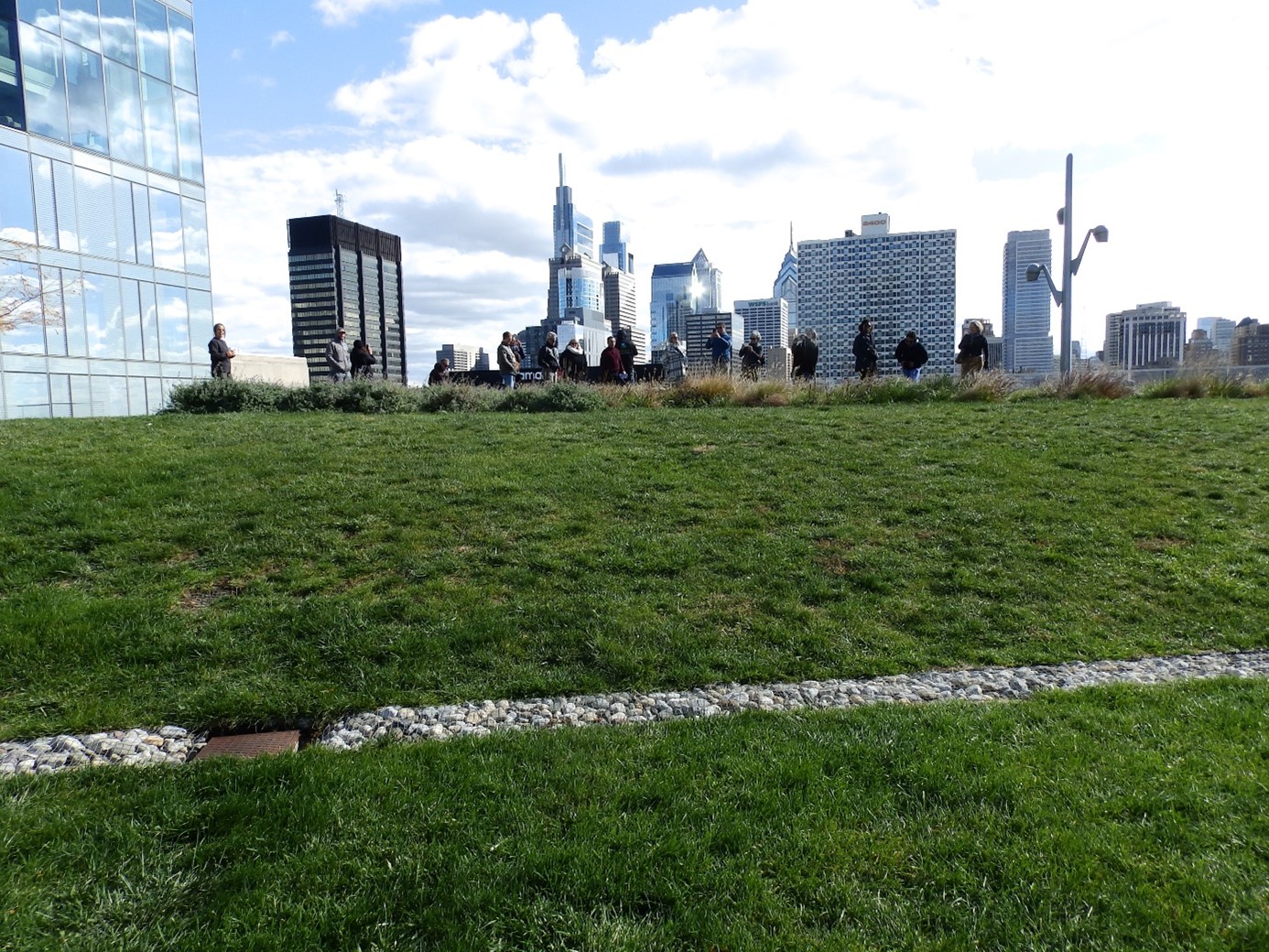
Downtown Philadelphia: Project “the Arthouse”, a new highrise building. For the apartment owner, available are not only the typical amenities, such as a pool deck. Also available is a roof garden with various urban gardening spaces. “A new trend in urban greening” The old Silk factory: Back yard roof gardens, private roof spaces with an exiting skyline view to downtown Philadelphia. discover more Philadelphia, for more than 10 years, has been known for it’s rainwater policy. Cira Green is a public open roof park on a multi store garage. It is equiped with an extra drain layer to maximise the local water retention. It is open all day, free to the citizens to enjoy sykline and plantings. A number of Living walls and climbers highlight the new trend in urban greening. Here an example at the Museum of Independance in the museum quarter in Philadelphia. Cities Alive ForumYear: 2022City: PhiladelphiaLocation: USA

Read More »
EU chapter

EU Policy Innovations Support Green Infrastructure Amid Climate Transition

University Warsaw’s Library – Beautiful and Multi-Functional Rooftop Gardens.  Policy innovation is key to increase green infrastructure amid the combined climate, energy and health crisis, writes Luigi Petito for Living Architecture Monitor. Read how the next 18 months are key for EU green legislation. We live in a time of unprecedented social, environmental, and economic change. To manage and hopefully guide the transition, and to address the multiple challenges it raises, particularly when it comes to the climate, we need innovation and resilience. Resilience and innovation go hand in hand. We show resilience in our capacity to face multiple crises, for example the combined climate, energy and health crisis, adapt and rethink what we consider taken for granted. When we innovate, we go beyond resilience, bringing forward new ideas, methods and devices that provide solutions. The green transformation of cities is the quintessence of resilience. We have a large body of evidence showing that the deployment of green infrastructure in urban areas delivers solutions to adapting to and managing environmental and societal challenges ranging from rainwater management to increased biodiversity, energy savings and the improved mental health and wellbeing of citizens.  Read the full article by Luigi Petito in Living Architecture Monitor.

Read More »
EU chapter

Renaturing Cities and Restoring the Natural Water Cycle Through Green Infrastructure

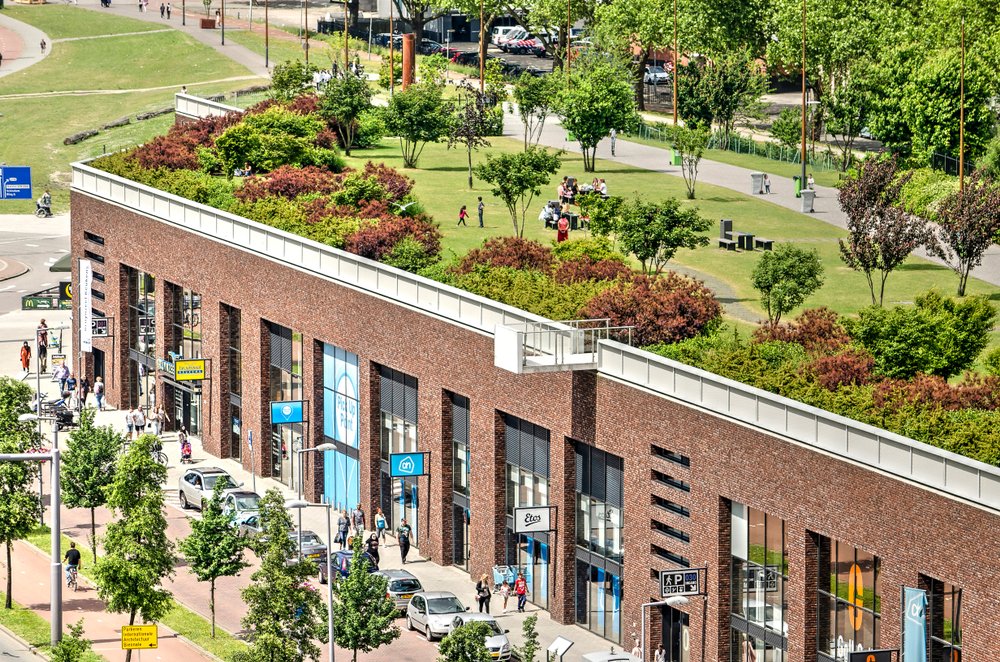
Rotterdam, The Netherlands. ID: 1121792051 In July, the European Commission’s Joint Research Centre published the “Drought in Europe – July 2022” report, an assessment of Europe’s drought situation based on the European and Global Drought Observatory. The report showed that a staggering portion of Europe was exposed to warnings (44 per cent of EU+UK) with serious consequences ranging from vegetation stress to severe impacts on farming and the energy sector (for both hydropower generation and the cooling systems of nuclear and thermal plants). The report anticipated that warmer and drier than usual conditions were (and they actually are) likely to occur in the western Euro-Mediterranean region until November 2022 with some precipitation, in many cases associated to thunderstorms, foreseen to alleviate drought conditions while causing damages and further losses.  Read the full article by Luigi Petito in the Autumn 2022 issue of Living Architecture Monitor.

Read More »
Latest News

Renaturing Cities and Restoring the Natural Water Cycle Through Green Infrastructure

Investments in urban green infrastructure is the solution to extreme weather events, writes Luigi Petito for Living Architecture Monitor.​ ​ The good thing is that we have solutions to mitigate these extreme phenomena. One of these solutions is investment in urban green infrastructure. In cities we must and can restore the natural water cycle with existing technologies. We must renature densely populated areas with blue-green infrastructure on roofs, allowing water infiltration, rainwater harvesting, evapotranspiration, urban heat island effect mitigation and decentralised stormwater management. straight from the source Rotterdam, The Netherlands, June 3, 2018: close-up of some of the shops and the public park on top of them at Dakpark Rotterdam, The Netherlands, June 3, 2018: close-up of some of the shops and the public park on top of them at Dakpark

Read More »
Latest News

“A building as a powerhouse of creativity”- Axel Springer’s new building in Berlin

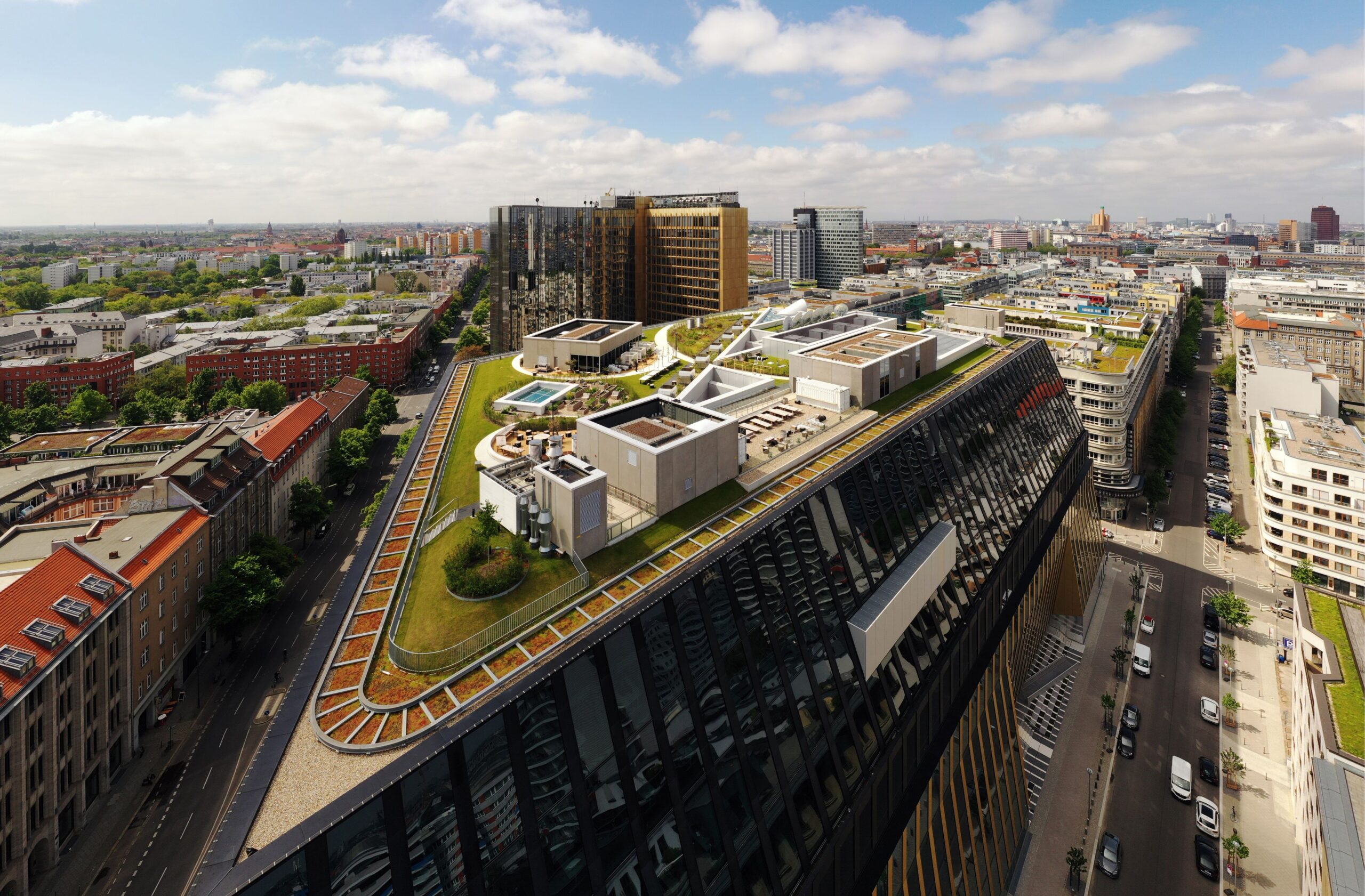
With the new Axel Springer building in Berlin, Axel Springer SE is following the current paradigm shift in the world of work. With the new Axel Springer building in Berlin, Axel Springer SE is following the current paradigm shift in the world of work. Work is being rethought today, with value creation being understood in such a way that every employee is empowered to develop his or her full potential. This presents employers with special challenges. Mathias Döpfner, CEO of Axel Springer SE, accordingly formulated the objective for the new office complex: “With the new building, we wanted to create a symbol and an accelerator of our own change. The brief, long before Corona, was to answer the question why office space is still needed at all in the digital age. Rem Koolhaas has succeeded spectacularly. Open multifunctional spaces that allow maximum flexibility of use. Avant-garde architecture as a magnet for encounters and communication. A house as a powerhouse of creativity.” The ambitious project was launched as a planning competition with 18 architecture offices. The decision was then made in Spring 2014 in favour of the design by Rem Koolhaas of the Dutch office: Office for Metropolitan Architecture (OMA). The new cube-shaped Axel Springer building in Berlin extends over the Lindenpark site, in the heart of the former newspaper district, with a built-up area of around 9,100 m². It complements the Axel-Springer-Kiez, the ensemble of various premises at the headquarters of the media and technology company. The new building is located on the former course of the inner-German border, which runs symbolically right through the building. Bringing the divisions and brands together in the new building enables better networking and knowledge exchange among them. The extraordinary architecture not only stands for the future of work, but it is also a symbol for the digital and cultural transformation of Axel Springer. Greened event areas on the roof of the office building: Tinted glass surfaces characterise the façade of the light-flooded office building. At the same time, the used roof area offers an attractive space for events. The greenery transforms the roof area into a green oasis in the middle of the city. With this in mind, an attractive roof garden was created, which offers the more than 5,500 employees in the Axel Springer neighbourhood the opportunity to spend their lunch break or after-work events in the green. Various event areas have been created for this purpose. Long paths between the green spaces invite to go for a walk – or to visit the “REM”, the gastronomic offer spread over three containers and named after the architect Rem Koolhaas. The roof surface slopes downwards to the outside towards the drive-in system. The slope is executed with the help of the Optigrün system solution pitched roof with thrust protection and extensive greening. In the middle of the roof are the Optigrün system solutions Garden Roof and Landscape Roof, partly with substrate heights over 40 cm for intensive green roofs, which also allow the planting of trees. The Optigrün FKD 60BO drainage and water storage elements used here have a high water storage capacity, prevent waterlogging through the rapid drainage of excess water and thus ensure the irrigation of the vegetation. The Optigrün FKD 10 drainage elements, which are also installed, ensure a high drainage capacity under the accessible traffic routes and areas.    Roof Accessibility/Amenity: The employees of the media and technology company already use the roof garden extensively and enjoy the green oasis in the city. Especially during the extreme temperatures in summer, the green roof provides a pleasant environment. The evaporation through the greenery reduces the temperatures on and around the building. At the same time, the greenery binds CO2 and fine dust. And the green roof, which has grown well in the meantime, also provides an additional habitat for flora and fauna. Green Roof/Wall System: Optigrün System Solution Garden Roof and Optigrün System Solution Landscape Roof Project owners & coordinators: Owner: Office for Metropolitan Architecture OMA, Rotterdam, Architekt Rem Koolhaas (Designer)Axel Springer SE Green Space Planning: Wiggenhorn & Van den Hövel, Hamburg Execution of gardening and landscaping: Klaus Hildebrandt GmbH, Hamburg Supply of green roofs and planning support: Optigrün international AG  © Optigrün international AG © Optigrün international AG © Optigrün international AG © Optigrün international AG © Optigrün international AG © Optigrün international AG © Optigrün international AG © Optigrün international AG   More information: Optigrün System Solution Garden Roof & Optigrün System Solution Landscape Roof Year: 2021 City: Berlin Contact: Optigrün’s Website Optigrün’s Facebook Optigrün’s Instagram Optigrün’s LinkedIn

Read More »

Follow us on our social channels.

Follow us on the channel that best suits you to receive our latest updates!