Latest in: WGIN-mockup.

Projects

Dubai Opera Garden

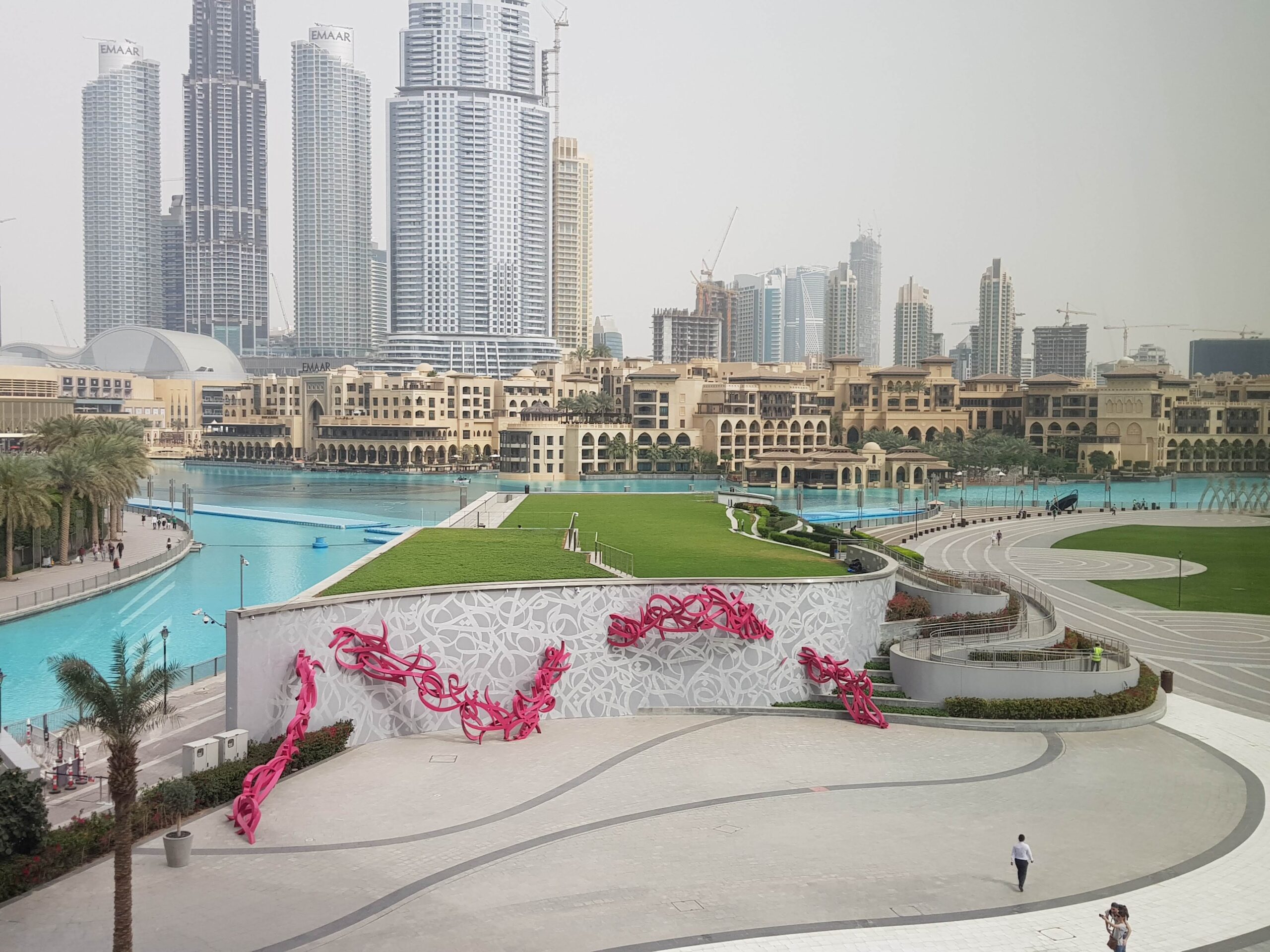
Dubai Opera Garden. This Utility House next to Dubai Opera has been facing a challenge of weight restrains as originally it was not planned to include Green Roof which will serve also as a venue place. The traditional green roofs installed in Dubai are always extremely heavy as they use between 30 – 50 cm of local sweet soil which brings the weight up to 750 kg / m2. A semi intensive green roof system  With local team we have developed a semi-intensive green roof system which allows better plant growth than traditional green roofs. Utilizing combination of inorganic rock based multipurpose growing media in thickness of 4 cm allowed us to use only up to 10 cm of local sweet soil on top which consequently opened an opportunity to do the installation on this roof and not compromising the structure stability.  Green Roof/Wall System: Single Source Provider Number of Greenroofs / Walls on Property: 1 Roof/Wall Size: 3000 The provided system has lowered the weight of the green roof to less than 150 kg/m2 but at the same time also reducing the irrigation needs for up to 50%. The entire design has been redesigned to actually become a venue place where people can meet and enjoy the views over the Dubai Music Fountain. Roof/Wall Slope: 2-5 Roof Accessibility/Amenity: Yes Open to the Public: Yes Designer: NLME ConsultantsYear: 2017City: Dubai owner website

Read More »
Latest News

Sempergreen: Innovative Flexipanel A2 resists fire and heavy wind loads

SemperGreenwall first living wall system with fire safety certificate A2 in the market. Sempergreen is proud to announce that its living wall system SemperGreenwall has been awarded the fire safety certificate A2-s2-d0. This fire class is often mandatory in high-rise projects. Sempergreen’s living wall system already had the B-s2-d0 certificate. This means that it was already suitable for project-based applications, including use on escape routes. With the addition of the A2-s2-d0 certificate, the SemperGreenwall now also offers a fire-safe solution for high-rise projects. This makes the SemperGreenwall the first living wall system in the market to meet these very strict fire safety requirements. Innovative Flexipanel A2 resists fire and heavy wind loadsA SemperGreenwall is a modular living wall system built from pre-cultivated Flexipanels. These panels are extremely flexible, making the system also applicable to curved surfaces or corner solutions. In order to meet the strict safety requirements that often apply to high-rise projects, the standard Flexipanel has been further developed into the innovative Flexipanel A2. This new Flexipanel is not only resistant to fire, but also to other extreme conditions, such as heavy wind loads. Tested for flashover and combustion valuesThe potential risks posed by fire in high-rise buildings are very high. The building requirements for high-rise projects are therefore extremely strict. In order to obtain the A2-s2-d0 fire safety certificate, Flexipanel A2 has been subjected to the following tests carried out by Fire Safety Expert Efectis. These tests included combustion values and flashovers. This test determines the heat release, flame spread, smoke development and the formation of burning droplets. A test to determine the maximum burning value. The tests have shown that according to the European fire classification (EN 13501-1), Flexipanel A2 barely contributes to the development of a fire and cannot cause melting parts, only a slight development of smoke. Response to market demand for nature-inclusive and climate-adaptive constructionThe SemperGreenwall is the very first living wall system in the market that meets the fire safety requirements for high-rise projects. With the Flexipanel A2 Sempergreen makes it possible for architects and developers to use a fire-safe living wall system for high-rise projects. This answers the market demand for nature-inclusive and climate-adaptive building. Residential tower Eden Tower in Frankfurt first projectThe first orders for high-rise projects with the application of Flexipanel A2 are already being realized this year, including a residential tower no less than 98 meters high in Frankfurt, called Eden Tower. Sempergreen expects many more similar projects to follow. “The impressive 98 meter high residential tower Eden Tower in Frankfurt is the very first high-rise project to be built with a SemperGreenwall that complies with fire class A2-s2-d0.” About Sempergreen® Sempergreen, headquartered in the Netherlands, is the world’s largest grower and supplier of innovative quality solutions for green roofs, living walls and instant ground cover. Sempergreen is driven by the mission to create a green and liveable world for our generation and the next generations. The green solutions from Sempergreen contribute to reducing the effects of climate change and environmental pollution. To keep her ecological footprint as small as possible, Sempergreen operates as much as possible from local nurseries in Europa, North and South America Australia and Asia. The highly motivated team of Sempergreen of over 200 professionals works continuously on the quality of the sustainable products. Together with their customers, Sempergreen is working to make the world a little greener every day. For more information about Sempergreen, please visit www.sempergreen.com. For more information, please contact: Rianne Slootweg, Marketing Manager: rianne.slootweg@sempergreen.com Phone: +31 (0)30 307 8792

Read More »
Must Read

Key Definition: Living Wall

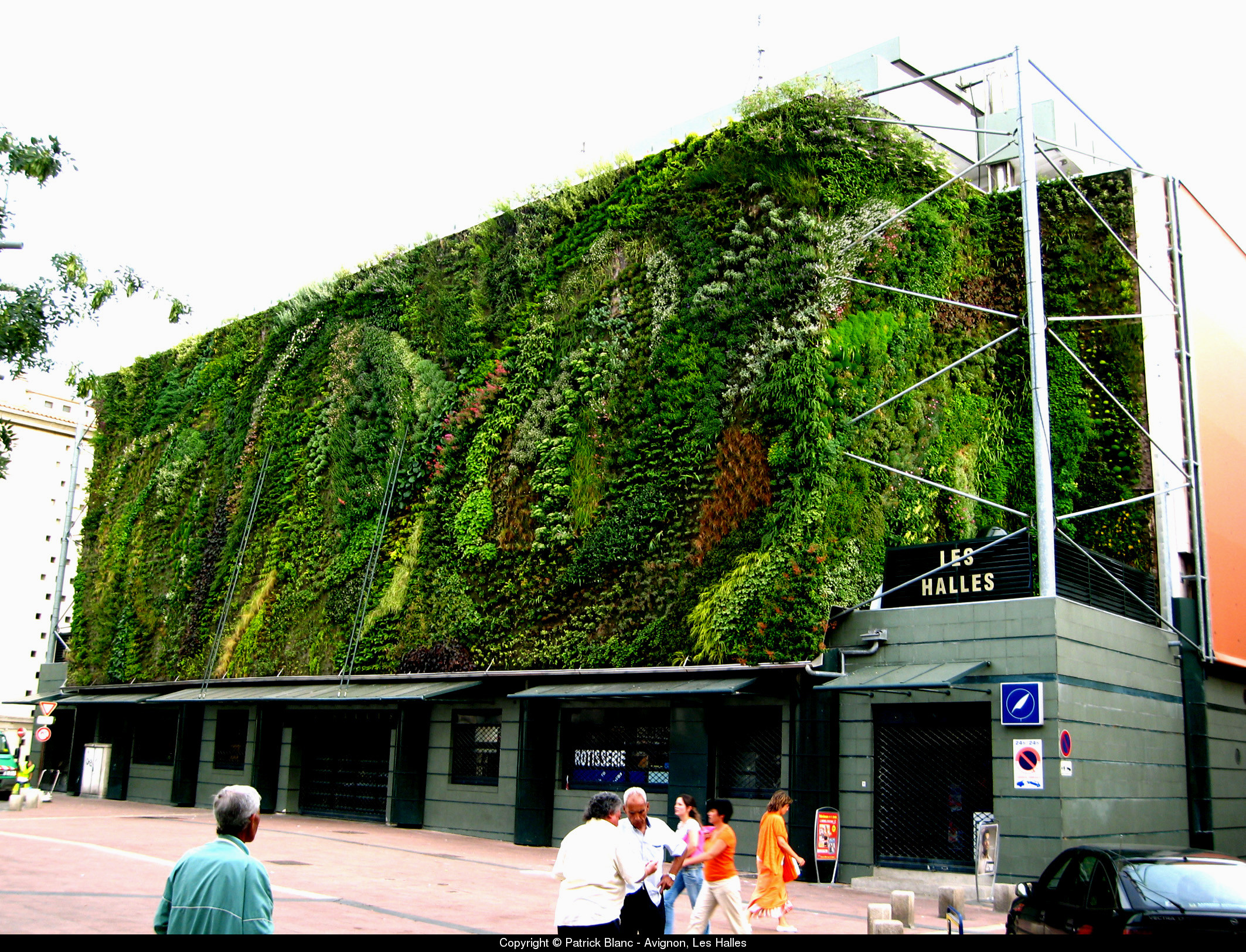
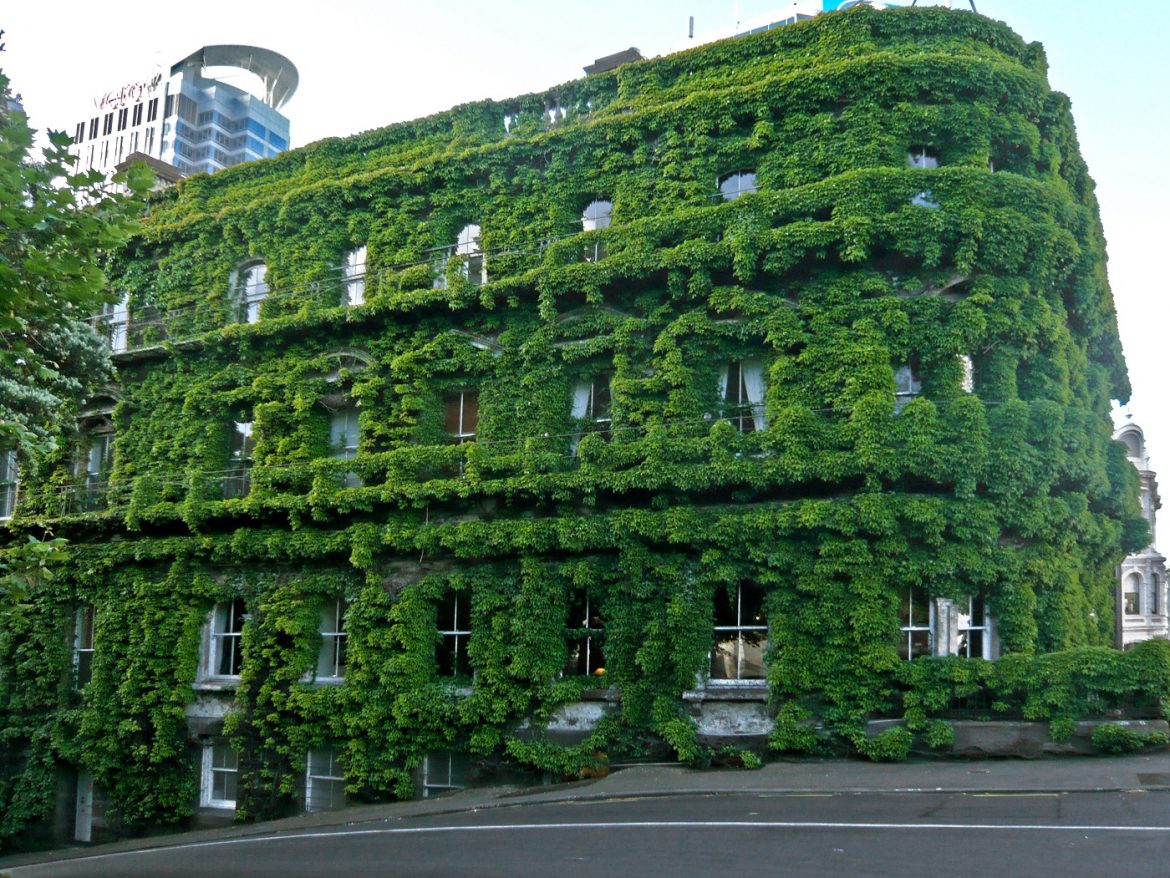
Living wall: A living wall is a vertical vegetated wall system with irrigation. A living wall system is variable depending on the climatic conditions and there is no proven formula for plant specification, even the most successful walls have evolved from the time of initial installation with the plant palette changing. Interior living walls require supplementary ‘grow’ lights and irrigation with drip trays and drainage outlets. The most lightweight system is hydroponic with two layers of felt matting stapled to poly-board and fixed to a structural wall aka Vertical Gardens / P.Blanc. Slits allow plants to grow in pockets initially until the root system spreads between the two felt layers. The felt is kept constantly damp with nutrient levels specifically maintained. This system was originally developed by Patrick Blanc in 1986 in Paris. In their more elaborate form, living walls and may incorporate water elements including ponds and ?sh, which provide essential nutrients. Living walls may also be incorporated into the cooling strategy of a house, as a kind of evaporative air conditioner, and they may even be designed as part of a water treatment system. TYPES OF LIVING WALLS Living walls, i.e. vegetation growing on or against vertical surfaces, can be found outdoors or indoors on any type of vertical surface, from building façades to boundary demarcation or even free-standing support. They can be incorporated into new construction or easily retrofitted to existing buildings. Living walls can vary considerably in construction; they can be rooted in or off the ground (i.e. soilless), in several kind of growing media (mineral or organic), or in an inert medium acting only as a rooting element. According to the type of structure, the system can be either ‘completely natural’ or hydroponic. Irrigation can be manual or automatic. Living walls have been divided into three main categories: green façades and green walls; however the concept of the green wall can be extended to a wider range of systems: urban hedges, stone walls, green screens, live curtains and modular planter walls. Green façades Green façades are made of climbing plants growing on a wall either with no additional infrastructure, or with the use of stainless steel or wooden trellis, meshwork, or cabling, as plant support. They are historically set outdoors, rooted in the ground and don’t require additional irrigation. They can also be off the ground and erected indoors, usually free-standing with irrigation. The great diversity of climbing plants, in terms of flower and foliage colours, flowering season, profile, etc. make them attractive for humans. They can be evergreen or deciduous and are usually woody and perennial, although some can be herbaceous or/and annual. As they use different ways of adhering to a surface, they need different kinds of support either vertical and/or horizontal, or no support at all in the case of self-adhering climbers such as Hedera helix(common ivy), Parthenocissus sp. (Boston ivy) or Wisteria sp. (Virginia creeper).Plants that can be trained against the wall or in espalier (e.g. Camellia sp., Ceanothus sp., Chaenomeles sp. (“flowering quince”), Coronilla valentine (scorpion vetch), Garrya sp., Fuchsia sp., Magnolia grandiflora, Pyracantha sp.) referred to as ‘wall shrubs’ can be included in the term ‘green façade’. Green Walls Green walls are recently developed, completely artificial systems, using continuous or modular, planted-up, units. Continuous living wall systems can be made of felt-layers or be a block of concrete. Modular panels are using modules of sphagnum, substrate filled metallic cage, gabions, preformed plastic modules or rockwool units. Plants are rooted directly in the structure (in the case of felt layers or sphagnum units) or in growth medium, beforehand added to the structure (for concrete block, rockwool, plastic preformed module or gabion panel). The growing media can be organic materials such as coconut coir (Cocos nucifera L.), peat, tree bark, or inorganic materials such as expended clay pebbles, gravel, perlite, mineral soil, mineral wool, sand, vermiculite; although different components are often used in mixes. The system is usually hydroponic (i.e. the mineral nutrients are brought to the plant as inorganic ions in water). Any plant species can be grown on a living wall system. Typically, the only constraint is the weight of the mature plant; some felt layers systems have been shown to support tree species. Indoor walls are usually planted with tropical species due to the constant mild temperature and the lack of light; while outdoor walls are more restricted to rustic plants. Living walls are sometimes referred to as “vertical gardens” when they are used to grow herbs and/or plants producing vegetables or fruits. When growing herbs, the green wall is usually called a “herb wall”.Depending on the system and the manufacturer, units are either pre-grown in greenhouse (vertically or not) prior to installation or planted on site once installed. Intermediate living walls Green Façades and Green Walls are the opposites, in terms of complexity of structure and man-made features, of the large panel of the green wall concept. Between these two can be found features like Green screens, made of a climbing plant (typically Hedera sp.), pre-grown on a freestanding, galvanized steel framework, and established as an instant hedge. They are usually included in the concept of green façades. However, the facts that they are commercially pre-grown in nursery, completely free-standing when historically green façades are against walls, and usually installed with automatic irrigation, may set them apart from green façades. Live curtains combine the features of green façades and living walls. Like green façades, this system is made of plants climbing on a structure, but rooted off the ground, in small planter boxes, as hydroponic systems like living walls.Urban hedges can be considered as part of the green wall concept as they are interchangeable with green façades or living walls for some of their features and ecosystem services.Stone walls are horizontal structures of overlapping stones build upwards, with successive rows of stones overlapping each other. The space between two rows is filled with smaller stones and sometimes with capping stones bridging the top. A distinction is made between dry stone walls and mortared walls that are usually more shaped with

Read More »
Must Read

Key Definition: Green Roof

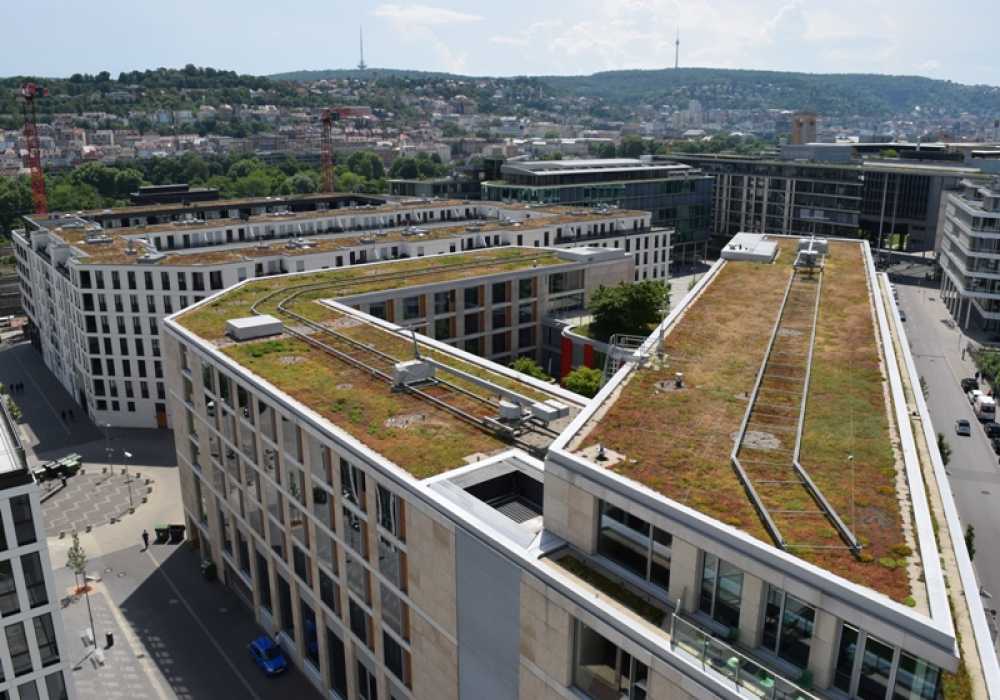
Green roof: (Also referred to as living roofs; eco roofs; ecotecture; roofscapes.) Their usage dates back to 10thC BC throughout Persia with particular reference to Babylon, as green roofs were used as a storm-water management system irrigating a stepped series of planters throughout the city creating a lush cool urban environment aka the Hanging Gardens of Babylon. Scandinavian ‘sod’ roof housing has been built since 1000AD to insulate dwellings during summer and winter. Throughout the 20thC there were progressive architects using vegetated roof-tops, however it was not until a green roof renaissance started in Germany during the 1980’s with R&D by FLL producing a definitive guideline for specification of green roofs. In 1986, Patrick Blanc pioneered his irrigated felt Verticle Garden (aka living wall) in Paris, which completed a technology capable of vegetating every building facade. The technology is now referred to as ‘Building Integrated Vegetation (BIV) systems. Definition: A green roof is a vegetated roofing system which is functionally integrated onto a roof area. Designs are site specific depending on climatic conditions; slope; access; structural capacity and intended usage. Standard components are a tested waterproofing membrane; root barrier; drainage outlets; drainage layer; geofabric; grow media; vegetation; irrigation; maintenance regime. Green roofs are sometimes referred to as the fifth façade. There are three kinds of green roof: extensive; semi intensive & intensive, each type requiring particular engineering. A simple way to differentiate the types is :- EXtensive is less / INtensive is more. Types: Extensive Green Roofs: Shallow growing medium – 90 to 300mm.Roof engineering similar to conventional standards.Vegetation limited to shallow rooting plants.Relatively economical.Relatively easy to retrofitAverage saturated weight @ 150kg/sqm Semi Intensive Green Roofs: Grow medium depth – 300 – 500mmPlant range; ground cover to small treesIrrigation suggestedRoot barrier suggested Intensive Green Roofs: Deep growing medium – 500mm or greater.Greater saturated load..Wide range of plantings possible.Relatively expensive.Greater benefits, insulation, water retention etcRoot barrier & Irrigation suggestedLeak detection system suggestedHigher biodiversity Green roofs may appear as manicured lawns or natural plant communities. Extensive green roofs that use a thin layer of growing medium to support ground cover plants with short roots are generally designed with building performance in mind rather than aesthetic concerns. Sloping and curved extensive green roofs may be seen from ground level. Intensive roofs can support quite substantial, highly visible vegetation, cascading over the sides of the building or as shrubs and trees rising above the roo?ine. These are commonly referred to as roof gardens. By creating a landscaped surface green roofs can radically change a building’s ‘roof line’. Green roofs and external green walls (which can be small and incidental or large and dramatic) extend the scope for creating pleasant urban environments by introducing plants and greenery that are visually restful or refreshing. Proven therapeutic effects include increased productivity with improved concentration levels; improved psychological health and happiness. BENEFITS: Green roofs provide a multitude of benefits to the people who interact with them and the cities and regions in which they exist. Benefits are delivered across three spheres, environmental, economic and social, making green roofs a truly sustainable feature. In fact, it would be hard to argue that any other architectural element of a building can have such wide and profound benefits as a green roof does. The benefits of a green roof range from a single user observing a roof to reducing the planet’s CO2 emissions through sequestration. The benefits described below have been dived up into Environmental, Economic and Social sections. However, as with true sustainability, many of these overlap. A further distinction is made if the benefit is private, that is mostly delivered to a signal person or organization, or public, those benefits derived by all. Many green roofs deliver both public and private benefits, making green roofs an equitable and egalitarian solution for our cities and homes. Social Benefits Physiological/mental health Green roofs can improve a person’s mental and physiological function by allowing them to view ‘natural’ scenes and elements. Such experiences have been shown to relieve stress, improve productivity and reduce blood pressure. Improved Biophilia “A human’s innate need to connect with Nature” Exposure to nature or natural scenes, even for periods of as little as 3-4 minutes, has been shown to reduce symptoms of stress and restore cognitive function. Most city cores have a lack of either accessible or viewable green space, thus denying city-dwellers a means to escape from the demands of their daily lives or the opportunity for mental rejuvenation.  The inability to experience nature’s involuntary stress reliving power can place people at risk of poor productivity, anti-social behaviour or symptoms of mental illness. Green roofs supply an important resource of ‘natural environments’ in a landscape dominated by built structures. Due to the built form of many modern cites, green roofs might be the only option for introducing green space. Green roofs can deliver many public and private physiological benefits. In the case of an office roof garden for example, it may provide a venue for relaxation, socialising or ‘time out’ for the employees of the building, improving staff wellbeing and productivity. The same roof however can also be viewed by an office worker in an adjacent building and they too can enjoy the mental respite by simply viewing the natural elements of a green roof. The ability of green space to relive stress and improve physiological function has seen an increase in installation of green roofs in European and North American hospitals. In the redesign and redevelopment of the Royal Children’s hospital, Melbourne, the use of evidence-based design led to the installation of 360m2 green roof for use by patients, staff and visitors alike. Increased Amenity and recreation opportunities Many cities lack adequate open space. Green roofs provide an opportunity to increase the amount of useable space available for the pursuit of both passive and active recreational activities. Since they are composed of natural elements and replace underutilised space, green roofs can also improve the quality and attractiveness of building and its surrounding location. The high population

Read More »
Must Read

Key Definition: Green Infrastructure

Green Infrastructure: There is an international movement towards the regeneration of urban landscapes due to an increased awareness about human impact on the environment. As urban development and populations increase there is a greater demand to improve upon the planning mistakes of the past. There is a movement towards mitigating the impact of impermeable urban infrastructure materials such as concrete by including permeable pedestrian paths, bio-swales, street planting, green roofs, green walls, rejuvenated wetlands, urban forests, parklands and other vegetative systems into the urban fabric. Green Infrastructure refers to any vegetative infrastructure system which enhances the natural environment through direct or indirect means. It describes the network of green spaces and water systems that deliver multiple environmental, economical and social values and benefits for sustainable urban development. Green Infrastructure includes green roofs, living walls, parks and reserves, backyards and gardens, waterways and wetlands, streets and transport corridors, pathways and green corridors, squares and plazas, sports fields and cemeteries. Green Infrastructure provides and connects vital ecosystem services which contribute or enhance urban sustainability and the natural environment. GI: a strategically planned network of natural and semi-natural areas with other environmental features designed and managed to deliver a wide range of ecosystem services. It incorporates green spaces (or blue if aquatic ecosystems are concerned) and other physical features in terrestrial (including coastal) and marine areas. On land, GI is present in rural and urban settings ie green roofs, living walls, rain gardens, parks, community gardens, canopy cover, parklands, urban forests. Green Infrastructure Benefits include storm-water management, climate adaptation, mitigation of Urban Heat Island Effects, enhanced biodiversity, carbon sequestration, enhanced air quality, sustainable energy production, enhanced storm water quality returning to the natural environment and to deep soil profiles, improved anthropocentric functions such as increased quality of life and improving biophilia. Green Infrastructure (GI) / Enhancing Natural Capital Overview: Human society depends on the benefits provided by nature such as food, materials, clean water, clean air, climate regulation, flood prevention, pollination and recreation[1]. However, many of these benefits, frequently referred to as ecosystem services, are used as if their supply is almost unlimited and treated as free commodities whose true value is not fully appreciated. This can result in public authorities turning to built infrastructure — grey infrastructure — as a substitute for natural solutions to problems such as flood prevention. In Australasia we consequently continue to degrade our natural capital, jeopardising our long-term sustainability and undermining our resilience to environmental shocks. As stated in the Resource Efficiency Roadmap[2], the failure to protect our natural capital and to give a proper value to ecosystem services will need to be addressed as part of the drive towards smart, sustainable and inclusive growth.. The EU roadmap identifies investing in GI as an important step towards protecting natural capital. All AUS government tiers need to collaborate and establish a GI Commission to develop a GI strategy[5]. The EU Resource Efficiency Roadmap states that their Commission will draft a Communication on GI. This document is the Commission’s response to these commitments[6]. It sets out how EU-wide action can add value to the local initiatives currently underway. What is Green Infrastructure (GI)? GI is a successfully tested tool for providing ecological, economic and social benefits through natural solutions. It helps us to understand the value of the benefits that nature provides to human society and to mobilise investments to sustain and enhance them. It also helps avoid relying on infrastructure that is expensive to build when nature can often provide cheaper, more durable solutions. Many of these create local job opportunities. Green Infrastructure is based on the principle that protecting and enhancing nature and natural processes, and the many benefits human society gets from nature, are consciously integrated into spatial planning and territorial development. Compared to single-purpose, grey infrastructure, GI has many benefits. It is not a constraint on territorial development but promotes natural solutions if they are the best option. It can sometimes offer an alternative, or be complementary, to standard grey solutions.

Read More »
EU chapter

European Parliament highlights green roofs for climate change adaptation

December 2020 – In a resolution adopted on 17 December the European Parliament recognised the key role of green roofs and walls to minimise the adverse impact of climate change. The resolution says that green roofs and walls can contribute to cooling high urban temperatures, retaining and reusing rainwater and producing food. Urban green infrastructure can also help reduce air pollution, improve the quality of life in cities, reduce risks to human health, and protect biodiversity, including pollinators. MEPs supported any targeted initiatives to seize this potential, including the development of urban strategies and better spatial planning. Moreover, they called for infrastructure such as roads, parking lots, train tracks and power and drainage systems to be made biodiversity and climate-proof. The Parliament’s resolution on adaptation to climate change will provide input on a new EU Adaptation Strategy, expected from the Commission in 2021 as part of the European Green Deal. About usThe EU Chapter of the World Green Infrastructure Network (WGIN) aims to increase the awareness of the European Union policymakers about the multiple benefits of green infrastructure, with a specific focus on Building Integrated Vegetative Systems (green roofs and living walls). WGIN brings together national and regional industry associations to promote the development of the green infrastructure industry through training, research, advocacy for new policy, conferences, publications, and promotion.

Read More »
Projects

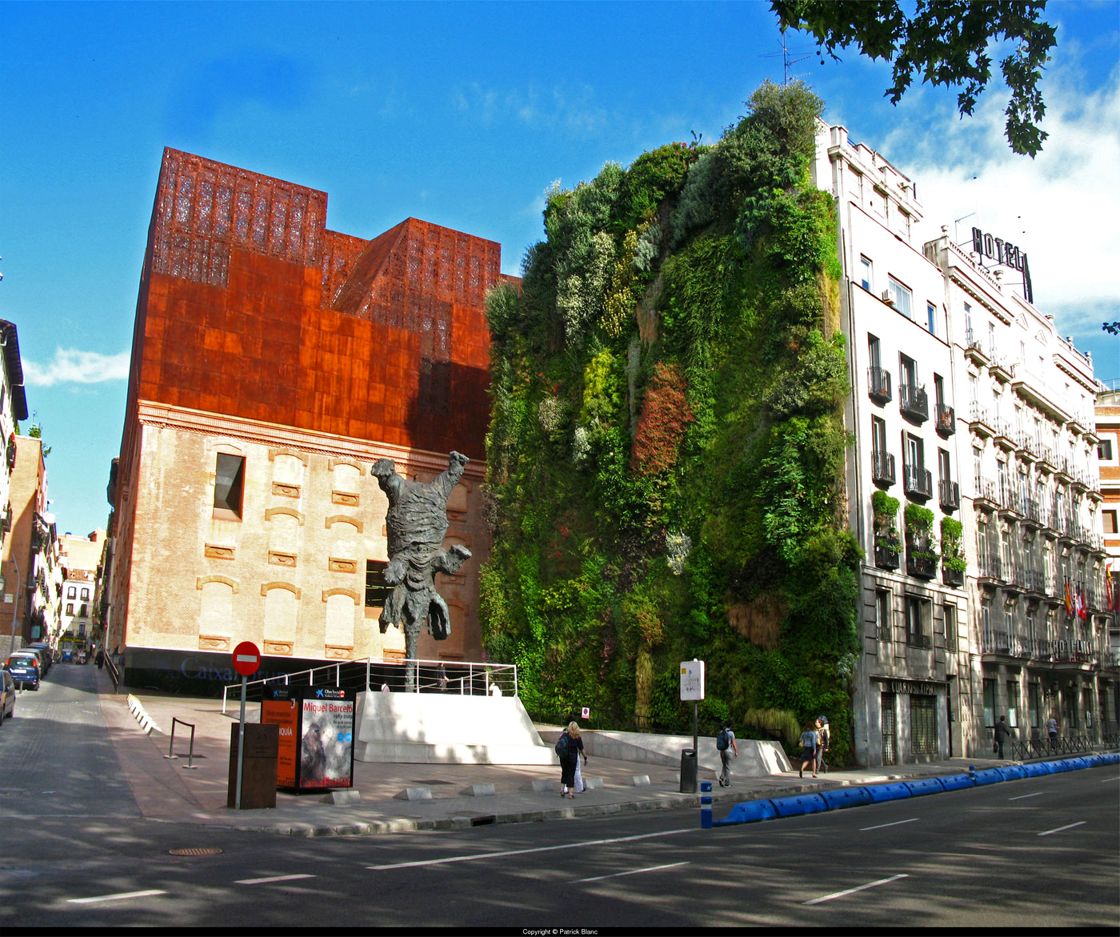
Caixa Forum Museum vertical garden

Caixa Forum Museum. Acquired by the Caixa Foundation in 2001, the Caixa Forum Museum is a modern art gallery and a refurbished 1899 power station. Located on the Avenida Prado across from the Prado Museum and botanical gardens, and in close proximity to the Reina Sofia and the Thyssen-Bornemisza Museums, exhibitions feature works from the foundation’s permanent collection (some 700 pieces by artists from the 1980s to the present), as well as temporary displays from other museums and foundations. By Patrick Blanc & his “Le Mur Végétal” system Situated in the heart of the Madrid’s cultural district, the Caixa Forum Museum vertical garden was designed and created by Patrick Blanc using his Le Mur Végétal system. The adjacent square is accessible to the public who can walk up, touch, and explore over 15,000 plantings on the hydroponic living wall. Nearly 300 different species were chosen by Patrick Blanc who had to keep in mind Madrid’s very demanding seasons – very hot in the summer and cold in the winter. Using Patrick Blanc’s Le Mur Vegetal system, the set up starts with a sheet of polyurethane, plastic mesh and a non-biodegradable felt-type blanket with pockets which are used to pot the plants. The plant roots develop extremely well and the total vertical garden weight is estimated at 30 kilos per square meter. The exact number of plants within the living wall is unknown due to replacements and changes of species over the years. The figure is between 15,000-17,000 plants, which depends on season and selected varieties adapted to the region. Species include Dianthus deltoids, Lonicera nitida, Yucca filamentosa, Cistus purpureus, Cedrus deodara, Pilosella aurantiaca, Arenaria montana, Bergenia cordifolia, Cornus sanguinea, Lonicera pileata, Sedum alpestre, Campanula takesimana, Garrya elliptica, and different Begonias. Since the building where the wall is located does not belong to Caixa Forum, special care has been taken to avoid moisture problems by contact or condensation. The polyurethane sheet is anchored to the wall of the building, leaving a gap that allows passage through its interior for monitoring of the irrigation and fertilization system, which is zoned at different heights. It constitutes a network of pipes arranged in layers with emitters, fed by a pump. Irrigation is vertical and layered, using gravity, wetting the wool and spreading by plants; all of this is automated. The runoff that occurs along the leaves and stems can cause water loss – at ground level, there is a recovery system and subsequent recirculation which continues to be tweaked. Remember that the climate of Madrid is very demanding, and a failure of water in the summer may cause the loss of many plants. Green Roof/Wall System: Single Source Provider Number of Greenroofs / Walls on Property: 1 Roof/Wall Size: 450 Roof/Wall Slope: 90 degrees Roof Accessibility/Amenity: Yes Open to the Public: Yes Designer: Patrick BlankYear: 2001City: Madrid owner website

Read More »
Projects

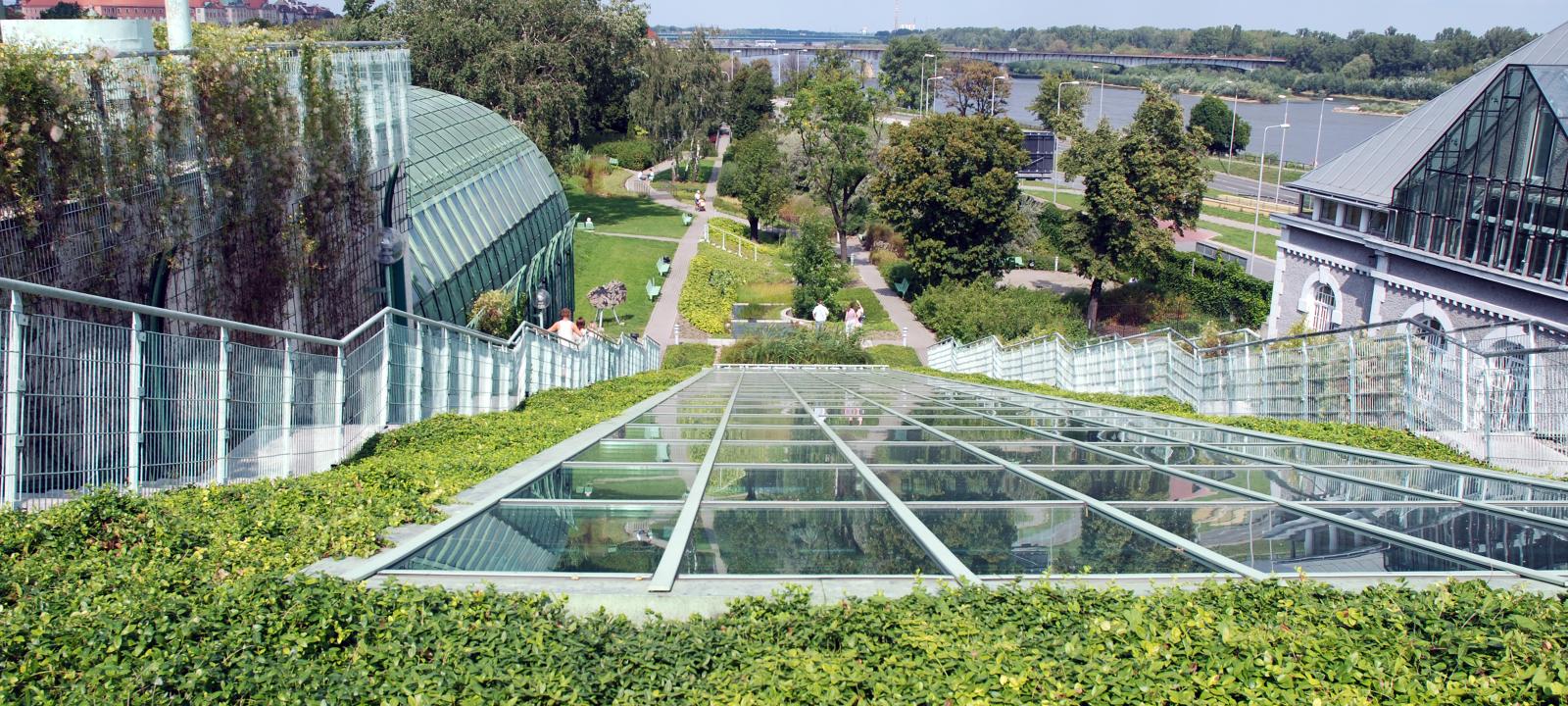
Library of the university of Warsaw

University of Warsaw. The green roof is divided into several separate gardens: the Gold Garden, the Carmine Garden, the Green Garden, the Silver Garden. For each of them the plants were selected taking into account their color. The garden is a place of rest with a beautiful view of the Vistula River. The green roof is located on two levels. The lower garden is over 15,000 square meters. From this level, a long staircase leads to the rooftop, underlined by the water element (gutters that flow rainwater to the lower ponds). The upper garden covers about 2,000 square meters. The green roof is divided into several gardens Green Roof/Wall System: Single Source Provider Roof/Wall Size: 17000 Roof Accessibility/Amenity: Yes Number of Greenroofs / Walls on Property: 4 Roof/Wall Slope: varied Open to the Public: Yes Project designer: Irena BajerskaYear: 2002State: Mazovia owner website

Read More »
EU chapter

Greener buildings to save energy and reduce emissions

WGIN EU Chapter highlights multiple benefits of greener buildings in its first feedback on the revision of the Energy Performance of Buildings Directive. On 22 February, the European Commission published its Inception Impact Assessment on the revision of the Energy Performance of Buildings Directive (EPBD), requesting stakeholders to share their inputs. The EU Chapter of the World Green Infrastructure Netowk (WGIN) submitted a comprehensive feedback highlighting how green infrastructure like green roofs and walls support the insulation of buildings and therefore contribute to reducing their energy consumption, a key step in the decarbonisation of the EU building stock. In addition, vegetated surfaces help reduce CO2 emissions, making buildings carbon sinks and improving air quality in urban areas, while also having a positive impact on citizens’ mental health. Given green roofs and walls’ added value for the energy performance of buildings and beyond, the EPBD revision should introduce a set of mandatory provisions on green infrastructure in new buildings, public buildings (such as hospitals and schools) and large commercial buildings, where technically feasible. Moreover, the European Commission should include mandatory considerations for green roofs and walls on residential buildings undertaking major renovations. “The revision of the EPBD represents a unique opportunity to set green infrastructure as an integral part of the future of buildings across Europe,” said Prof. Manfred Koehler, President of WGIN. “The multiple benefits of green roofs and walls fit perfectly with the goal of the Directive to achieve a decarbonised and highly energy-efficient building stock by 2050”. The Inception Impact Assessment represents the first step in the consultation process of the European Commission on the EPBD. The legislative proposal on the EPBD revision is expected for the end of 2021. Read WGIN feedback here About us The EU Chapter of the World Green Infrastructure Network (WGIN) aims to increase the awareness of European Union policymakers about the multiple benefits of green infrastructure, with a specific focus on Building Integrated Vegetative Systems (green roofs and living walls). WGIN brings together national and regional industry associations and renokwn experts to promote the incorporation of urban green infrastructure practice and planning, globally.

Read More »
EU chapter

Multiple benefits of green roofs recognised in EU climate adaptation strategy

On 24 February, the European Commission adopted a new EU Strategy on Adaptation to Climate Change, setting out the pathway to prepare for the unavoidable impacts of climate change. Green roofs and walls feature prominently in the strategy, which fully recognises their multiple benefits for climate adaptation. “Blue-green (as opposed to grey) infrastructures are multipurpose, ‘no regret’ solutions and simultaneously provide environmental, social and economic benefits and help build climate resilience”, it is stated in the document, which adds “Europe needs to leverage more investments in nature-based solutions to generate gains for adaptation, mitigation, disaster risk reduction, biodiversity, and health”. The strategy mentions the deployment of nature-based solutions for adaptation among the Commission’s priorities to make adaptation actions “systemic” across the Union, together with integrating adaptation into macro-fiscal policy and local adaptation action. Moreover, the Commission called for strengthened action to “prepare Europe’s building stock to withstand the impacts of climate change”, highlighting that green roofs and walls are key to make sure that “buildings can also contribute to large-scale adaptation, for example through local water retention that reduces the urban heat island effect.” The Commission announced it will support the integration of climate resilience considerations into the criteria applicable to construction and renovation of buildings and critical infrastructure. “The Commission’s recognition of the benefits of green roofs and walls to help make Europe resilient to climate change is excellent news for citizens and the environment. We very much welcome this approach and we hope this will serve as inspiration to governments and local administrations around the world. Green roofs and walls can greatly support climate adaptation efforts and as WGIN we are ready to do our part,” said Prof. Manfred Koehler, President of the World Green Infrastructure Network (WGIN). About us The EU Chapter of the World Green Infrastructure Network (WGIN) aims to increase the awareness of European Union policymakers about the multiple benefits of green infrastructure, with a specific focus on Building Integrated Vegetative Systems (green roofs and living walls). WGIN brings together national and regional industry associations to promote the development of the green infrastructure industry through training, research, advocacy for new policy, conferences, publications, and promotion. ContactMatteo Guidimatteo.guidi@wgin.org

Read More »

Follow us on our social channels.

Follow us on the channel that best suits you to receive our latest updates!