Latest in: Latest News.

Latest News

Launch of Sempergreen white paper: ‘Building for Biodiversity’

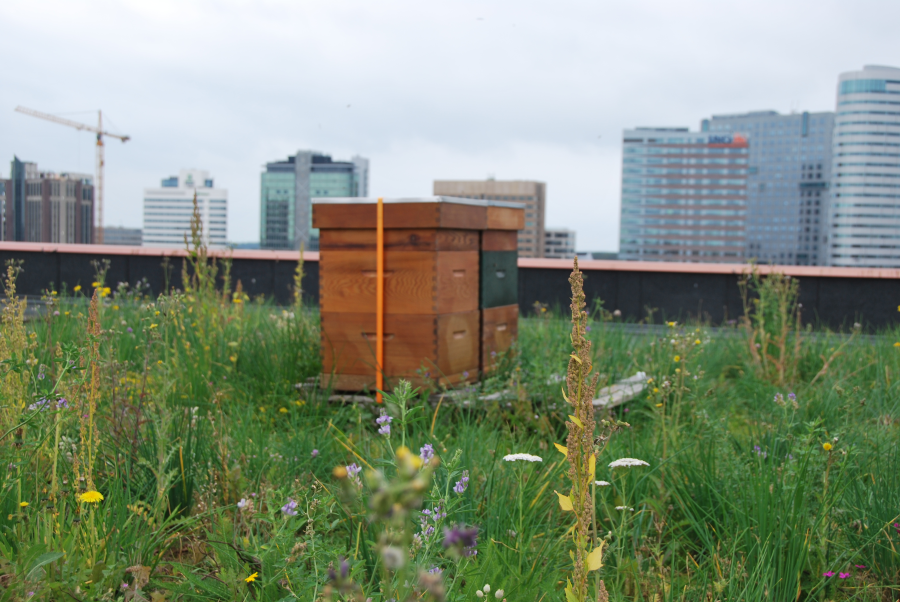
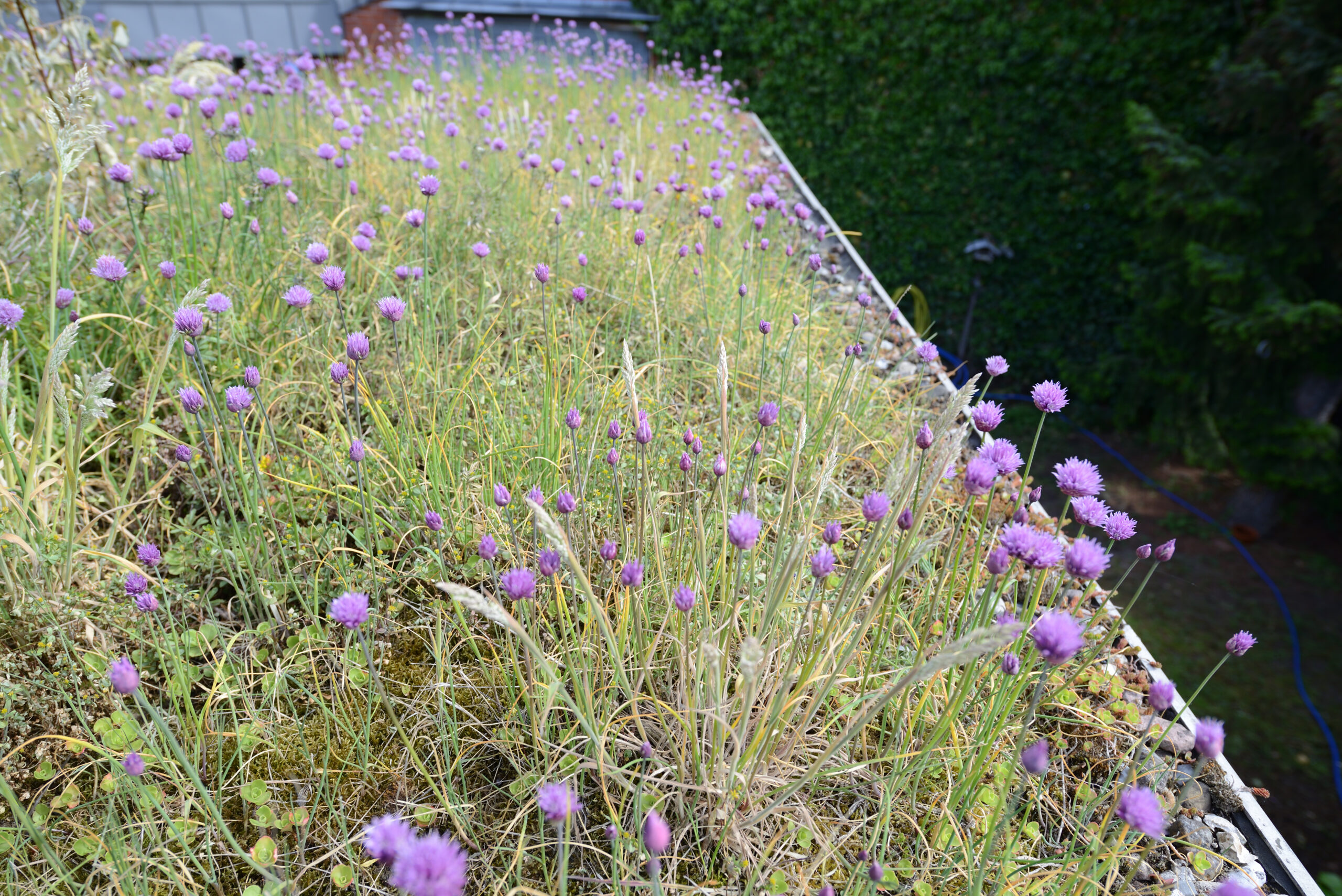
How can green roofs contribute to promoting biodiversity in urban areas? WGIN member Sempergreen developed a white paper ‘Building for biodiversity’, which answers this question and aims to raise awareness among architects, property developers, governments, and other parties involved in the construction and refurbishment of buildings. Hot topic Biodiversity is becoming a hot topic both in the industrial and political arena, as shown by the EU new Climate Adaptation Strategy and the European Parliament’s recent resolution on the EU biodiversity Strategy for 2030. And rightly so: biodiversity loss will have, and is already having, a devastating impact on both people and planet. Thankfully, we as humans can do something about it. Urbanisation being among the main causes of biodiversity loss across Europe, greening cities is the next logical step. Indeed, as recently recognised by the European Parliament, “green urban areas and green infrastructure can provide ecosystem services to support biodiversity and contribute to the physical and mental well-being of the population”. WGIN, Sempergreen and biodiversity In the new EU Climate Adaption Strategy, a novel focus is put on promoting green roofs and walls as ‘no-regret’ solutions to make urban infrastructure more climate-proof. As member of the World Green Infrastructure Network (WGIN), Sempergreen is actively advocating for increasing green infrastructure in the EU to create a more sustainable society. In addition to this white paper, Sempergreen Trade’s director Stephan Beerends was part of one of the panels of the European Green Infrastructure Day 2021, where he contributed to an illuminating discussion about biodiversity and urban development. You can download the white paper here. All images © Sempergreen

Read More »
EU chapter

In the press | Jure Šumi: “Green infrastructure bring life to cities”

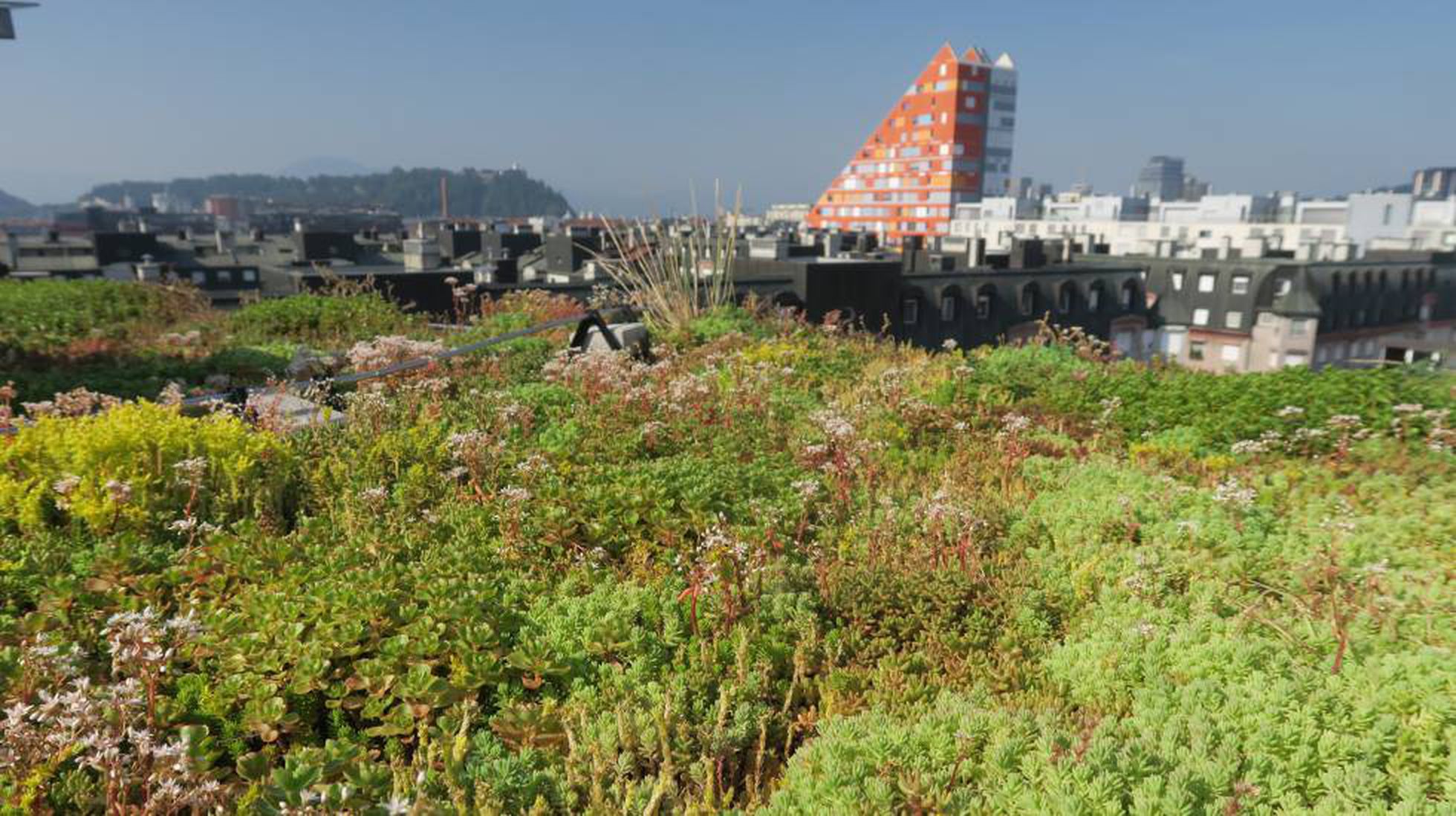
Azotea del Instituto Nacional de Biologia, en Liubliana, capital de Eslovenia. © DANILO BEVK In an interview to top-ranking Spanish media outlet El Pais, Jure Sumi, president of the Slovenian Green Infrastructure Association and Representative of the WGIN European Business Group presented the multiple benefits of nature in cities. “The holistic benefits that urban green infrastructure is bringing to cities are relatively little known”, Jure Sumi told El Pais, “People, and even city officials, are not aware of all the positive effects of nature. The benefits go beyond the aesthetic. Green infrastructure brings life to cities, reduces overheating in city centres, manages stormwater and removes dangerous dust particles from the air…. If buildings are designed correctly, green roofs on top can be additional amenity spaces for residents to enjoy nature at home.” “Not understanding all the benefits brings us to the second challenge”, he explained, “Adding green infrastructure is costly. As the benefits are not yet recognised, investors are not willing to pay much more for ‘green buildings’ as they are not sure how to sell the benefit to potential buyers. They see green infrastructure more as an additional cost than as an opportunity to increase the value of the building. I firmly believe that this is our task, to convince national and municipal governments, as well as investors and residents, to understand the benefits of green infrastructure. In the end everyone wins: municipality, investor, resident and, above all, nature.” Read the full article (in Spanish): https://elpais.com/elpais/2021/06/14/seres_urbanos/1623663219_703877.html

Read More »
Latest News

Nature within cities and cities within nature

30 JUNE 2021 BACKGROUND You are cordially invited to a high-level event, co-organized by the United Nations Environment Programme and the Portuguese EU Presidency, aiming at demonstrate the value of Nature-based Solutions (NbS) for cities, from developing climate resilient pathways to harnessing a broad range of environmental and socio-economic benefits. The event will highlight local participatory approaches as bases for long-term success, look at ways to scale impact with innovative approaches and call for genuine action across differentscales and sectors. The event will focus on exploring the multiple benefits of NbS for cities, highlighting opportunities and challenges to advance and scale up NbS, from local action to global solutions, accelerating impact in 2021 and beyond. The event starts with a high-level panel (16:00 – 16:30 CEST) which will discuss how the application of NbS can provide long-term social, ecological and economic benefits. The second session (16:30 – 17:30 CEST) features two technical panels with a focus on implementation challenges and opportunities as well as models for scaling up NbS from local action to global solutions. AGENDA Opening Remarks H.E. João Pedro MATOS FERNANDES, Portuguese Minister for the Environment Inger ANDERSEN, Executive Director, UNEP Multiple Benefits of NbS H.E. Ana ABRUNHOSA, Portuguese Minister of Territorial Cohesion H.E. Svenja SCHLUZE, German Federal Minister for the Environment, Nature Conservation and Nuclear Safety (Video) H.E. Andrej VIZJAK, Slovenian Minister of the Environment and Spatial Planning (Video) Opportunities and Challenges to Advance NbS Philippe TULKENS, acting Head of Unit, DG Research & Innovation, Healthy Planet Directorate, European Commission Ana DAAM, Head of Division of Sustainable Finance and Adaptation, Portuguese Environment Agency Rosário OLIVEIRA, Researcher, Institute of Social Sciences (ICS), University of Lisbon From Local Action to Global Solutions: Models for Scaling up NbS Duarte D´ARAÚJO, Landscape Architect, Lisbon Municipality Angela CRUZ GUIRAO, Director of Green and Sustainable Development, Campinas City Hall Q&A session Wrap up by Moderators Susana NETO (University of Lisbon) and Catarina ROSETA-PALMA (ISCTE-IUL)

Read More »
EU chapter

European Parliament calls for green roofs targets to restore urban biodiversity

The European Parliament adopted its position on the EU Biodiversity Strategy for 2030, signalling another important recognition of green infrastructure benefits. On 9 June 2021, the European Parliament adopted the resolution “EU Biodiversity Strategy for 2030: Bringing nature back into our lives”, fully endorsing the EU Commission strategy to address the current biodiversity crisis in Europe and the rest of the world. In the resolution, the Parliament calls on the European Commission to set ambitious legally binding targets for urban biodiversity, nature-based solutions, ecosystem-based approaches and green infrastructure, highlighting their benefits for both humans and wildlife and their contribution to the overall biodiversity targets. To promote urban biodiversity, MEPs stress the need to include measures such as a minimum share of green roofs on new buildings, supporting urban farming, ensuring no chemical pesticides are used and reducing fertiliser use in EU urban green areas. At the same time, the Parliament underlines the importance of increasing the number of green spaces according to the number of inhabitants of European urban areas, while also addressing inequalities in access to green spaces. The resolution recognises that green urban areas and green infrastructure can provide ecosystem services to support biodiversity and contribute to the physical and mental well-being of the population. In this view, MEPs support the Commission’s initiative to set up an EU platform for urban greening. “We are glad to see that the European Parliament recognizes the key contribution of green infrastructure to restore biodiversity in urban areas”, said Prof. Manfred Koehler, President of the World Green Infrastructure Network. “Bringing nature back into our cities is among the most urgent and difficult challenges that Europe and the world are facing. By installing vegetated surfaces on our buildings, we can create a natural habitat for pollinators, small insects and birds, and even allow for urban farming, in places that are otherwise unutilised.” In the resolution, MEPs regret that the EU has not achieved its 2020 biodiversity objectives, stressing that the new strategy must tackle all five main drivers of change: changes in land and sea use; the direct exploitation of organisms; climate change; pollution; and invasive alien species. Moreover, they ask to mobilise €20 billion per year for biodiversity action in Europe. About usThe EU Chapter of the World Green Infrastructure Network (WGIN) aims to increase the awareness of European Union policymakers about the multiple benefits of green infrastructure, with a specific focus on Building Integrated Vegetative Systems (green roofs and living walls). WGIN brings together national and regional industry associations, researchers, and companies to promote the incorporation of urban green infrastructure practice and planning, globally.

Read More »
EU chapter

European Green Infrastructure Day 2021

Policymakers, experts and representatives of national associations and green infrastructure industry discussed the state of affairs of urban green infrastructure in the European Union in a unique policy conference. Urban green infrastructure, such as vegetated roofs and walls, can greatly support green economic recovery and Europe’s transition to a more sustainable and resilient society. This clearly emerged from the insightful discussions of the first European Green Infrastructure Day, hosted by the EU Chapter of the World Green Infrastructure Network throughout 27 May 2021.  The panels focused on urban biodiversity, green and efficient buildings, financing green infrastructure, exchanging best green roofs practices across Europe, green infrastructure and climate adaptation, and how to build more sustainable, healthier and human-centred cities.  Among the speakers were:  View the full programme here.You can watch the event recordings below and on our YouTube channel.  recordings:

Read More »
Latest News

15-16 JUNE : Register now for GRHC’s First Virtual Grey to Green!

In light of COVID-19, Grey to Green 2021 will take place on a virtual platform on June 15th and June 16th. EXCITING SPEAKERS Get inspired by professionals working to create greener and more resilient communities post-COVID19. Designers, researchers and policymakers will come together to share their work in Biophilic Design, Integrated Stormwater Management Practices, Urban Agriculture, Green Roof and Green Wall Best Practices & more! GET CONNECTED Just because we are virtual does not mean we have to miss out on networking! Grey to Green 2021 will engage you in the discussion and help you connect with other passionate professionals.  Connect one-on-one with speakers or in break-out rooms to help solve urban challenges! GET INSPIRED Most importantly, let’s get inspired. Grey to Green 2021 is all about hope and giving you the tools and connections to build a better tomorrow.  We can’t wait to see you! Continuing Education: Grey to Green Virtual will be pending approval for various Continuing Education Credits following agenda selection. As always, the Grey to Green Conferences and Events are approved for Green Roof Professional credits. Continuing Education: Approved for 12.5 APLD CEUs, 13 ASLA CEUs, 13.5 AIA CEUs and 13.5 GRP CEUs. To learn more, check out the conference website: https://greytogreenconference.org/

Read More »
Latest News

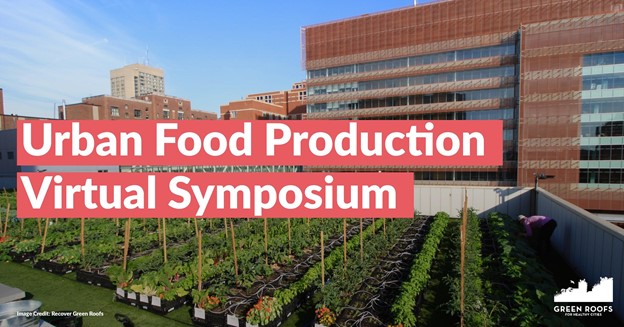
11 MAY: GRHC’s Urban Food Production Virtual Symposium!

A year into the COVID-19 pandemic, we have all been affected tremendously. With this, people are beginning to look for innovative solutions that will allow them to bounce back. Urban agriculture has grown rapidly in popularity and is quickly being understood as a resilient solution to COVID19. Urban agriculture helps support strong local economies and brings communities back together again, two things that are vital in COVID19 recovery. Not only will urban agriculture be an effective solution with COVID19, but it also provides many other benefits.           When you think of urban agriculture you probably think about urban space for food production, especially for fruits and vegetables. But, there are other viable types of production that you can get involved in, including microgreens, mushrooms, and edible insects! As well, urban agriculture has more capabilities than food production! It supports local economies, creates jobs, improves food access, and provides ecosystem services. On May 11th, Green Roofs for Healthy Cities is hosting the Urban Food Production Virtual Symposium. The agenda will provide managers, researchers, and urban planners with an understanding of this burgeoning industry and tools to adopt these practices. GRHC brings together early adopters and pioneers so we can understand their successes and losses. Approved for 3.75 APLD CEUs, 3.75 ASLA CEUs, 4 GRP CEUs and 3 AIA CEUs. Admission: $50 USD To learn more and register for the event: https://greenroofs.org/virtualevents/2021/5/11/urban-food-production-virtual-symposium

Read More »
Latest News

Competition for the best diploma thesis on green roofs and living walls

In the fall of 2020, PSDZ for the first time launched a competition for authors of master’s and engineering theses on green roofs and walls. Competition works were sent by the end of January 2021, and the results of the competition were announced in March. Diploma theses for the competition were sent from 12 universities from all over Poland. The awards are of a financial nature and free annual membership in the Polish Green Roof Association. In addition, in the case of engineering diploma theses, the first prize was a 2-week internship at Optigrün in Germany; and for the second place – a 2-week internship at Optigrün in Poland. Members of the jury awarded prizes for: –        high substantive and graphic level –        originality of the design idea –        application of solutions limiting the influence of the building on the environment and local climate In the category of master’s theses, the winners were: 1st place – Paula Karpowicz and Anna Karbowska from Cracow University of Technology, supervisor:  Barbara Zin, PhD 2nd place – Aleksandra Irzyk from Cracow University of Technology, supervisor: Tomasz Kapecki, PhD 3rd place – Magdalena Bieryło from University of Ecology and Management in Warsaw, supervisor: Janusz Marchwiński, PhD  In the category of engineering diploma theses: 1st place – Łukasz Modrzejewski from Wroclaw University of Science and Technology, supervisor: Tomasz Głowacki, PhD 2nd place – Marcelina Smolarczyk from Cracow University of Technology, supervisor: Izabela Styka, PhD 3rd place – the jury did not award the third place

Read More »
Latest News

Green roofs in the national program “Moja woda” (“My Water”)

As a result of the PSDZ petition, green roofs are included in the national program “Moja woda” (“My Water”) – as confirmation of the success of our efforts, the Polish Green Roofs Association received an official letter from the Minister of Climate and Environment. “Moja woda” is a national government program that was opened in 2020 and the deadline for submitting applications is 30/06/2024. From this year, owners of private properties can apply for reimbursement of the costs of purchase, delivery and construction of rainwater retention systems on roofs (green roofs). The program aims to protect water resources and minimize drought in Poland by increasing the retention in private home gardens and the use of retained rainwater and snowmelt, including the development of green and blue infrastructure. The strategic goal of the program is to increase the level of protection against the effects of climate change and natural threats (in accordance with the directions of activities set out in the “Strategic Adaptation Plan for sectors and areas sensitive to climate change until 2020 with a perspective until 2030” and the National Environmental Policy 2030 – development strategy in the field of environment and water management). This is the first national program in Poland that includes partial financing of green roofs.

Read More »
EU chapter

WGIN selected as partner of the New European Bauhaus

The World Green Infrastructure Network (WGIN) has been selected as official partner of the New European Bauhaus (NEB). The New European Bauhaus initiative aims to connect the European Green Deal to our living spaces by calling on all Europeans to imagine and build together a sustainable and inclusive future that is beautiful for our eyes, minds, and souls. Being inspired by the 1920s Bauhaus current, that synthesized scientific, technological and artistic innovation and transformation, the NEB pushes for cross-disciplinary debates and ideas to rethink our current practices and rebuild our places according to the principles of, sustainability, quality of experience and inclusiveness. During the co-design phase of the initiative, the New European Bauhaus teamed up with inspiring networks, associations, and organisations that are committed to act as promoters and key interlocutors throughout the project. WGIN is proud to join the community of NEB partners, which include leading architecture, design and urban planning schools, universities, NGOs as well as networks of cities, mayors and local authorities. Through the inputs of contributors and partners, the NEB co-design phase will lead to the launch of at least five concrete pilot projects in different EU Member states, as innovative projects bringing the new Bauhaus concept to life. Green infrastructure, such as green roofs and walls, are a perfect example of combining sustainability with aesthetic and inclusiveness and can greatly help reconnect nature and human beings in cities and urban areas across Europe. The full list of official partners can be found here

Read More »

Follow us on our social channels.

Follow us on the channel that best suits you to receive our latest updates!