Latest in: WGIN-mockup.

EU chapter

European Parliament highlights green roofs for climate change adaptation

December 2020 – In a resolution adopted on 17 December the European Parliament recognised the key role of green roofs and walls to minimise the adverse impact of climate change. The resolution says that green roofs and walls can contribute to cooling high urban temperatures, retaining and reusing rainwater and producing food. Urban green infrastructure can also help reduce air pollution, improve the quality of life in cities, reduce risks to human health, and protect biodiversity, including pollinators. MEPs supported any targeted initiatives to seize this potential, including the development of urban strategies and better spatial planning. Moreover, they called for infrastructure such as roads, parking lots, train tracks and power and drainage systems to be made biodiversity and climate-proof. The Parliament’s resolution on adaptation to climate change will provide input on a new EU Adaptation Strategy, expected from the Commission in 2021 as part of the European Green Deal. About usThe EU Chapter of the World Green Infrastructure Network (WGIN) aims to increase the awareness of the European Union policymakers about the multiple benefits of green infrastructure, with a specific focus on Building Integrated Vegetative Systems (green roofs and living walls). WGIN brings together national and regional industry associations to promote the development of the green infrastructure industry through training, research, advocacy for new policy, conferences, publications, and promotion.
Read More »
Projects

Caixa Forum Museum vertical garden

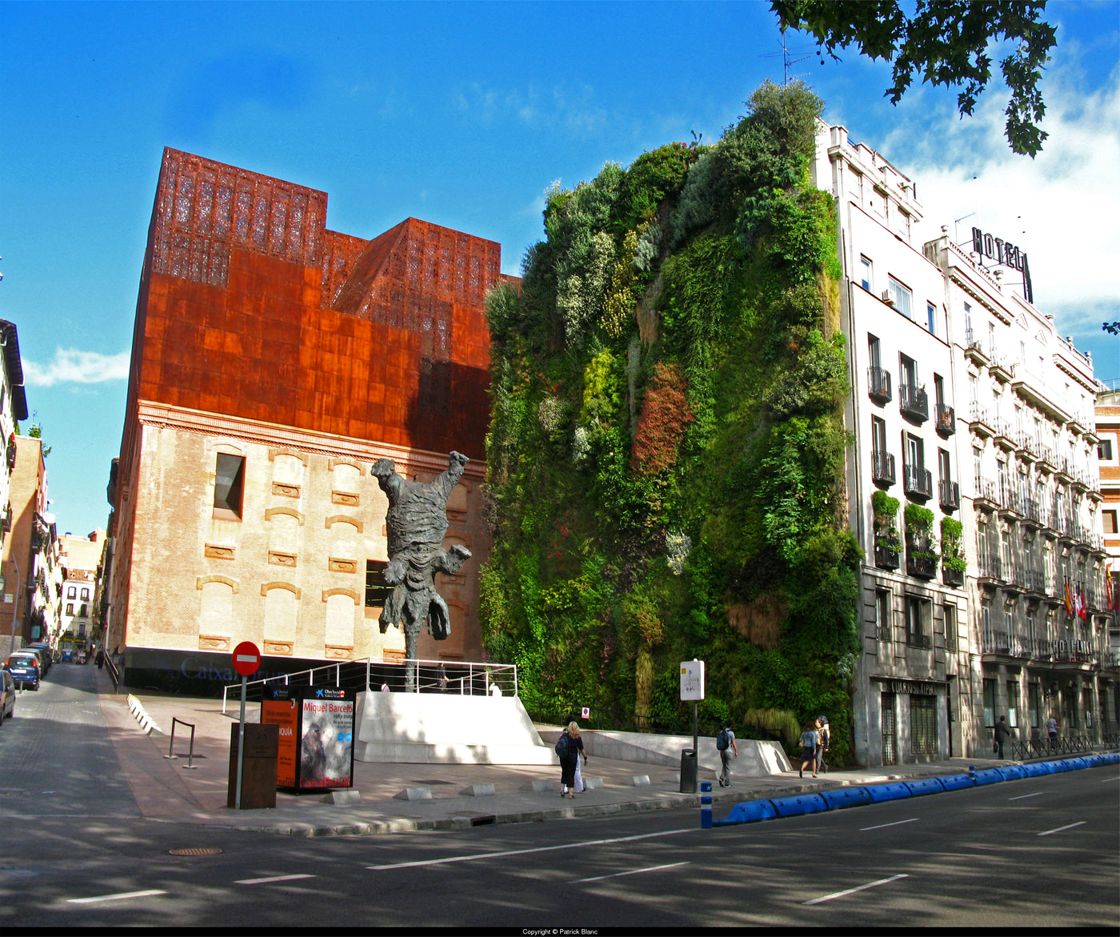
Caixa Forum Museum. Acquired by the Caixa Foundation in 2001, the Caixa Forum Museum is a modern art gallery and a refurbished 1899 power station. Located on the Avenida Prado across from the Prado Museum and botanical gardens, and in close proximity to the Reina Sofia and the Thyssen-Bornemisza Museums, exhibitions feature works from the foundation’s permanent collection (some 700 pieces by artists from the 1980s to the present), as well as temporary displays from other museums and foundations. By Patrick Blanc & his “Le Mur Végétal” system Situated in the heart of the Madrid’s cultural district, the Caixa Forum Museum vertical garden was designed and created by Patrick Blanc using his Le Mur Végétal system. The adjacent square is accessible to the public who can walk up, touch, and explore over 15,000 plantings on the hydroponic living wall. Nearly 300 different species were chosen by Patrick Blanc who had to keep in mind Madrid’s very demanding seasons – very hot in the summer and cold in the winter. Using Patrick Blanc’s Le Mur Vegetal system, the set up starts with a sheet of polyurethane, plastic mesh and a non-biodegradable felt-type blanket with pockets which are used to pot the plants. The plant roots develop extremely well and the total vertical garden weight is estimated at 30 kilos per square meter. The exact number of plants within the living wall is unknown due to replacements and changes of species over the years. The figure is between 15,000-17,000 plants, which depends on season and selected varieties adapted to the region. Species include Dianthus deltoids, Lonicera nitida, Yucca filamentosa, Cistus purpureus, Cedrus deodara, Pilosella aurantiaca, Arenaria montana, Bergenia cordifolia, Cornus sanguinea, Lonicera pileata, Sedum alpestre, Campanula takesimana, Garrya elliptica, and different Begonias. Since the building where the wall is located does not belong to Caixa Forum, special care has been taken to avoid moisture problems by contact or condensation. The polyurethane sheet is anchored to the wall of the building, leaving a gap that allows passage through its interior for monitoring of the irrigation and fertilization system, which is zoned at different heights. It constitutes a network of pipes arranged in layers with emitters, fed by a pump. Irrigation is vertical and layered, using gravity, wetting the wool and spreading by plants; all of this is automated. The runoff that occurs along the leaves and stems can cause water loss – at ground level, there is a recovery system and subsequent recirculation which continues to be tweaked. Remember that the climate of Madrid is very demanding, and a failure of water in the summer may cause the loss of many plants. Green Roof/Wall System: Single Source Provider Number of Greenroofs / Walls on Property: 1 Roof/Wall Size: 450 Roof/Wall Slope: 90 degrees Roof Accessibility/Amenity: Yes Open to the Public: Yes Designer: Patrick BlankYear: 2001City: Madrid owner website

Read More »
Projects

Library of the university of Warsaw

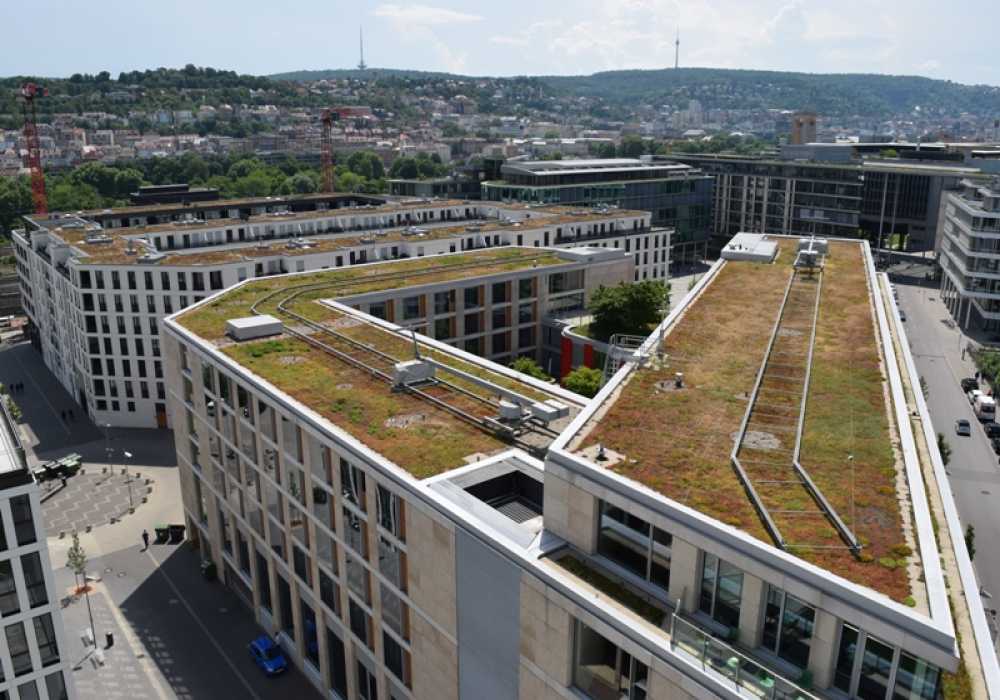
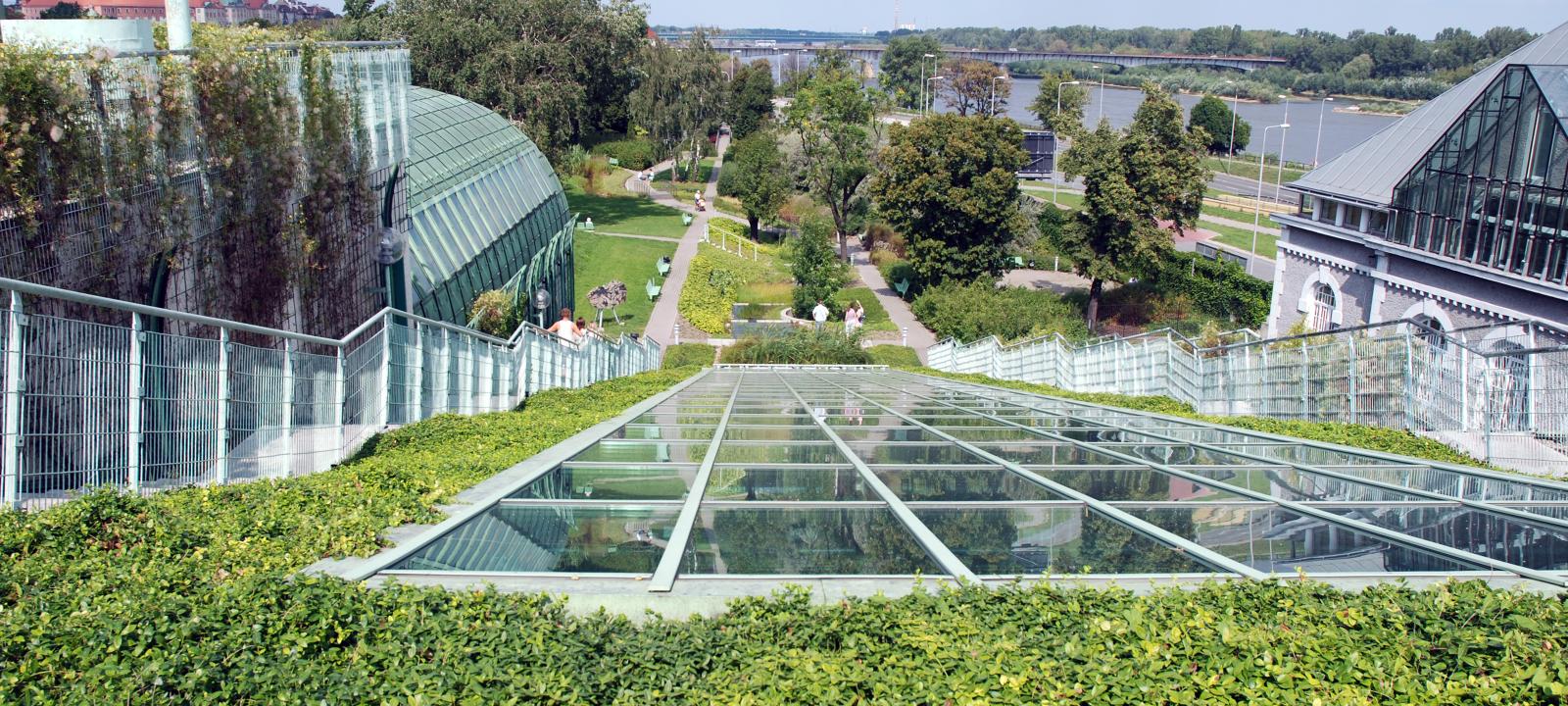
University of Warsaw. The green roof is divided into several separate gardens: the Gold Garden, the Carmine Garden, the Green Garden, the Silver Garden. For each of them the plants were selected taking into account their color. The garden is a place of rest with a beautiful view of the Vistula River. The green roof is located on two levels. The lower garden is over 15,000 square meters. From this level, a long staircase leads to the rooftop, underlined by the water element (gutters that flow rainwater to the lower ponds). The upper garden covers about 2,000 square meters. The green roof is divided into several gardens Green Roof/Wall System: Single Source Provider Roof/Wall Size: 17000 Roof Accessibility/Amenity: Yes Number of Greenroofs / Walls on Property: 4 Roof/Wall Slope: varied Open to the Public: Yes Project designer: Irena BajerskaYear: 2002State: Mazovia owner website

Read More »
EU chapter

Greener buildings to save energy and reduce emissions

WGIN EU Chapter highlights multiple benefits of greener buildings in its first feedback on the revision of the Energy Performance of Buildings Directive. On 22 February, the European Commission published its Inception Impact Assessment on the revision of the Energy Performance of Buildings Directive (EPBD), requesting stakeholders to share their inputs. The EU Chapter of the World Green Infrastructure Netowk (WGIN) submitted a comprehensive feedback highlighting how green infrastructure like green roofs and walls support the insulation of buildings and therefore contribute to reducing their energy consumption, a key step in the decarbonisation of the EU building stock. In addition, vegetated surfaces help reduce CO2 emissions, making buildings carbon sinks and improving air quality in urban areas, while also having a positive impact on citizens’ mental health. Given green roofs and walls’ added value for the energy performance of buildings and beyond, the EPBD revision should introduce a set of mandatory provisions on green infrastructure in new buildings, public buildings (such as hospitals and schools) and large commercial buildings, where technically feasible. Moreover, the European Commission should include mandatory considerations for green roofs and walls on residential buildings undertaking major renovations. “The revision of the EPBD represents a unique opportunity to set green infrastructure as an integral part of the future of buildings across Europe,” said Prof. Manfred Koehler, President of WGIN. “The multiple benefits of green roofs and walls fit perfectly with the goal of the Directive to achieve a decarbonised and highly energy-efficient building stock by 2050”. The Inception Impact Assessment represents the first step in the consultation process of the European Commission on the EPBD. The legislative proposal on the EPBD revision is expected for the end of 2021. Read WGIN feedback here About us The EU Chapter of the World Green Infrastructure Network (WGIN) aims to increase the awareness of European Union policymakers about the multiple benefits of green infrastructure, with a specific focus on Building Integrated Vegetative Systems (green roofs and living walls). WGIN brings together national and regional industry associations and renokwn experts to promote the incorporation of urban green infrastructure practice and planning, globally.

Read More »
EU chapter

Multiple benefits of green roofs recognised in EU climate adaptation strategy

On 24 February, the European Commission adopted a new EU Strategy on Adaptation to Climate Change, setting out the pathway to prepare for the unavoidable impacts of climate change. Green roofs and walls feature prominently in the strategy, which fully recognises their multiple benefits for climate adaptation. “Blue-green (as opposed to grey) infrastructures are multipurpose, ‘no regret’ solutions and simultaneously provide environmental, social and economic benefits and help build climate resilience”, it is stated in the document, which adds “Europe needs to leverage more investments in nature-based solutions to generate gains for adaptation, mitigation, disaster risk reduction, biodiversity, and health”. The strategy mentions the deployment of nature-based solutions for adaptation among the Commission’s priorities to make adaptation actions “systemic” across the Union, together with integrating adaptation into macro-fiscal policy and local adaptation action. Moreover, the Commission called for strengthened action to “prepare Europe’s building stock to withstand the impacts of climate change”, highlighting that green roofs and walls are key to make sure that “buildings can also contribute to large-scale adaptation, for example through local water retention that reduces the urban heat island effect.” The Commission announced it will support the integration of climate resilience considerations into the criteria applicable to construction and renovation of buildings and critical infrastructure. “The Commission’s recognition of the benefits of green roofs and walls to help make Europe resilient to climate change is excellent news for citizens and the environment. We very much welcome this approach and we hope this will serve as inspiration to governments and local administrations around the world. Green roofs and walls can greatly support climate adaptation efforts and as WGIN we are ready to do our part,” said Prof. Manfred Koehler, President of the World Green Infrastructure Network (WGIN). About us The EU Chapter of the World Green Infrastructure Network (WGIN) aims to increase the awareness of European Union policymakers about the multiple benefits of green infrastructure, with a specific focus on Building Integrated Vegetative Systems (green roofs and living walls). WGIN brings together national and regional industry associations to promote the development of the green infrastructure industry through training, research, advocacy for new policy, conferences, publications, and promotion. ContactMatteo Guidimatteo.guidi@wgin.org
Read More »
Latest News

WGIN virtual event: Project collaboration incubator

With great pleasure WGIN invites you to the first WGIN open virtual meeting March 26th, 2021: WGIN Project Collaboration Incubator. The year 2020 has almost completely deprived us of the possibility for direct exchange of experiences and face to face sharing of news from our countries. The mission of WGIN is to promote knowledge development and implementation of green infrastructure (GI), especially green roofs and walls, in all cities of the world. Increasing the pace of urban greening can be facilitated through various programs of support, both at the level of knowledge transfer and practical implementation of green infrastructure. Organizations associated in WGIN differ in structure and origin. Together we have comprehensive representation: scientists, representatives of municipal offices, NGOs, architects, landscape architects, contractors, designers and market suppliers of GI products. By combining our knowledge and experience, we can make the world greener! During this WGIN virtual meeting, we aim to discover possibilities for international project cooperation, primarily within Europe. WGIN members and stakeholders will present their organization’s interest and opportunities for international cooperation in projects promoting and implementing green infrastructure. Programs for financial support from the European Union will be presented. WGIN anticipates that similar programs will be launched in the coming years, not only in the EU, but worldwide. By mutually sharing information about our interests, competence, capacity and experience, we can identify possibilities for project collaboration. Project themes identified from the first WGIN Project Collaboration Incubator will set the stage for follow up meetings and discussions in smaller groups on project relevant topics, for example: biodiversity, urban farming, energy efficiency of buildings, health of city dwellers, rainwater retention, prevention and mitigation of urban heat island effect etc. Please note that WGIN’s role in the incubator is to bring potential project actors together. WGIN doesn’t normally take a project leadership role, but individual WGIN members and board members may, on behalf of other organizations, assume various project participation roles. All meeting attendees will be asked on the event registration form to provide information about their project ideas and potential roles. Time /place: 10:00 – 11:30 CET, March 26th, 2021 / GoToMeeting (link will be sent to attendees) Meeting hosts: Marta Weber – Siwirska – WGIN board member. Chairperson, Polish Green Roof Association David Brasfield – WGIN board member. Chairperson, Norwegian Association for Green Infrastructure Please register for your free attendance at the virtual Collaboration Incubator meeting here and please do forward this invitation to other potential GI project collaborators within your network.

Read More »
Latest News

World Congress of Building Greening 2021

Join us in Berlin! The event has been postponed to 2022. World Congress of Building Greening 2022May 10 – 12, 2022 Theme: Building GreeningVenue: Mercure Hotel MOA Berlin; Stephanstraße 41; 10559 Berlin, GER Please find more information here:https://www.bugg-congress2022.com/en/about.html The World Green Building Congress 2021 in Berlin is a multi-day event on greening buildings (green roofs, facades and interior greening) with the accompanying issues (including urban climate, rainwater management, sustainability, future city). At the end of the congress it is possible to take part in excursions to special projects. The World Congress is organized by the Bundesverband GebäudeGrün eV (BuGG) with the support of the World Green Infrastructure Network (WGIN). The largest congress on “the greening of buildings” held in Europe so far, offers: The WGIN Congress is globally acknowledged as the peak event for green infrastructure dissemination on:- Hosting a World Congress in 2022: We WELCOME all bidding proposals to host our World Congress. The process is simple and we are here to help and support your decision.We receive all applications to host our World Congress one month prior to our AGM in Berlin on 27th September 2021. Nations that bid will be considered by the WGIN board prior to a final decision of acceptance. CONTACT the WGIN Vice President for further information: matt.dillon@wgin.org

Read More »

Follow us on our social channels.

Follow us on the channel that best suits you to receive our latest updates!